- Agentic AI Use Cases
- 2025-08-28
Industry-wise Agentic AI Use Cases- All You Need to Know!
Audio Track
Table of Contents
Key Takeaways:
- Agentic AI can autonomously plan, reason, and execute complicated tasks across industries with minimum human interaction.
- Without the adoption of Agentic AI, industries struggle to keep up with the demands of speed, personalization, and accuracy in decision-making.
- Agentic AI use cases in banking and finance include automating complicated financial tasks, enhancing fraud detection, improving customer service, and streamlining investment strategies.
- Agentic AI in manufacturing empowers businesses with predictive insights, process streamlining, and automated decision-making.
- Starting from dynamic pricing to automated concierge services, AI agents allow personalized interactions, streamline resources, and help businesses adapt quickly to changing customer needs and market conditions.
- Agentic AI in the logistics and transportation industry goes beyond traditional automation to offer goal-driven capabilities across various aspects of the supply chain.
Overview- Agentic AI Use Cases in Varied Sectors
Agentic AI has since transitioned from a technological idea to a capability. Agentic AI can independently plan, reason and accomplish complex tasks with minimal human intervention. The technology boasts its ability to invoke external tools to complete complex directives, and to work with other technologies and agents. This has been predicted as a possibility for fully unleashing the potential of the technology to transform the business world.
Leading companies began implementing AI agents and systems into common everyday business operations. The digital workers powered by AI can be particularly impactful at maximizing customer service, automating supply chains, supporting human agents in sales and marketing teams, improving employee experience and data analysis in healthcare and finance sectors.
Challenges Confronted by Different Sectors without Agentic AI
Without the implementation of Agentic AI, industries are unable to match the challenge of speed, personalization, and precision in decision-making. In finance, healthcare, retail, and manufacturing, the lack of smarter, independent systems creates inefficiencies in operations, subpar customer experiences, and lost growth potential. Here are some critical issues that exist across industries without the advantages of Agentic AI application by industry:
-
Healthcare – Hospitals and clinics risk delayed diagnosis, ineffective patient triage, and increased operating costs through missing the opportunity to analyze gigantic amounts of medical data in real time without Agentic AI.
-
Banking & Payments – Financial institutions risk inadequate fraud detection, slow loan processing, and reduced automation—leading to a subpar customer experience—without agentic AI in banking and payments.
-
Human Resources (HR) – Without agentic AI in HR, recruitment cycles slow down, employee engagement monitoring is done manually, and predictive retention analysis is almost impossible.
-
Retail & Commerce – The absence of agentic AI in retail and agentic AI in commerce results in ineffective inventory management, lost personalization opportunities, and poorer demand forecasting.
-
Manufacturing – Factories experience downtime caused by reactive maintenance, delayed quality checks, and supply chain failure.
-
Technology & Enterprise – Without agentic AI in technology and enterprise sector, organizations are deprived of adaptive automation, smart customer service, and productive product development cycles.
-
Cross-Industry Impact – In general, across industries, there is loss of fragmented workflows, slower decision-making, and less competitive edge.
Agentic AI Use Cases in Various Sectors
Let's see the top real-world Agentic AI applications in various business landscapes. The real-world application of Agentic AI across different industries is as given below.
Finance & Banking
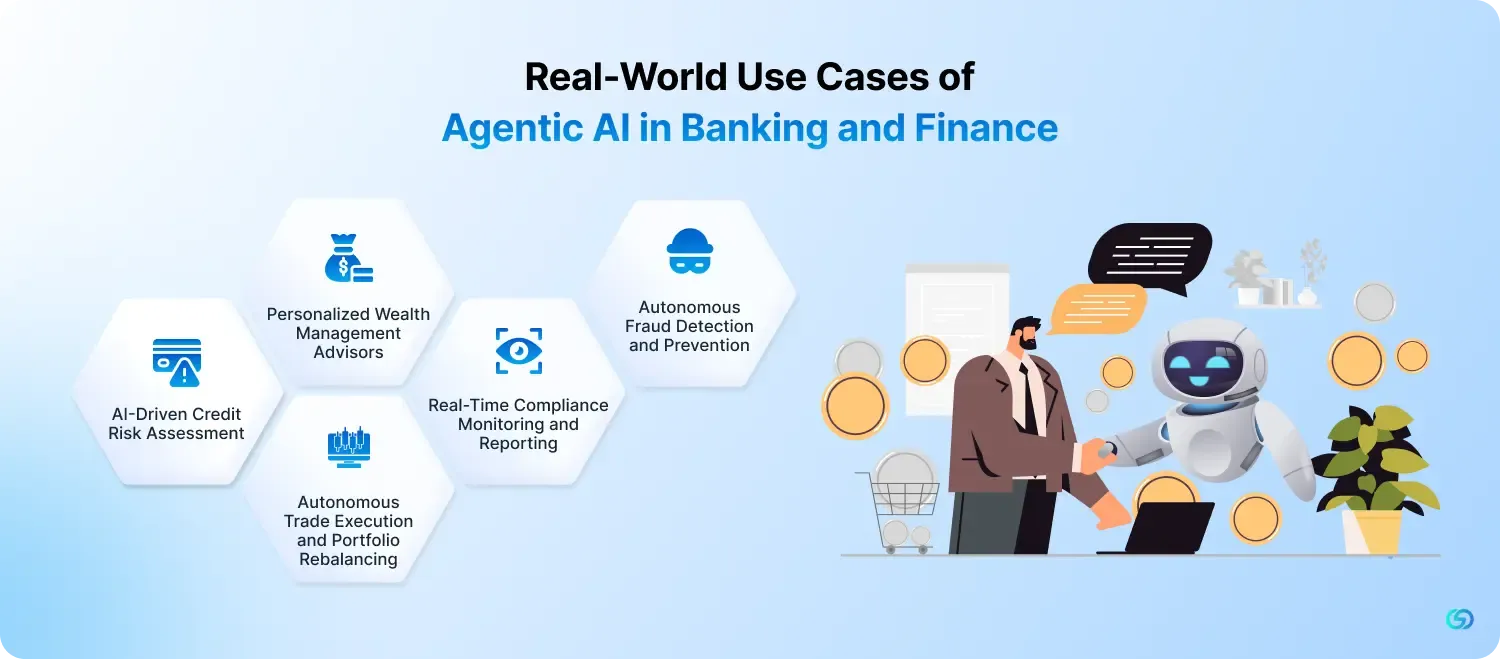
Agentic AI plays a crucial role in automating complex financial tasks, enhancing fraud detection, improving customer service, and streamlining investment strategies. Let’s learn about what are the use cases of Agentic AI in payments or finance?
Autonomous Fraud Detection and Prevention
-
Real-time transaction monitoring: Perhaps the most significant Agentic AI banking application is autonomous fraud detection and prevention. Agentic AI systems facilitate the analysis of transactions in real time, instantly identifying suspicious patterns and anomalies that signify any type of fraud, before the fraudulent transaction has a chance to be completed.
-
Adaptive learning models: Agentic AI systems learn on a continuous basis from new data, updating detection algorithms for keeping pace with the shifting fraudulent tactics environment, thereby improving accuracy and reducing false positives.
Personalized Wealth Management Advisors
-
Goal-oriented investment approaches: AI agents are able to evaluate the goals of individual clients, financial conditions, and risk tolerance for generating and dynamically updating customized portfolios of investments, ensuring they remain aligned with goals.
-
Behavioral profiling: Through examining market interactions, consumption behaviors, and other behavioral data, the technology can discover investor preferences and personalized recommendations for an efficient and more tailored strategy to wealth management.
AI-Driven Credit Risk Assessment
-
Alternative data integration: Agentic AI has the ability to process a diverse set of data points aside from the conventional credit scores. These include behavioral, social, and transactional data for creating a more inclusive and precise measurement of risks.
-
Dynamic risk models: They are ever-changing and constantly updating live creditworthiness, responding to the dynamic conditions of the market and the behavior of individuals, leading to better-informed and responsive lending choices.
Real-Time Compliance Monitoring and Reporting
-
Regulatory change monitoring: AI agents can track new regulatory changes and update internal policies and workflows autonomously to maintain continuous compliance without the need for manual intervention.
-
Automated audit trails: These systems create detailed audit trails automatically of decisions and activity, providing transparency as well as automating hassle-free compliance review and reporting.
Autonomous Trade Execution and Portfolio Rebalancing
-
Algorithmic decision-making: AI agents are able to process market signals as well as preprogrammed strategies for executing trades autonomously at the right times, borrowing on temporary opportunities, and optimizing the execution of trade efficiency.
-
Ongoing portfolio optimization: Such systems can continuously track portfolios in real-time, adjusting asset allocation automatically to reduce risk and maximize returns based on current market conditions and client goals.
Healthcare
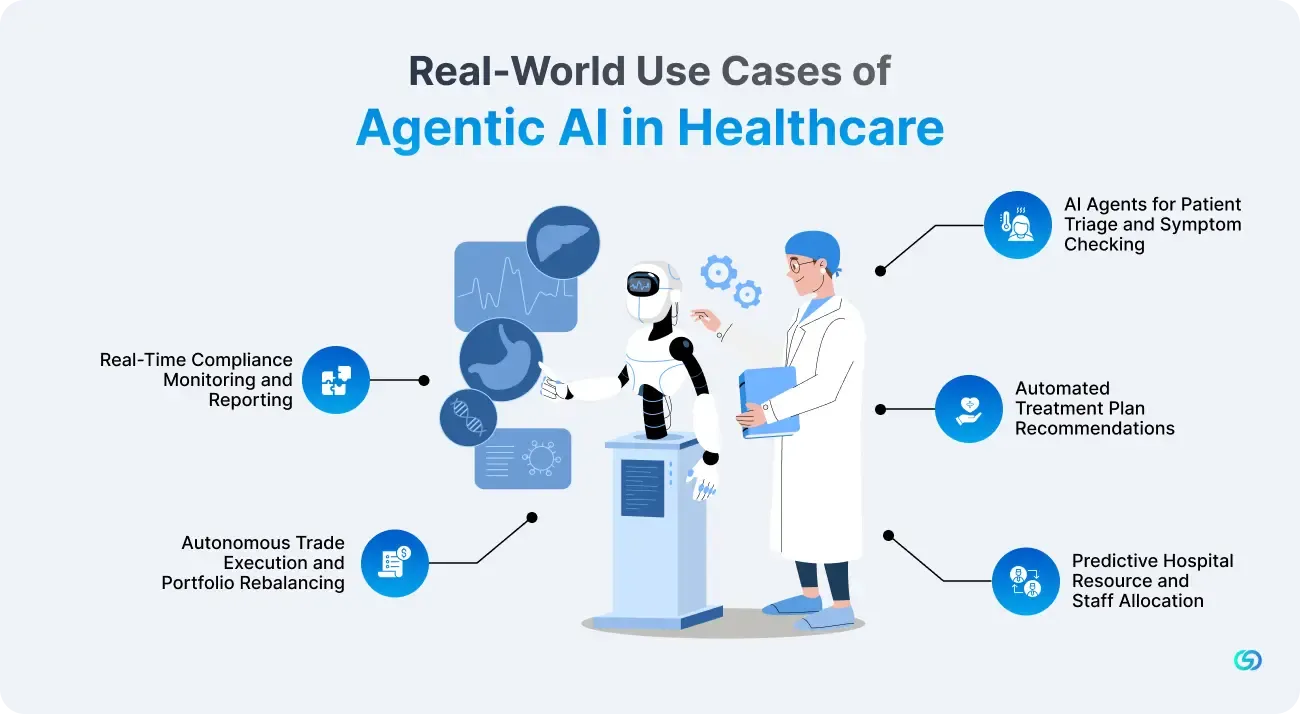
Agentic AI helps in transforming healthcare by allowing intelligent systems to make decisions and act independently to achieve healthcare goals. Apart from traditional AI, which typically focuses on providing insights and analyzing information, agentic AI takes a much active role. It makes decisions and takes actions autonomously within defined parameters. Let’s discuss the Agentic AI use cases in healthcare below.
AI Agents for Patient Triage and Symptom Checking
-
Conversational intake bots: These agents are capable of engaging in natural language conversations with the patients for collecting detailed symptom information as well as medical history. This info can thereafter be used for directing patients to the most appropriate level of care, like self-care advice, an urgent appointment, a virtual consultation, or an urgent care appointment.
-
Urgency prioritization: The technology can analyze gathered information for assessing the urgency of the condition of the patient and give priority to critical cases for instant attention. This helps in ensuring the patients with life-threatening conditions get on-time care, potentially decreasing delays and enhancing patient outcomes.
Automated Treatment Plan Recommendations
-
Evidence-based recommendations: Agentic AI is capable of analyzing huge amounts of patient data, medical literature, and clinical guidelines for generating evidence-based treatment plan recommendations. This helps the clinicians to make learned decisions and ensure that the patients get the highly effective and up-to-date treatments.
-
Context-aware adjustments: Tailor treatment to the patient’s unique conditions, like their medical history, lifestyle factors, genetic profile, and comorbidities. This helps in ensuring that the treatments are customized for the individual, potentially resulting in enhanced patient adherence and improved outcomes.
Predictive Hospital Resource and Staff Allocation
-
Bed occupancy forecasting: Agentic AI helps in analyzing historical data, patient admission patterns, and other relevant factors for accurately forecasting bed occupancy rates. This enables hospitals to streamline bed allocation, decrease overcrowding, and enhance patient flow within the facility.
-
Shift optimization: AI also dynamically adjusts the staff assignments depending on patient demand, clinical availability, and other factors of operations. This helps ensure sufficient staffing levels, decreases workload for healthcare professionals, and improves operational efficiency.
Continuous Patient Monitoring with Wearable Integration
-
Vital signs tracking: Agentic AI can be integrated with smart home sensors or wearables, continuously monitoring the vital signs of patients or other health metrics in real-time. This offers healthcare providers a constant stream of information about the health status of the patient, allowing proactive intervention and personalized care.
-
Early warning alerts: AI algorithms analyze the gathered data for detecting some changes or anomalies that can indicate a worsening condition. This enables early intervention, potentially preventing complications, decreasing hospital readmissions, and enhancing patient outcomes.
Autonomous Medical Coding and Billing Agents
-
Error-free medical coding: Agentic AI is capable of automating medical billing and coding processes by analyzing documentation and assigning the proper codes with high accuracy. This ensures compliance with regulations, decreases errors, and speeds up reimbursement cycles.
-
Fraud and overbilling prevention: Agentic AI detects unusual billing patterns, flags discrepancies, and prevents fraudulent claims, ensuring transparency, reducing financial losses, and maintaining compliance in healthcare billing and reimbursement processes.
Manufacturing
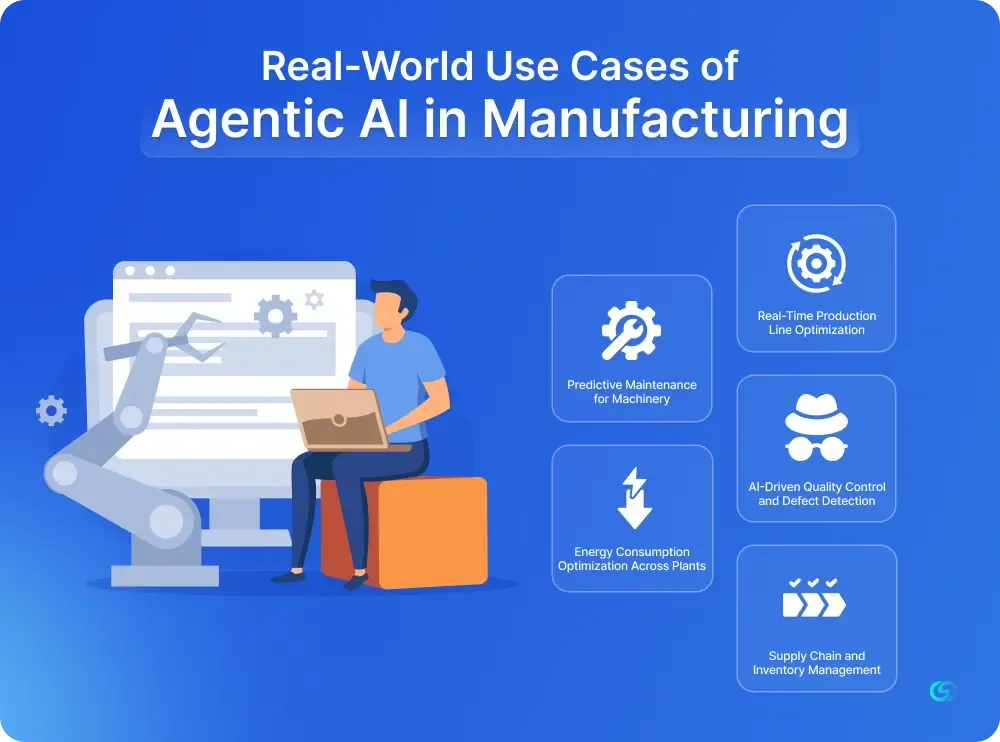
Agentic AI in manufacturing use cases empowers industries with predictive insights, process optimization, and automated decision-making. These intelligent systems reduce downtime, improve quality, streamline supply chains, and optimize energy use, driving operational excellence across production facilities while adapting quickly to market changes.
Predictive Maintenance for Machinery
-
Sensor-driven diagnostics: Continuously monitor machinery health, detecting early wear-and-tear signs before costly breakdowns occur. This enables proactive repairs, minimizes production interruptions, extends asset lifespan, and significantly lowers unexpected maintenance expenses for manufacturing plants of all sizes.
-
Maintenance scheduling automation: Automatically plan servicing based on real-time data, ensuring optimal equipment performance. This approach reduces manual oversight, increases operational efficiency, and enables manufacturers to maintain uninterrupted production schedules with fewer unplanned delays and lower repair costs.
Real-Time Production Line Optimization
-
Bottleneck detection: Identify inefficiencies in the production process instantly, allowing rapid resolution to maintain steady output. AI-driven analysis ensures consistent throughput, minimizes delays, and prevents costly slowdowns during peak manufacturing periods.
-
Dynamic task reallocation: Reassign tasks in real-time based on resource availability and production demands. This adaptive capability ensures maximum efficiency, optimal workforce utilization, and balanced workloads across the production line, reducing idle time and improving productivity.
AI-Driven Quality Control and Defect Detection
-
Computer vision inspections: Utilize high-precision visual recognition to detect micro-defects invisible to the human eye. This ensures consistent quality standards, reduces waste, and minimizes customer complaints related to faulty products.
-
Root cause analysis: Identify recurring production issues quickly, enabling manufacturers to implement targeted solutions. By addressing underlying problems, manufacturers can prevent defect repetition, improve quality output, and reduce operational costs over time.
Supply Chain and Inventory Management
-
Demand prediction: Leverage AI-powered forecasting to anticipate inventory needs accurately, avoiding costly overstock or product shortages. This helps maintain balanced inventory levels, meeting customer demands without tying up capital unnecessarily.
-
Supplier performance monitoring: Track vendor reliability and efficiency automatically, enabling data-driven procurement decisions. This ensures timely deliveries, improves supply chain resilience, and fosters stronger supplier relationships while maintaining consistent production flow.
Energy Consumption Optimization Across Plants
-
Real-time energy monitoring: Identify energy wastage instantly across facilities, enabling immediate corrective measures. This reduces operational costs, lowers environmental impact, and supports sustainability goals without compromising production output.
-
Load balancing: Distribute energy usage efficiently across multiple production sites to prevent overloads. This optimization ensures stable operations, prolongs equipment life, and minimizes energy expenses for manufacturers.
Hospitality & Travel
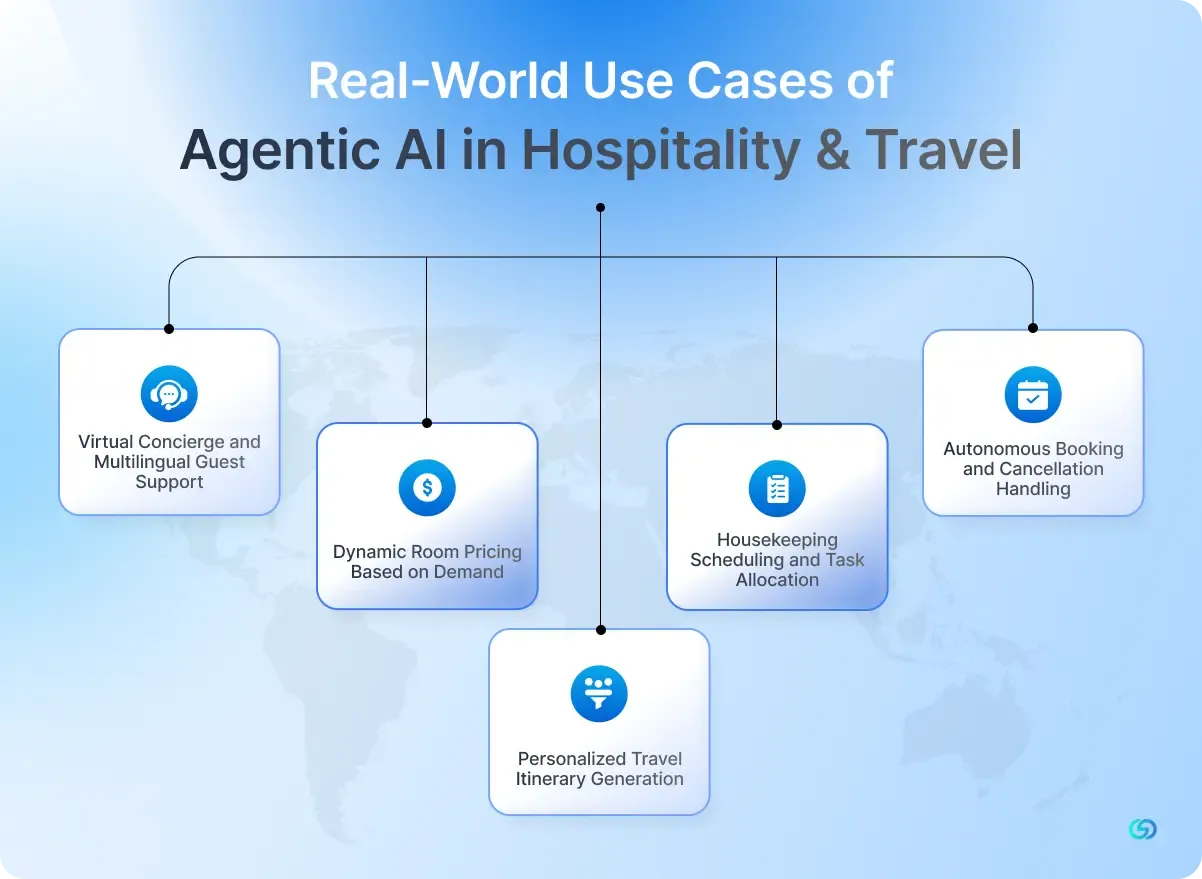
Agentic AI use cases in hospitality and travel enhance guest experiences, streamline operations, and improve service efficiency. From dynamic pricing to automated concierge services, AI agents enable personalized interactions, optimize resources, and help businesses adapt quickly to changing customer needs and market conditions.
Virtual Concierge and Multilingual Guest Support
-
Local Recommendations: Provide curated dining, activity, and sightseeing suggestions tailored to each guest's interests. This enhances satisfaction, encourages repeat visits, and allows hotels to upsell premium services through relevant and timely recommendations.
-
Language translation in real-time: Break down communication barriers instantly for international guests. Multilingual AI agents enable smooth conversations, improve service quality, and ensure guests feel understood regardless of their native language.
Dynamic Room Pricing Based on Demand
-
Event-aware pricing: Adjust room rates automatically based on local events, seasonal trends, and demand spikes. This ensures maximum revenue potential while offering competitive rates to attract guests.
-
Competitor rate tracking: Monitor rival pricing in real-time, enabling hotels to remain competitive without sacrificing profitability. AI agents adjust rates instantly based on market conditions.
Personalized Travel Itinerary Generation
-
Interest-based recommendations: Create tailor-made travel itineraries based on guest preferences, lifestyle, and travel goals. This personalization boosts satisfaction and encourages longer stays.
-
Real-time adjustments: Modify travel plans instantly based on factors like weather updates, local event changes, or guest feedback, ensuring seamless experiences.
Housekeeping Scheduling and Task Allocation
-
Occupancy-aware cleaning schedules: Allocate housekeeping tasks based on guest check-in and check-out times to maximize efficiency and minimize guest disruption.
-
Inventory-linked housekeeping: Trigger automatic restocking of amenities when inventory is low, ensuring rooms remain fully equipped without manual monitoring.
Autonomous Booking and Cancellation Handling
-
Instant rescheduling: Offer alternative bookings or upgrades instantly when cancellations occur, minimizing revenue loss and improving guest satisfaction.
-
Overbooking prevention: Automatically monitor and adjust availability to avoid double-booking, ensuring smooth operations and reducing customer complaints.
Retail & E-Commerce
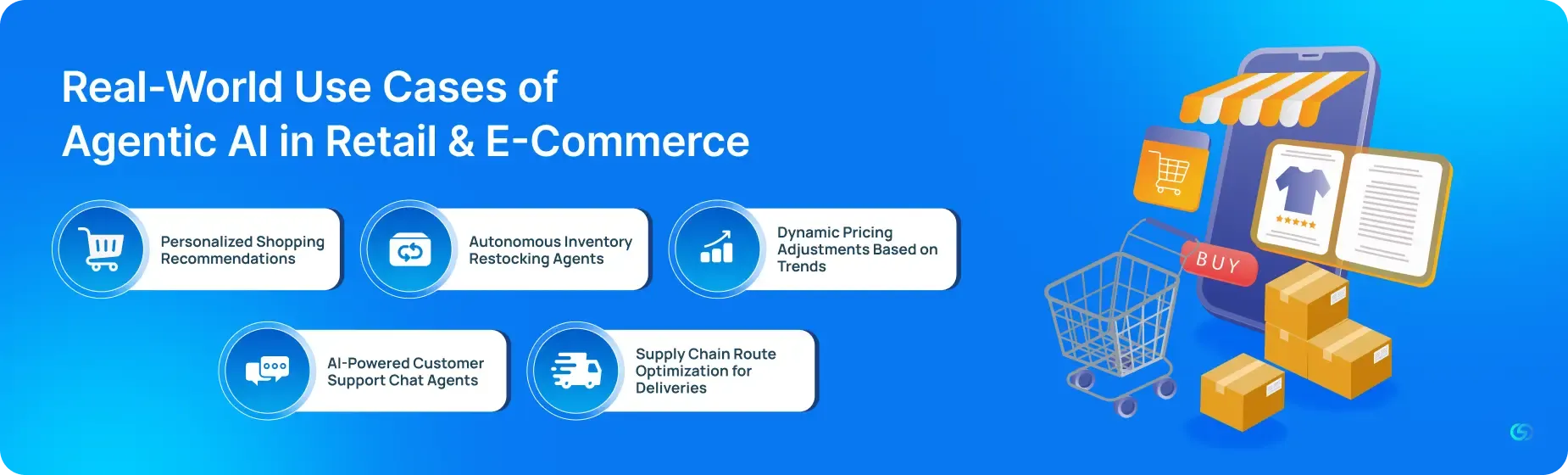
Agentic AI use cases in retail and e-commerce focus on enhancing personalization, streamlining inventory, and optimizing logistics. These intelligent systems improve customer engagement, drive sales, and reduce operational inefficiencies, enabling businesses to remain agile in highly competitive and rapidly evolving marketplaces.
Personalized Shopping Recommendations
-
Browsing behavior analysis: Track customer browsing activity in real-time to recommend relevant products instantly. This personalized approach increases engagement, drives higher conversions, and encourages impulse purchases, improving the overall shopping experience while boosting average order value for retailers.
-
Purchase history insights: Analyze past transactions to create loyalty-driven offers and personalized promotions. By tailoring recommendations based on buying behavior, retailers strengthen customer relationships, encourage repeat purchases, and drive long-term brand loyalty with consistent, personalized engagement.
Autonomous Inventory Restocking Agents
-
Demand-based ordering: Predict product demand accurately to prevent costly stockouts or excessive overstocking. AI ensures inventory levels are maintained optimally, improving customer satisfaction and minimizing wastage through proactive, data-driven restocking.
-
Supplier auto-negotiation: Use autonomous agents to negotiate with suppliers for the best terms, ensuring cost savings and faster procurement. This streamlines supply chain operations and improves profit margins without heavy manual intervention.
Dynamic Pricing Adjustments Based on Trends
-
Seasonal and demand-based shifts: Adjust product prices dynamically based on seasonal patterns, market demand, and consumer behavior. This ensures competitive positioning, maximizes profit margins, and helps businesses adapt quickly to shifting buyer expectations.
-
Competitor monitoring: Continuously analyze competitor pricing strategies in real-time, enabling instant adjustments to stay competitive. AI-driven price management allows businesses to balance profitability with customer appeal efficiently.
AI-Powered Customer Support Chat Agents
-
Natural conversation handling: Deliver real-time support through AI chat agents that simulate human-like interactions. They resolve common issues instantly, reducing wait times and boosting customer satisfaction.
-
Proactive problem-solving: Predict customer concerns before they escalate into complaints, offering pre-emptive solutions and enhancing service quality. This strengthens brand reputation and customer trust.
Supply Chain Route Optimization for Deliveries
-
Traffic-aware routing: Plan delivery routes using real-time traffic and weather data to reduce delays. This ensures faster deliveries, improving customer satisfaction while minimizing logistical disruptions.
-
Fuel efficiency optimization: Optimize routes to cut unnecessary mileage, reducing transportation costs and environmental impact. AI-driven logistics management improves sustainability while maintaining delivery reliability.
Logistics & Transportation
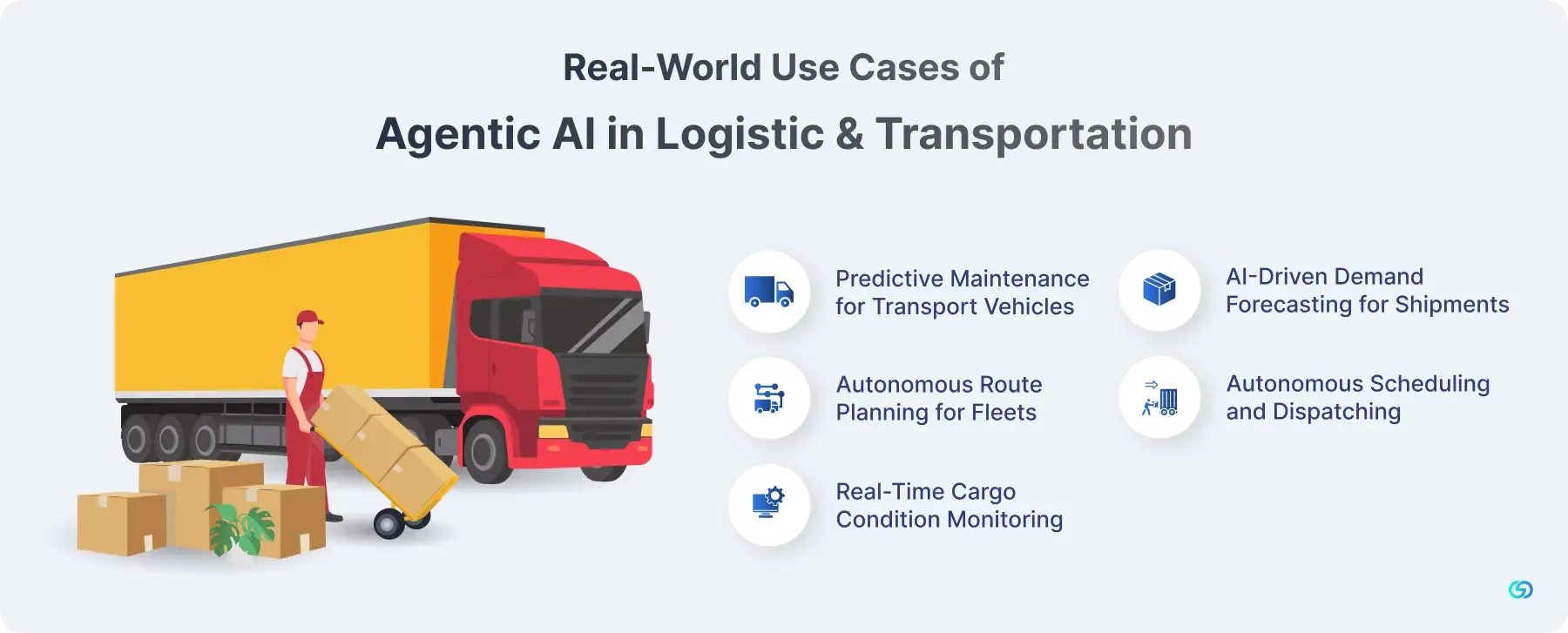
Agentic AI in the logistics and transportation industry goes beyond traditional automation to provide goal-driven abilities across several aspects of the supply chain.
Given below is how Agentic AI can be used for addressing the main areas in the logistics and transportation industry.
Autonomous Route Planning for Fleets
-
Real-time traffic data integration: Agentic AI can process real-time information from sources such as traffic cameras, sensors, weather reports, and availability of vehicles to strongly streamline routes, decreasing delays and enhancing delivery. This involves rerouting vehicles around congestion, accidents, or sudden road closures.
-
Fuel efficiency optimization: By analyzing factors like vehicle performance, load capacity, and road conditions, AI agents can identify the most fuel-efficient routes and driving practices, resulting in significant cost savings and decreased environmental impact.
Real-Time Cargo Condition Monitoring
-
IoT sensor integration: Connecting IoT sensors with AI agents mounted on vehicles and within warehouses enables real-time, continual tracking of the conditions of the cargo, like humidity, temperature, light exposure, and shock.
-
Alert-based intervention: AI agents can be programmed to trigger alerts when the conditions change from the traditional predefined thresholds. This allows proactive measures for preventing damage to sensitive items during transit, initiating cold-chain reinforcement, or potentially rerouting to protect the cargo.
-
End-to-end chain of custody: Sensors all over the route can offer logged data that improves transparency and helps resolve disputes and claims.
Predictive Maintenance for Transport Vehicles
-
Telematics-driven diagnostics: Agentic AI systems can utilize data from maintenance logs, telematics systems, and maintenance logs for analyzing performance patterns and proactively predicting potential breakdowns.
-
Automated repair scheduling: After detecting potential issues, AI agents are capable of automatically scheduling preventative maintenance appointments, decreasing unexpected downtime and streamlining the reliability of the fleet.
AI-Driven Demand Forecasting for Shipments
-
Seasonal and event-based forecasting: AI agents are capable of analyzing historical data, market trends, seasonal fluctuations, news events, and social media information for generating extremely accurate demand forecasts, anticipating peak delivery times, and allowing better inventory planning.
-
Capacity planning automation: Match resources for predicting demand, businesses can streamline resource allocation and adjust levels of inventory, ensuring that the products are available as per the need while avoiding overstocking and stockouts.
Autonomous Scheduling and Dispatching
-
Priority-based load assignment: AI agents can match loads dynamically to the vehicles available as per their location, traffic, weather, capacity, and delivery deadlines, ensuring proper utilization of resources.
-
Real-time rerouting: In the case of cancellations, emergencies, or delays, the technology can immediately recalculate routes and reassign tasks to decrease disruption and maintain service levels.
Education & EdTech
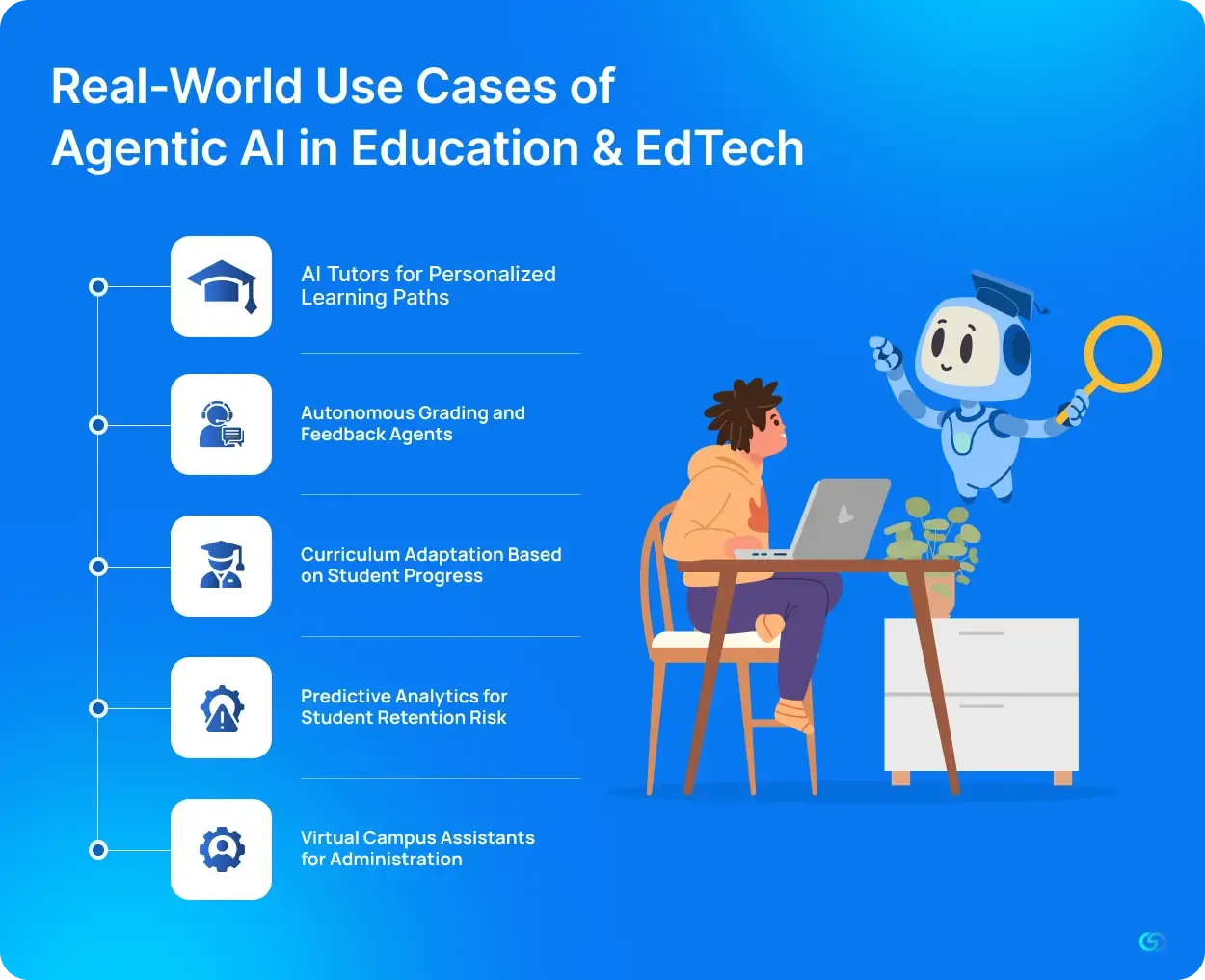
Agentic AI use cases in education and EdTech are transforming learning by delivering personalized experiences, automating administrative work, and predicting student needs. From AI tutors to virtual campus assistants, these systems optimize teaching, improve retention, and enhance education quality across industries and institutions.
AI Tutors for Personalized Learning Paths
-
Adaptive content delivery: Adjust lesson difficulty in real time based on individual student performance. This ensures learners progress at their own pace, improves engagement, and supports better outcomes across diverse educational settings.
-
Skill gap analysis: Identify areas where students struggle and provide targeted resources to address weaknesses. These best Agentic AI use cases improve knowledge retention and learning efficiency.
Autonomous Grading and Feedback Agents
-
Instant grading for objective assessments: Evaluate quizzes, tests, and assignments immediately, reducing teacher workload and speeding up feedback. This enhances student learning cycles and academic efficiency.
-
AI-assisted essay review: Highlight structural, grammatical, and conceptual improvement areas, enabling students to refine work and teachers to focus on high-value instruction.
Curriculum Adaptation Based on Student Progress
-
Performance-based module sequencing: Reorder lessons dynamically based on student mastery levels. This approach, common in Agentic AI use cases across industries, ensures efficient knowledge delivery.
-
Data-driven lesson improvements: Use aggregated performance data to refine teaching materials for better clarity and effectiveness.
Predictive Analytics for Student Retention Risk
-
Early warning detection: Identify learners at risk of dropping out using behavioral, attendance, and performance data, enabling timely intervention.
-
Proactive engagement triggers: Assign mentors, resources, or communication efforts before students disengage, a proven Agentic AI use case in enterprise education.
Virtual Campus Assistants for Administration
-
Automated enrollment and scheduling: Manage student registrations, timetables, and course allocations with minimal human involvement, improving efficiency and accuracy.
-
24/7 student support: Provide instant responses to common questions, improving accessibility and satisfaction, similar to agentic AI use cases in technology industry services.
Human Resource
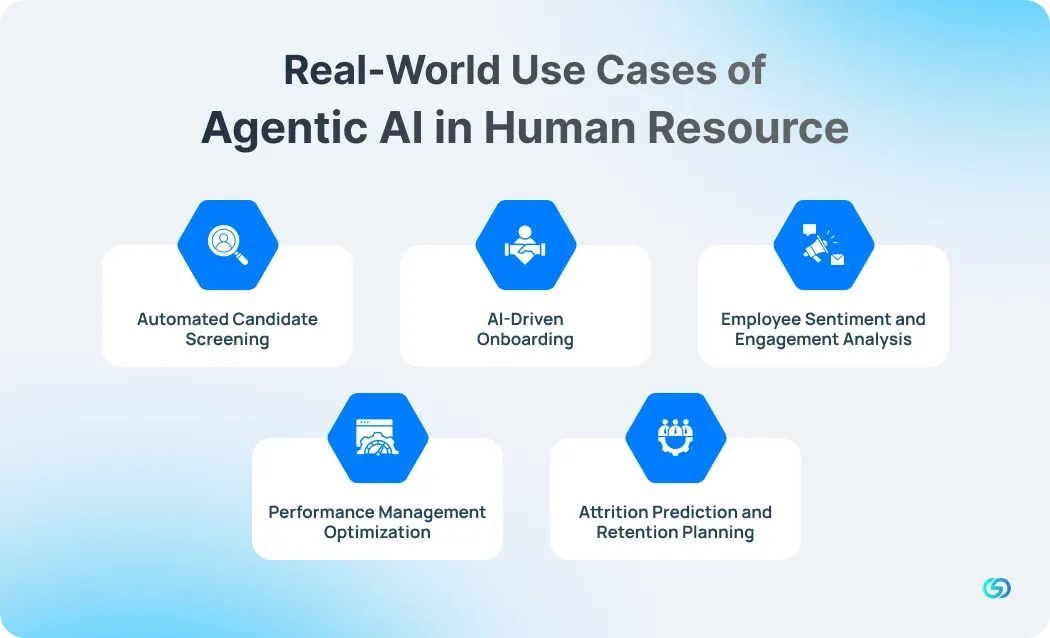
Agentic AI use cases in HR are transforming workforce management by automating recruitment, streamlining onboarding, improving employee engagement, and predicting workforce needs. From AI-driven screening to attrition prediction, these solutions empower HR teams to make data-driven, strategic decisions that improve organizational performance.
Automated Candidate Screening
-
Resume parsing and skill matching: Evaluate thousands of resumes instantly, matching candidates to roles without bias. This ensures faster hiring, higher-quality selections, and aligns with the best agentic AI use cases in HR.
-
Behavioral and cultural fit analysis: Use AI to assess candidate traits and values, improving long-term retention and workforce alignment.
AI-Driven Onboarding
-
Personalized training paths: Design onboarding programs tailored to each new hire’s role, skills, and learning style, ensuring quicker integration.
-
Automated documentation: Manage contracts, compliance forms, and policy acknowledgments seamlessly, reducing manual HR workload.
Employee Sentiment and Engagement Analysis
-
Real-time morale tracking: Monitor employee communications and survey data to identify engagement trends.
-
Proactive well-being initiatives: Trigger wellness programs or manager check-ins based on sentiment data, a growing agentic AI use case across industries.
Performance Management Optimization
-
Dynamic goal setting: Adjust KPIs and objectives based on evolving business priorities and employee capabilities.
-
Skill gap identification: Highlight areas for improvement and recommend targeted learning programs to boost performance.
Attrition Prediction and Retention Planning
-
Early resignation risk detection: Predict potential turnover using attendance, productivity, and feedback patterns.
-
Targeted retention strategies: Offer career growth plans or benefits to retain high-value employees, answering the question, “What are the use cases for agentic AI for HR?”.
Conclusion
Agentic AI is revolutionizing industries with autonomous decision-making, real-time adaptability, and minimal human intervention. From finance and healthcare to manufacturing, retail, HR, and logistics, it delivers best-in-class use cases that optimize operations, enhance customer experiences, and boost ROI. In banking, it powers fraud detection, credit risk assessment, and personalized wealth management. In healthcare, it enables patient triage, treatment planning, and predictive resource allocation. Manufacturing benefits from predictive maintenance, AI-driven quality control, and supply chain optimization. Retail and commerce gain through hyper-personalization and demand forecasting, while HR leverages AI for recruitment, onboarding, and employee engagement. Logistics sees smarter route planning and real-time cargo monitoring. Education and EdTech utilize AI tutors, adaptive learning, and retention analytics. Across all industries, Agentic AI transforms workflows, improves speed, and drives competitive advantage—making it the next big leap in enterprise innovation.
FAQ
How is Agentic AI different from traditional automation?
Agentic AI goes beyond predefined workflows by autonomously making decisions, adapting to changing contexts, and learning from new data. Unlike traditional automation, which follows fixed rules, Agentic AI can dynamically adjust processes, optimize outcomes in real time, and operate independently with minimal human intervention, enabling smarter, context-aware enterprise operations.
What are the various challenges of implementing Agentic AI in enterprises?
Key challenges include high initial costs, integration complexities with legacy systems, a lack of skilled talent, data security concerns, and ensuring ethical AI use. Additionally, enterprises must manage change resistance, maintain transparency in AI decisions, and develop robust governance frameworks to ensure reliable, compliant, and bias-free outcomes while leveraging Agentic AI capabilities.
How do you measure the ROI of deploying Agentic AI?
ROI is measured through metrics like operational cost savings, productivity gains, faster decision-making, reduced downtime, improved customer satisfaction, and error reduction. Enterprises also assess long-term benefits, such as adaptability to market shifts, increased innovation, and scalability of processes, compared to the investment in AI infrastructure, training, and integration costs.
Is Agentic AI ready for enterprise-level deployment?
Yes, Agentic AI is increasingly mature for enterprise use, especially in areas like supply chain optimization, HR automation, and predictive maintenance. However, readiness depends on robust data infrastructure, AI governance policies, and skilled teams. Many enterprises adopt a phased approach, starting with pilot projects to validate performance and scalability.
Which tools are used for building enterprise Agentic AI agents?
Popular tools include LangChain, AutoGPT, CrewAI, BabyAGI, and Microsoft’s Azure AI Agent services. These platforms enable autonomous decision-making, context management, and task orchestration. Additionally, enterprises use frameworks like OpenAI APIs, Hugging Face Transformers, and RAG-based architectures to build scalable, domain-specific Agentic AI agents tailored for complex business workflows.