- Education App Development
- 2025-12-26
What’s Powering the EdTech Boom? Inside Education App Development
Audio Track
Table of Contents
Key Takeaways:
- Education is shifting faster than ever and is driven by mobile-first experience and AI that personalize learning.
- Multiple types of EdTech apps are available, from subject-specific, language learning, and educational games to quiz apps.
- EdTech apps personalize learning, create an interactive environment, and enhance communication and collaboration.
- Emerging technologies such as AI, AR, VR, and voice interfaces are redefining what learning looks like.
The New Learning Era
Global connectivity is reshaping the way we interact, and the landscape of the education sector is undergoing a tremendous transformation. Learning in the 21st century stands at the forefront of this massive shift, enhancing the way knowledge is accessed and shared.
EdTech is totally breaking down geographical barriers, empowering students and educators with personalized learning experiences to collaborate in real-time across the globe.
The shift from traditional classroom learning to AI-driven learning tools and a modern education system is preparing learners to thrive in an increasingly dynamic world.
The customer base for EdTech apps is expected to grow exponentially. The survey shows that there will be 2.5 million more educational app users, a massive rise from 1.6 billion reported in 2021.
By partnering with a custom mobile app development company, you can elevate your impact and stay ahead of the competition. Education app development is redefining how we learn, teach, and succeed in 2025 and beyond.
The Evolution of Education Technology
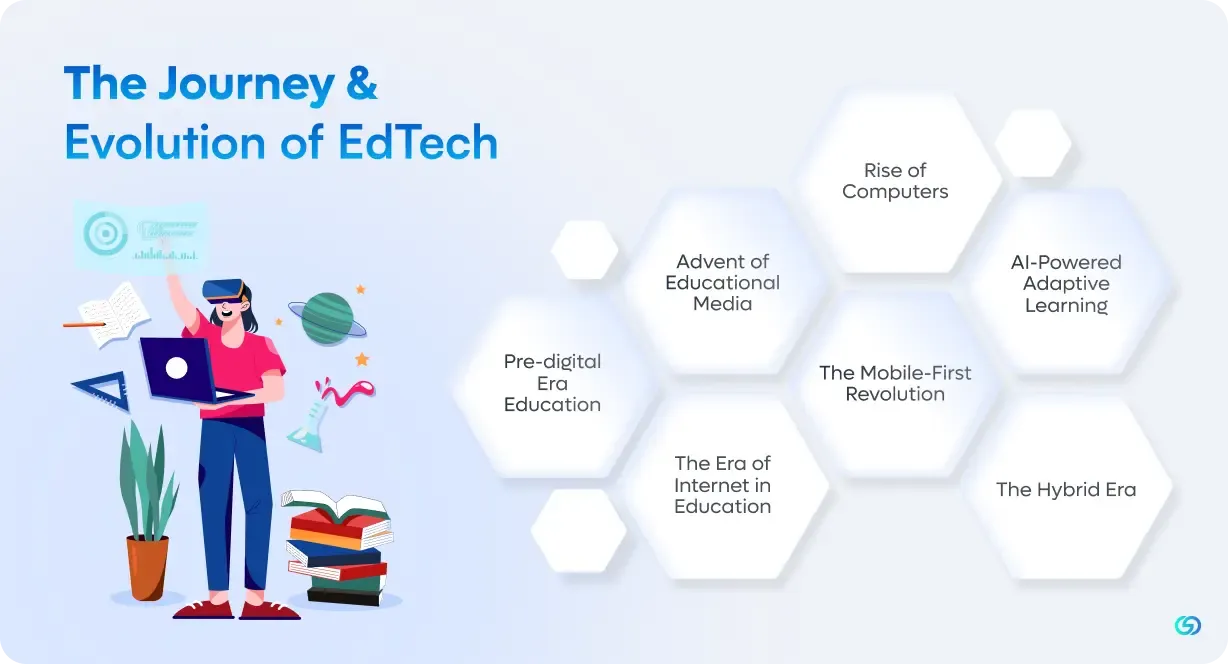
From simple blackboards to smart classrooms, technology has transformed the education sector.
➡️Pre-digital Era Education
Earlier, technology in the classroom revolved around simple learning tools that shaped the education system for generations. In the 19th century, the presence of a blackboard and a teacher was important to present information interactively, which shaped student learning.
➡️Advent of Educational Media
It was the 20th century that saw a significant shift in tech in the classroom with the introduction of film, television, and radio as educational media. With the advancement of technology, media tools have become important as they have made it possible to assist students in various ways, which were previously impossible.
➡️Rise of Computers
The 70s and 80s saw the beginning of the new era—the computers. Classrooms were revolutionized through Computer-Assisted Instruction programs, offering personalized and interactive learning experiences. Computers helped teachers grade tests and track progress. Additionally, it allowed students to learn beyond textbooks.
➡️The Era of Internet in Education
The Internet made students ready for the tech-driven world. Automated systems could streamline tasks, like the grading system, and assess student performance. Further, this fostered distance education and increased the student’s capability of learning things independently.
➡️The Mobile-First Revolution
The proliferation of smartphones changed the way education is delivered. Learning was not confined to computers only; instead, it became personal, portable, and accessible 24/7. Education app development opened doors for educational content with multiple platforms, reaching millions of students across the world. Mobile devices became the primary gate to knowledge.
➡️AI-Powered Adaptive Learning
Since 2020, the education industry has entered its most transformative phase. Artificial Intelligence now understands the learner’s unique patterns and offers custom pathways that were unimaginable even a decade ago. ML algorithms analyze vast data to predict where the students might struggle even before encountering the material. This boosted learning outcomes.
➡️The Hybrid Era
From 2024 onward, the debate between traditional vs. digital has completely changed because we’re now perfecting their integration. The classroom today is blending physical presence with digital advancement. Teachers use AI teaching assistants, students collaborate with peers across borders, and learning happens everywhere.
Types of EdTech Apps Revolutionizing Learning
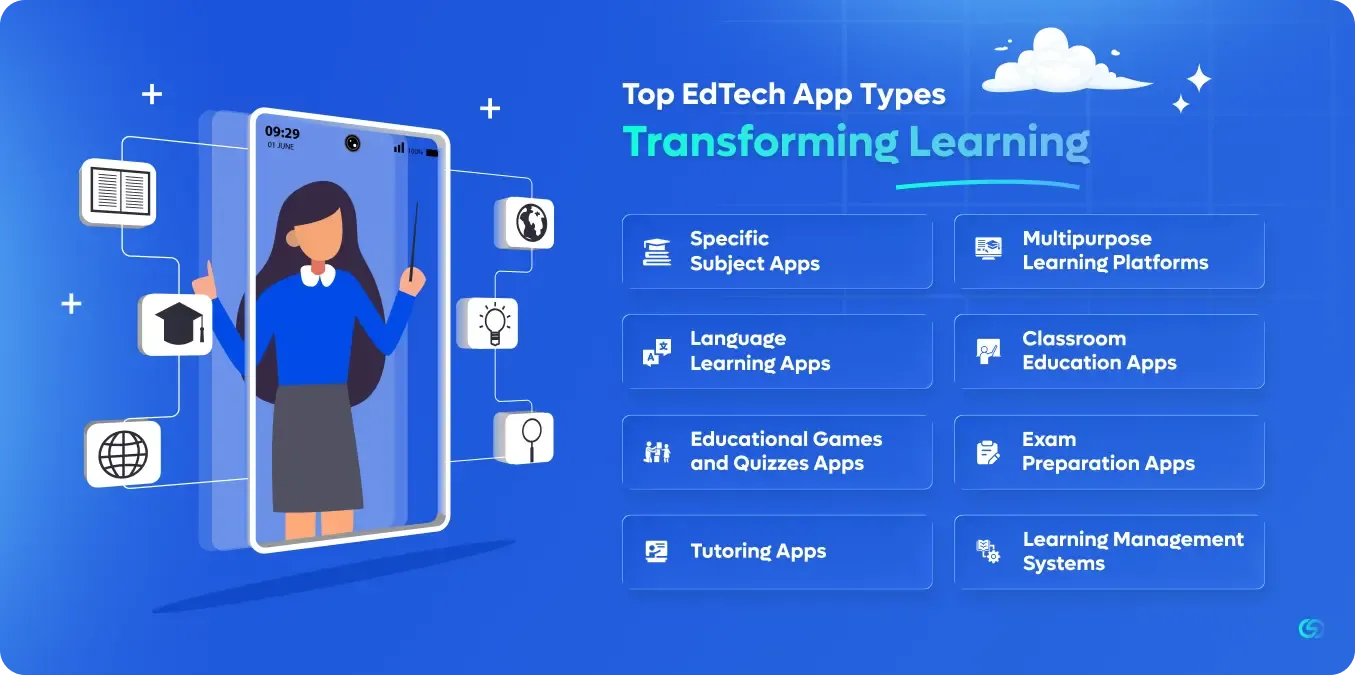
The educational mobile app development provides remarkable opportunities to accommodate different learning stages and needs. These are the types of EdTech apps you may look into:
🔷Specific Subject Apps
These are designed to offer comprehensive knowledge on a specific domain. The app helps individuals with self-assessment tools, engaging learning experiences, and multimedia content.
🔷Multipurpose Learning Platforms
This type of education app development is a boon to the industry, offering several learning courses in one place. People from different backgrounds can pick up a particular topic and enjoy the learning process.
🔷Language Learning Apps
These apps support language learning, instructing everything from sophisticated vocabulary to basic grammar using exercises, assessments, and lessons.
🔷Classroom Education Apps
With this type of education application, you can turn your device into a classroom. This helps teachers and students communicate easily, monitor assignments, and share study materials.
🔷Educational Games and Quizzes Apps
These education app developments make the learning process engaging through quizzes, games, and puzzles. Such apps provide progress tracking, challenge-based learning, and visual storytelling.
🔷Exam Preparation Apps
These EdTech apps help prepare for exams, assist students in revising course materials, and build confidence. These apps provide comprehensive materials and practice tests.
🔷Tutoring Apps
The EdTech app is designed to connect students with experts for personalized teaching. The app is designed for live video, screen sharing, interactive whiteboards, and communication, making tutoring easier to offer customized learning experiences with quick academic support.
🔷Learning Management Systems
LMS helps institutions to assess learning, allowing educators to manage, deliver, and track educational content, students, and course progress.
What is the Importance of Educational App Development Today?
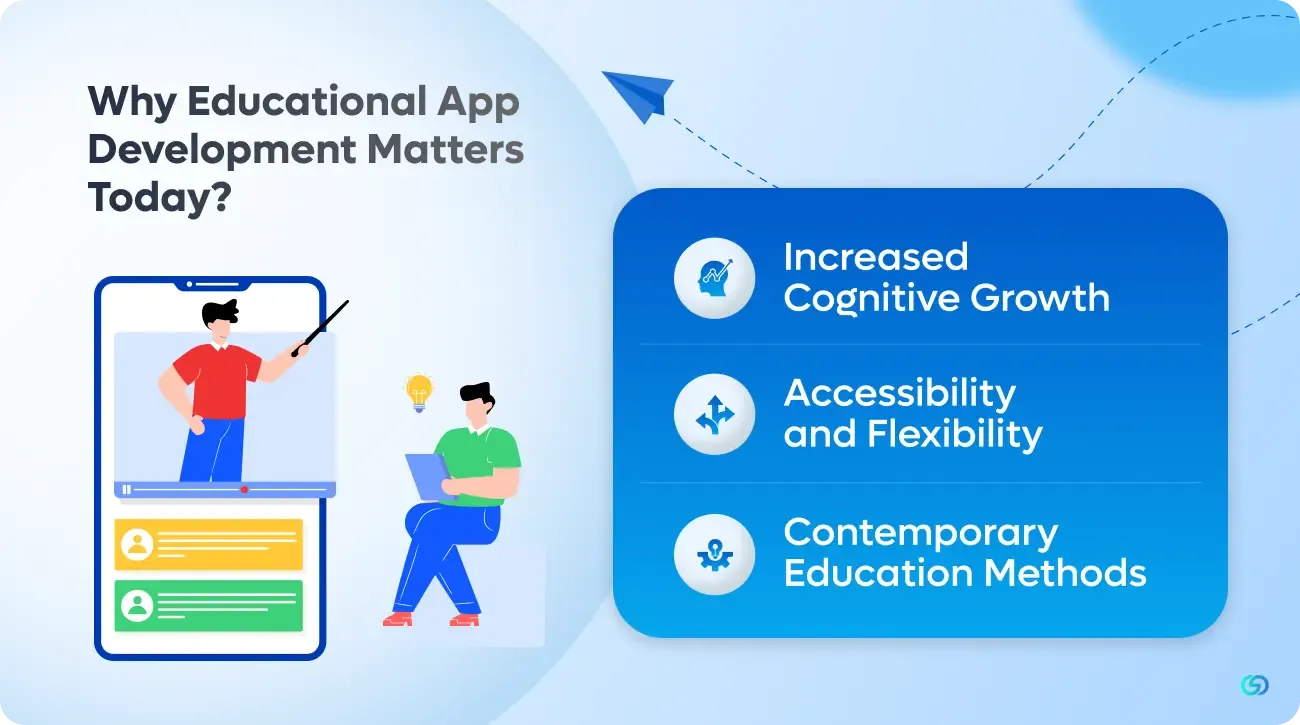
The education app saw a boost in usage over the pandemic, jumping from 388 million to 550 million because learning is now simple and convenient. Let’s understand the importance of educational app development today:
▶️Increased Cognitive Growth
When a student goes through development—from childhood to adulthood, deliberate thinking and problem-solving are two skills that are critical. Quality education apps can improve students’ cognitive growth and diligence.
▶️Accessibility and Flexibility
Education app development is easily accessible, making it a constant companion. Learning shouldn’t be limited to the classroom only, students can take tests and study whenever and wherever possible.
▶️Contemporary Education Methods
EdTech app development enables students to comprehend information from different angles. The app helps in understanding topics through challenging riddles and activities. Students are engaged and want to learn more about their courses.
Must-Have Features in Education App Development
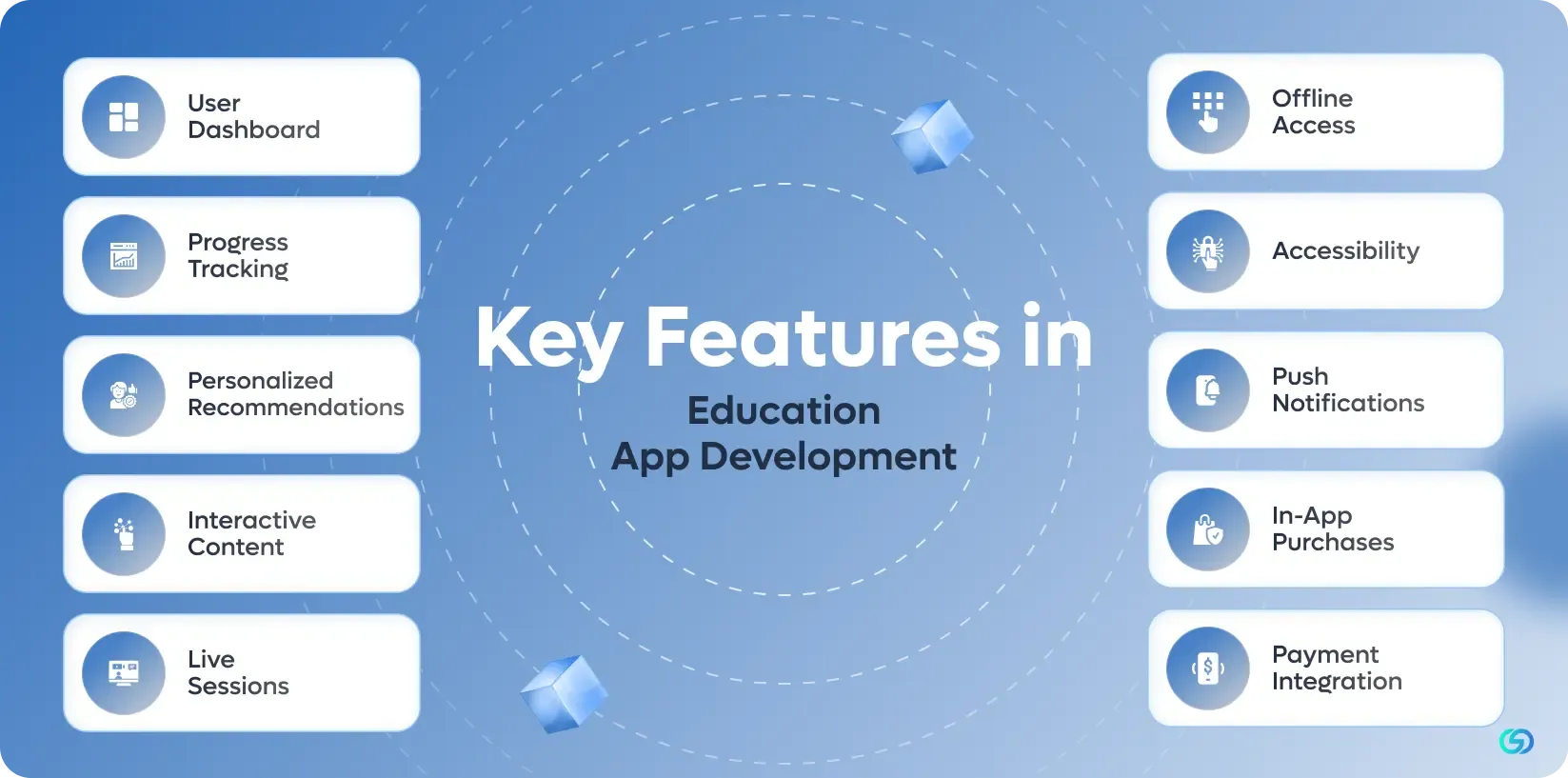
With the changing needs of learners and technology adoption, certain features are absolutely non-negotiable to develop immersive learning experience. Here are some must-have features in education app development:
🔶 User Dashboard
A dashboard is important for educational applications where students can create learning profiles and easily track their progress.
🔶 Progress Tracking
Students can use trackers like weekly or monthly reports to monitor their progress and improve over time, while teachers can make the best use of performance analytics and visual indicators to spot struggling learners.
🔶 Personalized Recommendations
Incorporating input from educators and other users is crucial to enhancing learning experiences. It allows the user to refine their errors and take constructive criticism for improvement.
🔶 Interactive Content
Add-ons like quizzes, drag-and-drop, media support, and note-taking keep users engaged, boosting engagement, retention, and understanding.
🔶 Live Sessions
The education app seamlessly integrates this functionality with Google Meet, Zoom, or so, providing live sessions for students to ensure a smooth learning experience.
🔶 Offline Access
Education does not need to depend on the internet solely. Videos and other important study materials can be downloaded to ensure that the learners have access to the files and save their progress even when they are offline.
🔶 Accessibility
Multiple features like font size, screen reader support, contrast modes, transcripts, and subtitles for audio and video ensure that your EdTech app supports inclusive learning, making it accessible for all learners, including those with cognitive or sensory impairments.
🔶 Push Notifications
Push notification is a non-negotiable to add during your education app development. This feature informs both students and tutors regarding anything related to the app and course, like new tutorials, study material, and so on.
🔶 In-App Purchases
Users get access to premium materials and extra resources with in-app purchase, a great approach to monetization. Additionally, it gives students a chance to improve their educational experience with personalized resources.
🔶 Payment Integration
The education app you develop will have multiple revenue models, including one-time payments, in-app sales, and subscription plans, for which the need for easy and secure payment is essential. Besides, with the availability of payment channels, users feel at ease.
Education Apps vs. Traditional Learning
The days of online learning have become highly popular, but despite its acceptance among a large group of individuals, many still consciously stay away from this method, which is mostly due to misconceptions. However, there are always two sides to the coin, so let’s understand the difference for you to take the right step.
| Factor | Educational Apps | Traditional Learning Methods |
|---|---|---|
| Accessibility | Accessible anytime, anywhere with a tablet or smartphone. | Limited to classroom hours and physical locations. |
| Learning Pace | Self-paced, students can learn at their own pace. | Fixed pace based on the tutor's schedule, mostly less flexible. |
| Interactivity | Includes videos, games, quizzes, and puzzles for engagement. | Mostly textbooks, written assignments, and lectures. |
| Personalization | Algorithms adapt to content based on student performance and preferences. | One-size-fits-all approach and limited personalization. |
| Cost | Affordable; apps offer freemium models. | It can be expensive due to infrastructure, books, and tuition. |
| Feedback | Quick feedback through automated tests and analytics. | Delayed feedback, dependent on the teacher's evaluation time. |
| Social Interaction | Lower, mostly individual learning experiences. | High, peer interaction, and discussions. |
| Learning Resources | Unlimited digital resources updated regularly. | Physical resources that may become outdated. |
How Does Education App Development Enhance Modern Learning?
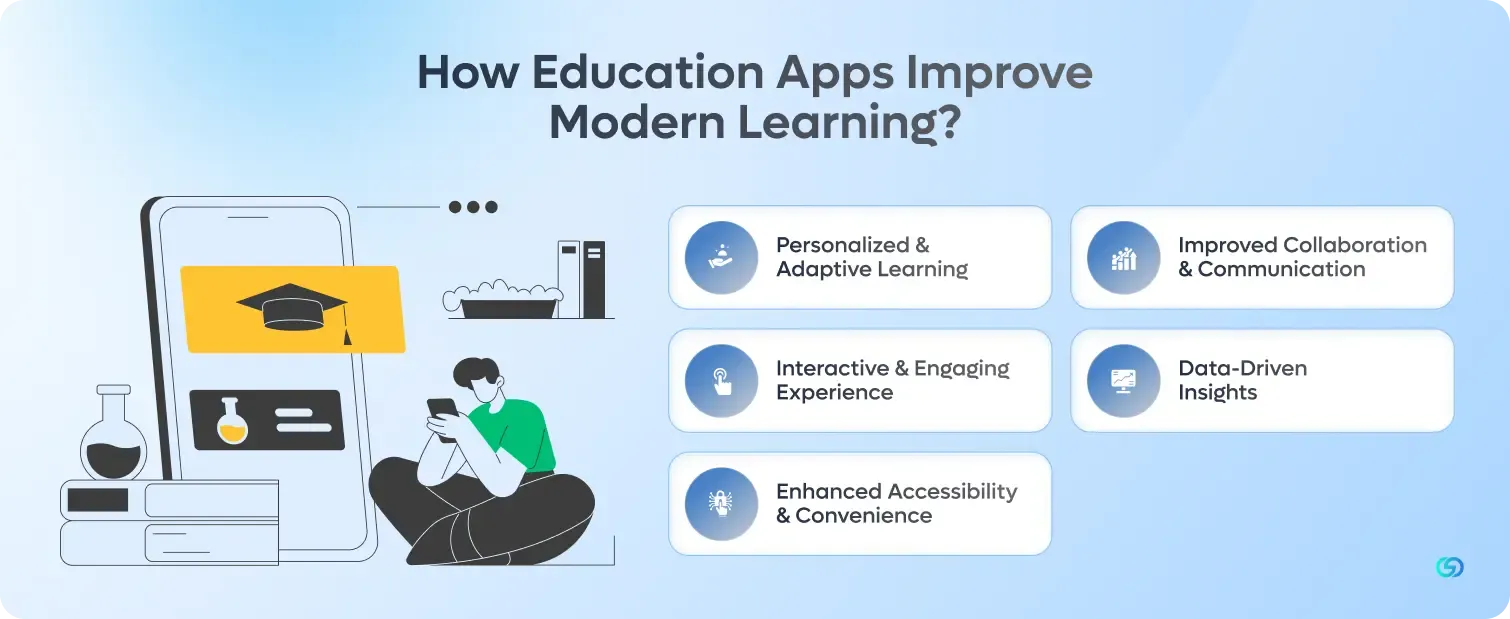
Now that you understand the difference between traditional and online learning methods, let’s dive deeper to understand how education apps are transforming the sector.
⏯️Personalized and Adaptive Learning
An educational app monitors and analyzes a student’s performance and adapts to their individual pace and needs. Adaptive learning focuses on student’s strengths and weaknesses. The app will provide real-time feedback on assessments and quizzes to track progress and determine the potential enhancement areas.
⏯️Interactive and Engaging Experience
Multiple features like puzzles or quizzes make learning fun and push students towards innovation. The EdTech app offers hands-on, interactive exercises for learners to grasp quickly, which traditional methods often fail to do. Additionally, the use of audio/visual creates a highly engaging learning environment, keeping the students hooked.
⏯️Enhanced Accessibility and Convenience
Education app development means 24/7 access to learning anywhere and anytime, going beyond geographical barriers. A flexible timetable allows the user to study at their own comfort and pace. Furthermore, the EdTech app offers vast educational resources and materials that are accessible.
⏯️Improved Collaboration and Communication
Apps can streamline communication; teachers can share reminders and offer student support more proficiently. Features like shared resources and forums allow students to collaborate easily and learn from one another.
⏯️Data-Driven Insights
Educational apps include learning management systems, which allow students and teachers to analyze and monitor progress in real-time. Data collected can adjust teaching methods and improve outcomes.
Simple Roadmap to Education App Development
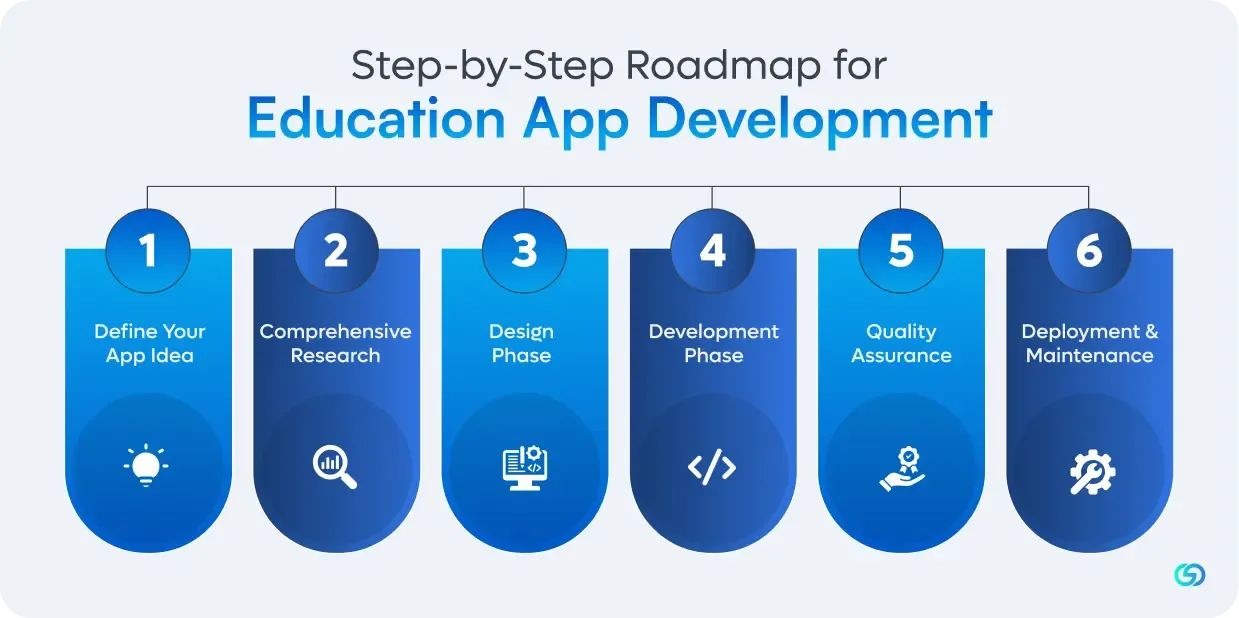
These six steps of building an EdTech app can give you a futuristic platform that will help your user base to expand:
1️⃣ Define Your App Idea
Defining your app idea and goal lays the groundwork. The objective of the discovery phase is to build a mutual understanding through conversation and idea analysis.
2️⃣ Comprehensive Research
Once done, your dedicated developer establishes your target audience, niche, and features to suit the unique needs and make your app relevant.
3️⃣ Design Phase
Engagement is everything in EdTech. Skilled designers create user-friendly app designs, creating exceptional visual components, UI, and user experience. This includes prototyping, wireframes, and setting up a brand guide.
4️⃣ Development Phase
After the completion of the design, your EdTech app development partner can start with coding and programming. Experienced developers can seamlessly integrate features like assessment, social learning, and gamification tools.
5️⃣ Quality Assurance
A thorough testing of your educational app is crucial. Once the app is developed, it needs to be ensured that the app is bug-free, and functions as planned. A dedicated QA performs beta testing and user testing for the app to work smoothly.
6️⃣ Deployment & Maintenance
After your app is tested and verified, it’s time to launch it into the online marketplace. The app development company you partner with will provide you with active maintenance and support to improve and boost efficiency.
Emerging Technologies Shaping Education App Development
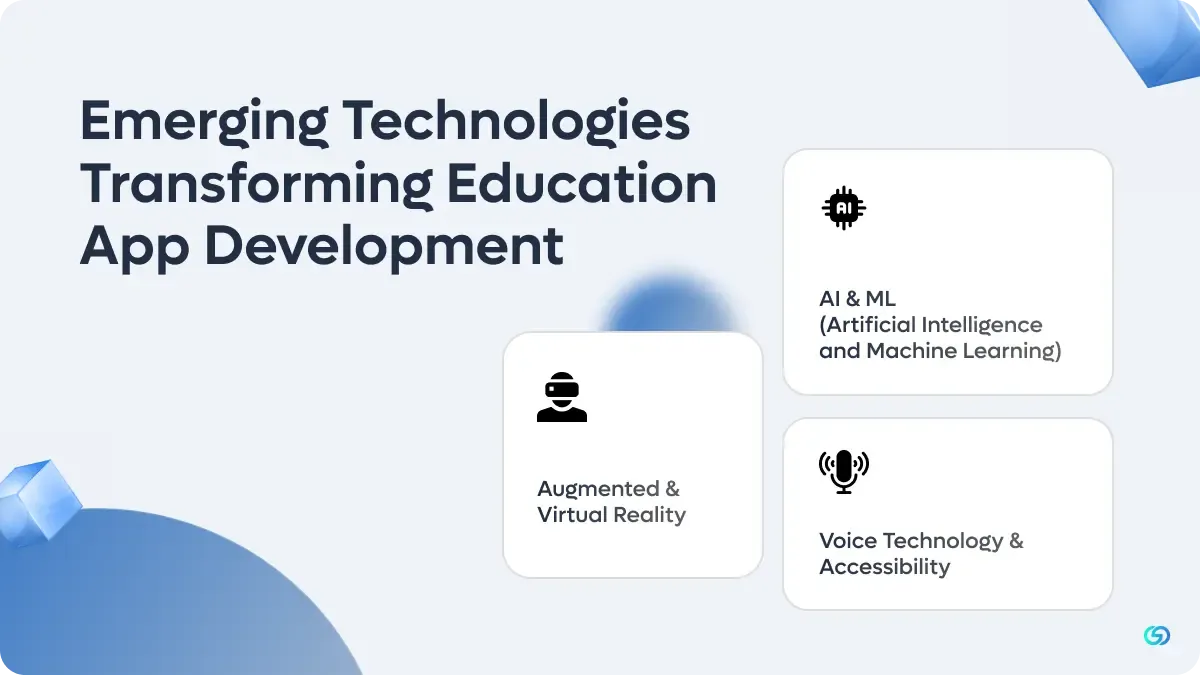
Mobile apps have become an indispensable tool to improve user experience, drive sales, and establish a strong brand presence. At the center of this dynamic landscape of tech advancements lies a combination of emerging technologies. Below are the top emerging technologies in the education industry, reshaping the education experience.
💠AI and ML
AI is changing the app with adaptive learning experiences that adjust to each student’s pace. ML algorithms analyze performance data, find knowledge gaps, and recommend tailored content. Natural Language Processing powers tutoring systems to answer questions in a conversational manner.
💠Augmented and Virtual Reality
AR and VR technologies create an immersive learning environment to teach abstract concepts. Students explore ancient civilizations through VR field trips, visualize mathematical structures in 3D, and dissect virtual specimens in biology class. These techs make learning experimental and engaging.
💠Voice Technology and Accessibility
Voice recognition and text-to-speech technologies make education apps more accessible to all learners. Voice interfaces allow hands-free learning and offer pronunciation feedback for language students.
These technologies make education apps more intelligent and inclusive than ever before.
How Can ConvexSol Help You with Exceptional Education App Development?
Now you know how custom app development is entirely changing the education sector and increasing its effectiveness. With the widespread use of mobile devices, it is astonishing to notice how students of all ages interact with educational content.
As a leading custom mobile app development company, ConvexSol specializes in creating stand out solutions that meet your unique needs. Our team is committed to improving the learning process by creating integrated learning platforms that boost collaboration and communication.
Backed by a decade of experience, we provide end-to-end services, right from ideation to launch. We help education businesses with faster time-to-market and easily navigable interfaces.
Frequently Asked Questions
How do I keep user data safe when building an EdTech app?
Protecting teacher and student data is non-negotiable. At ConvexSol, we follow industry standard security practices like secure login flows, multi-factor authentication, and encrypted databases. We also ensure that your app is compliant with global standards, depending on your audience. With us, your data is safe, locked, and protected at every step of the development process.
What is the actual cost of developing an education app?
The cost of education app development varies. A basic learning app may start on the lower end, while a full-featured one will naturally cost more. On average, education apps fall anywhere between $15,000 to $80,000+. Once you share your idea, we can give you a precise estimate.
Which platforms can you build my education app for?
We develop apps for Android, iOS, and web platforms. We can build cross-platform apps too, like React Native and Flutter, if you want to reach a wider audience. Our team makes sure your app runs smoothly everywhere.
Can I add new features or make updates after my app goes live?
Yes. Your app doesn’t stop evolving even after launch. Therefore, you can easily add new features and make updates. At ConvexSol, we design your architecture in such a way that it’s easy to roll out updates and improve UI/UX. We support you at every stage of app growth.
Will my education app be scalable in the future?
Surely. Scalability is built into our work process. We use flexible frameworks and cloud-based infrastructure that lets your app handle more users, content, and features over time.