- Ecommerce App Development
- 2026-02-10
A Comprehensive Guide to Understanding Ecommerce App Development
Audio Track
Table of Contents
Key Takeaways:
- Ecommerce application development can be defined as the art of designing and implementing a web or mobile appl that enables businesses conducting online sales of products or services.
- Ecommerce application development can be divided into three types namely- B2C (Business-to-Consumer), B2B (Business-to-Business), C2C (Consumer-to-Consumer), Marketplace Apps and Niche /Specialized eCommerce Apps.
- The various advantages of ecommerce app development include- broader market access, personalized customer experience, improved sales conversion, boosted customer loyalty and brand awareness, data-driven insights and enhanced operational efficiency.
- Developing an ecommerce application includes thorough market research, defining app type, UI/UX designing, choosing tech stack, building core feature, integrating advanced features, testing and quality assurance, deployment and post-launch support.
- Ecommerce app developers are perfect for rapid deployment, but custom development offers sustainability and a competitive edge.
Overview – Starting with Ecommerce Application Development
The sudden transition from retail shops to virtual malls has turned eCommerce apps into the backbone of contemporary enterprise. Whether fashion, foodstuffs, electronics, or services, consumers prefer the convenience of buying from their phones. Ecommerce apps have not only revolutionized the way companies sell but also the way consumers engage with brands.
For enterprises, SMEs, and startups alike, having an eCommerce app is now crucial for remaining competitive, reaching wider markets, and building customer experience. This guide will take you through the basics of eCommerce app development, ranging from its definition and types to the advantages, challenges, and main trends governing the sector.
What is Meant by Ecommerce Development?
Ecommerce application development is the art of designing and implementing a web or mobile application that helps businesses conduct online sales of products or services. Such applications facilitate smooth shopping by incorporating key functionalities like product catalogues, secure payment gateways, user authentication, order management, and shipping tracking.
In contrast to conventional websites, Ecommerce apps are designed for mobile-first experiences, providing speed, personalization, and convenience. The development process typically entails selecting the optimal technology stack, designing intuitive UI/UX, and incorporating features for customers (browsing, wishlist, checkout) and admins (inventory management, analytics, and customer management). A well-built Ecommerce application not only generates sales but also deepens customer loyalty and brand value.
Ecommerce Application Market Growth Statistics
The market for ecommerce apps has seen exponential growth over the last decade, driven by growing smartphone penetration, better internet connectivity, and changing consumer habits. As per recent reports:
- Global ecommerce sales are expected to hit $8.1 trillion in 2026 from $5.8 trillion in 2023.
- Mobile commerce (m-commerce) represents almost 70% of all ecommerce sales, with mobile apps being the most favored channel of shopping.
- Average revenue per user (ARPU) for ecommerce apps keeps on increasing, reflecting increased frequency and engagement in purchases.
- Regions such as the Middle East, Asia-Pacific, and Africa are seeing accelerated adoption because of digital payment options and growing internet penetration.
Types of Ecommerce Applications for Development
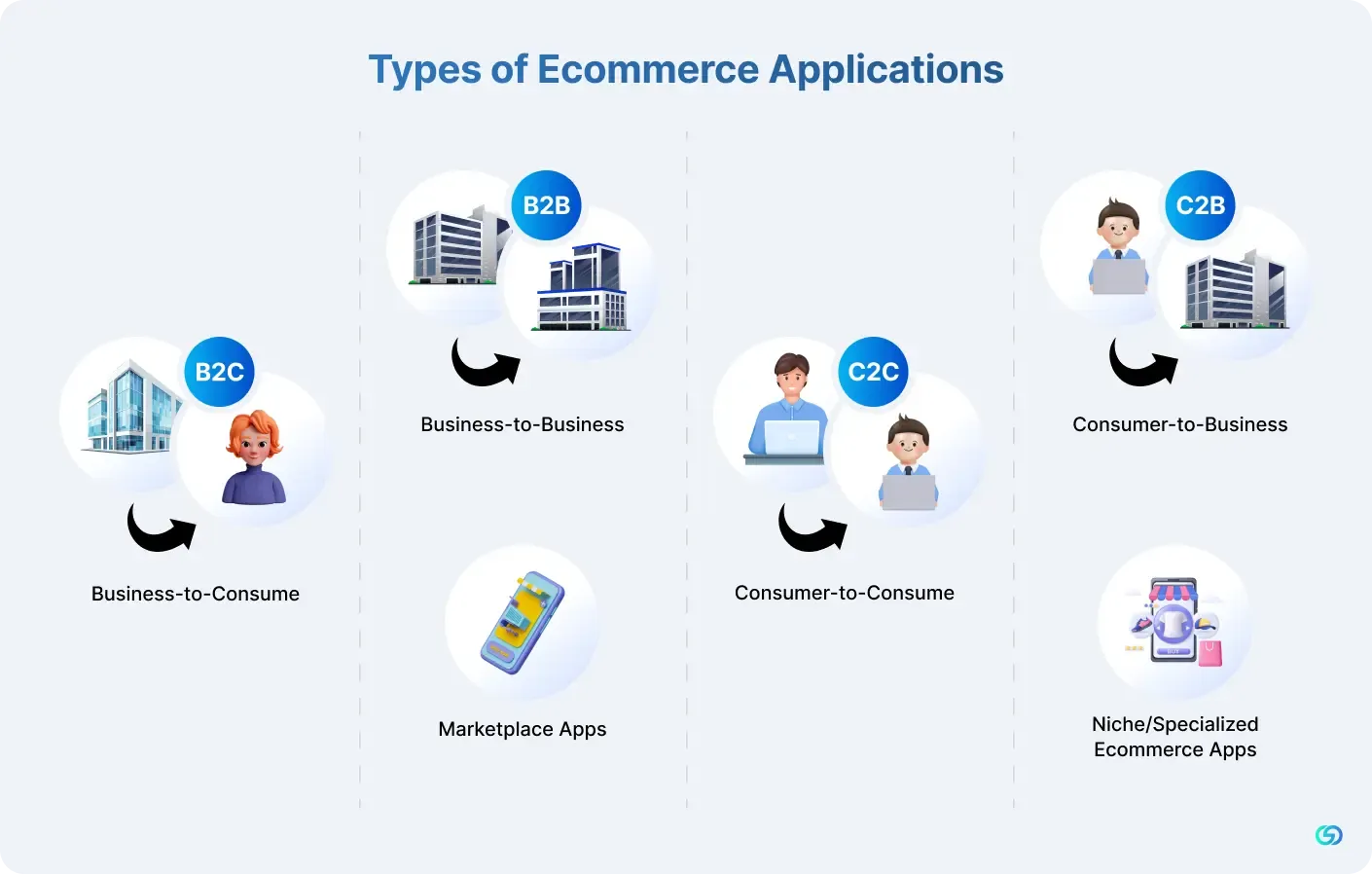
In considering an ecommerce app development project, companies need to determine the type of app that will suit their objectives, users, and operations. Each type has a specific purpose and demands a distinct approach to design and development.
1. B2C (Business-to-Consumer)
This is the most popular model in ecommerce mobile app development. In a B2C app, businesses sell directly to consumers, providing products from garments and foodstuffs to electronics. Such apps focus on an effortless shopping experience with capabilities such as product catalogs, wishlists, one-click checkout, and personal offers. For instance, Amazon and Noon succeed as B2C behemoths by putting convenience and personalization at the forefront.
2. B2B (Business-to-Business)
B2B apps are for businesses that sell goods or services to other businesses. They normally have features such as handling bulk orders, quotations, inventory management, and dynamic pricing schemes. Alibaba, which matches manufacturers with international retailers, is one such example. These apps tend to be more sophisticated, since they need to be integrated with enterprise systems like ERP and CRM.
3. C2C (Consumer-to-Consumer)
In this model, consumers sell products to other consumers. Sites such as OLX and eBay provide consumers with a space to place their products, meet buyers, and negotiate transactions within the application. Secure payment integration, ratings, and chat support are features that enhance trust in these platforms.
4. C2B (Consumer-to-Business)
This less popular but increasing model enables individuals to sell products or services to companies. Such platforms as Fiverr or Upwork are a perfect example where creators or freelancers present their abilities to firms. In this case, apps should deal with proposal management, bidding mechanisms, and safe payments.
5. Marketplace Apps
Multi-vendor apps integrate the features of B2C and B2B models where more than one seller can list their offerings in a single location. Admin takes care of the platform, vendors manage inventory, and customers get variety and competitiveness. Such platforms need to be developed based on strong features such as vendor dashboards, commission controls, and analytics.
6. Niche/Specialized Ecommerce Apps
These apps concentrate on one industry or category, for example, fashion, fitness, healthcare, or groceries. Niche-centred ecommerce app development strategy enables companies to reach a niche audience with specialized functionalities such as AR try-ons for clothing or subscription-based ordering for groceries.
What are the Benefits if Ecommerce Mobile App Development?
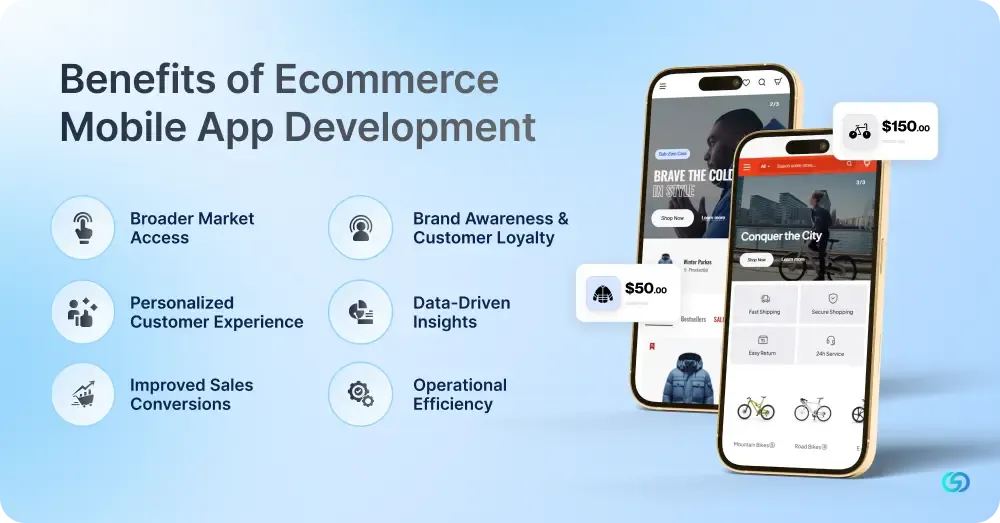
Ecommerce mobile app development is not merely a trend. It is now a growth driver for companies in all industries. These are the major advantages:
▶ Broader Market Access
With an ecommerce app, businesses can reach customers worldwide, breaking geographical barriers. A mobile-first approach ensures that customers can shop anytime, anywhere, contributing to higher sales.
▶ Personalized Customer Experience
Apps allow businesses to use AI and machine learning to track customer behaviour and recommend products tailored to individual preferences. Push notifications, loyalty rewards, and personalized discounts improve customer retention and engagement.
▶ Improved Sales Conversions
Mobile commerce currently accounts for almost 70% of all ecommerce revenue. With one-click checkout, payment security, and quick loading times, companies enjoy improved conversion rates over desktop-exclusive platforms.
▶ Brand Awareness & Customer Loyalty
A mobile application builds stronger brand awareness by having your business on customers' phones. Loyalty programs, referral rewards, and gamification features build bridges and create long-term loyalty.
▶ Data-Driven Insights
Ecommerce applications obtain insightful customer information such as preferences, purchasing behavior, and reviews. Companies can use analysis to fine-tune products, organize promotions, and enhance marketing returns.
▶ Operational Efficiency
As opposed to brick-and-mortar stores with high staff and rent expenses, ecommerce applications streamline operational costs but provide the potential to grow. Admin control panels also speed up and simplify inventory, order, and customer management.
What is the Process of Ecommerce App Development from Scratch?
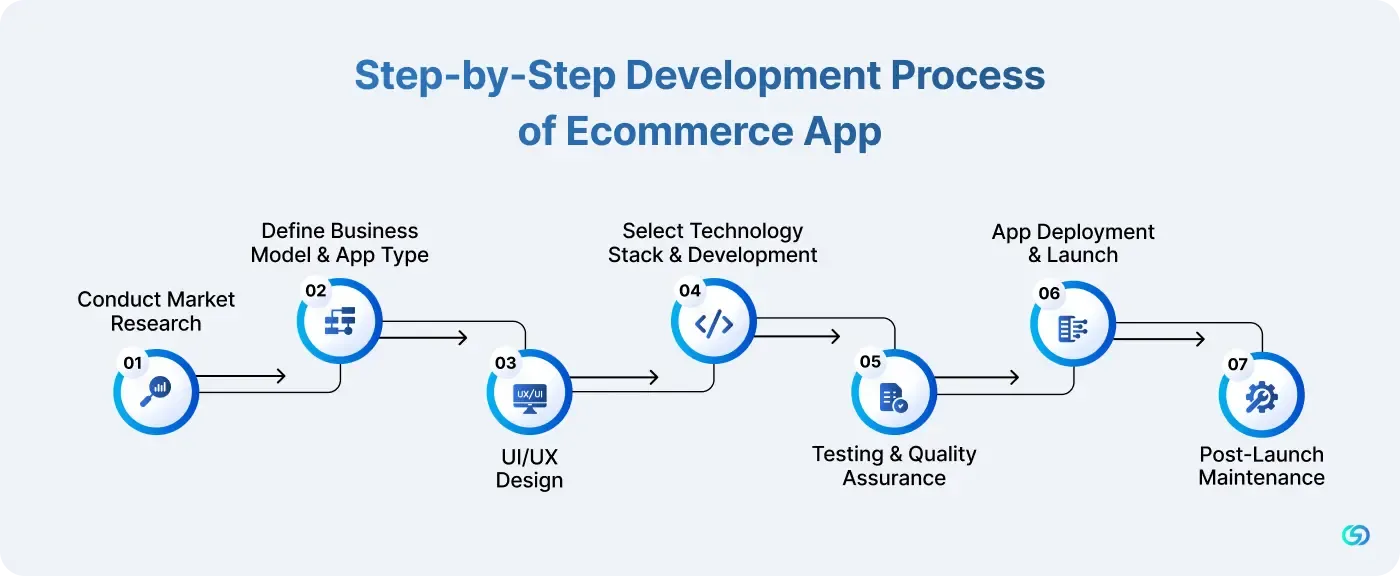
When it comes to ‘How to develop an ecommerce app?’, creating an ecommerce app from scratch involves meticulous planning and execution. Here are the step-by-step procedures:
🔹 Conduct Market Research
Begin by reviewing your competition, industry trends, and target market. Researching allows you to define market gaps, customer pain points, and possible opportunities that your app can solve.
🔹 Define Business Model & App Type
Determine if your business requires a B2C, B2B, C2C, or marketplace app. The decision will decide your app's architecture, feature list, and revenue model.
🔹 UI/UX Design
Prioritize creating a clean, user-friendly layout that facilitates easy navigation. An interface designed well enhances customer satisfaction and lowers cart abandonment rates. Intuitive UI/UX is among the most successful ecommerce app development factors.
🔹 Select Technology Stack & Development
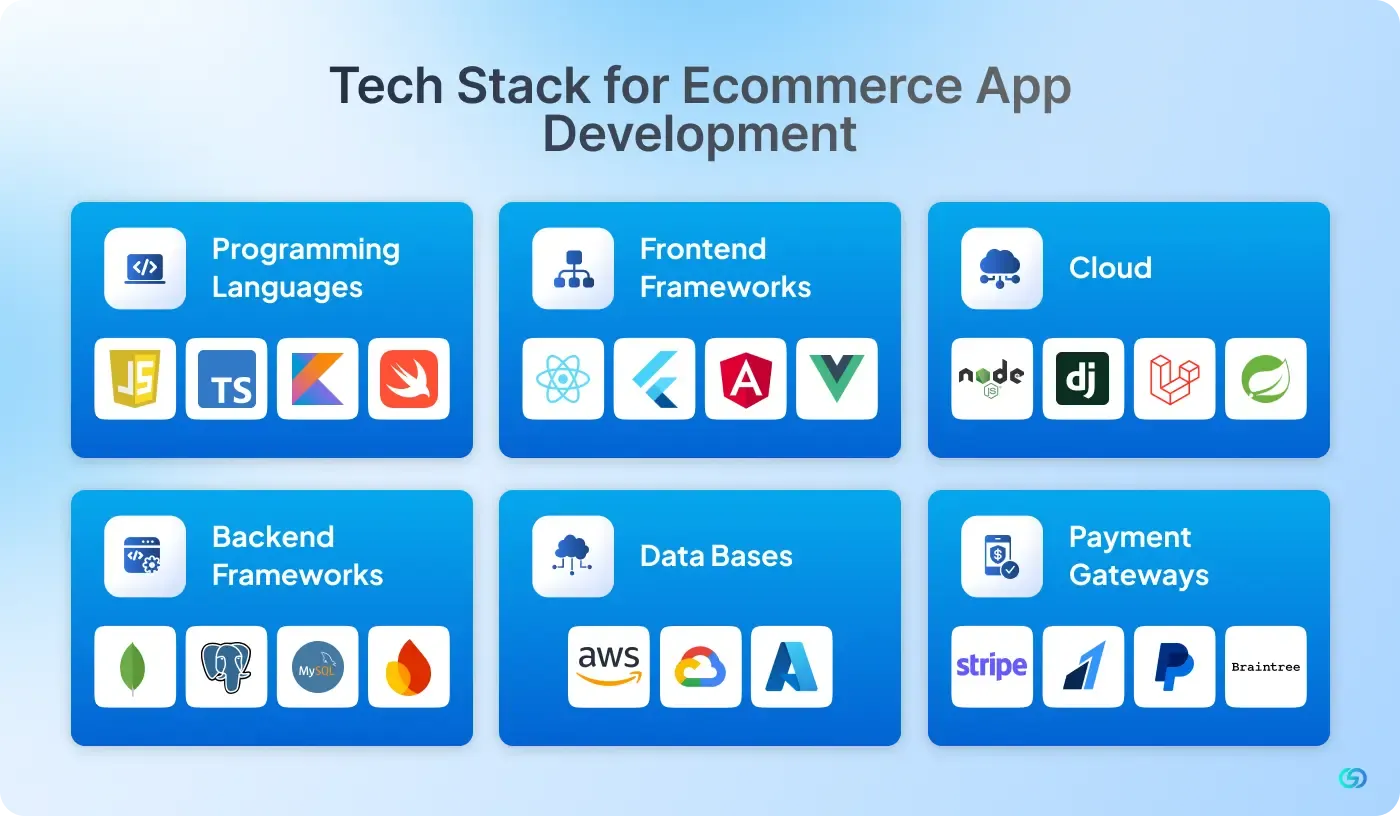
Your tech stack is critical to performance and scalability. For frontend, React Native or Flutter are cross-platform-friendly frameworks. Node.js, Python, or PHP are safe bets for backend. It is important to develop the frontend with which the users interact and that handles data and integrates other systems such as inventory and payment processing.
🔹 Testing & Quality Assurance
Stringent testing on various devices and operating systems is important. Security testing (for safeguarding payments and information), usability testing, and load testing guarantee stability before launching.
🔹 App Deployment & Launch
Release the app on Android and iOS operating systems. Concentrate on App Store Optimization (ASO) to enhance visibility and downloads.
🔹 Post-Launch Maintenance
There should be ongoing monitoring, bug correction, and feature enhancement to maintain the app as competitive in a rapidly evolving market.
How Much Does It Cost to Build an eCommerce App?
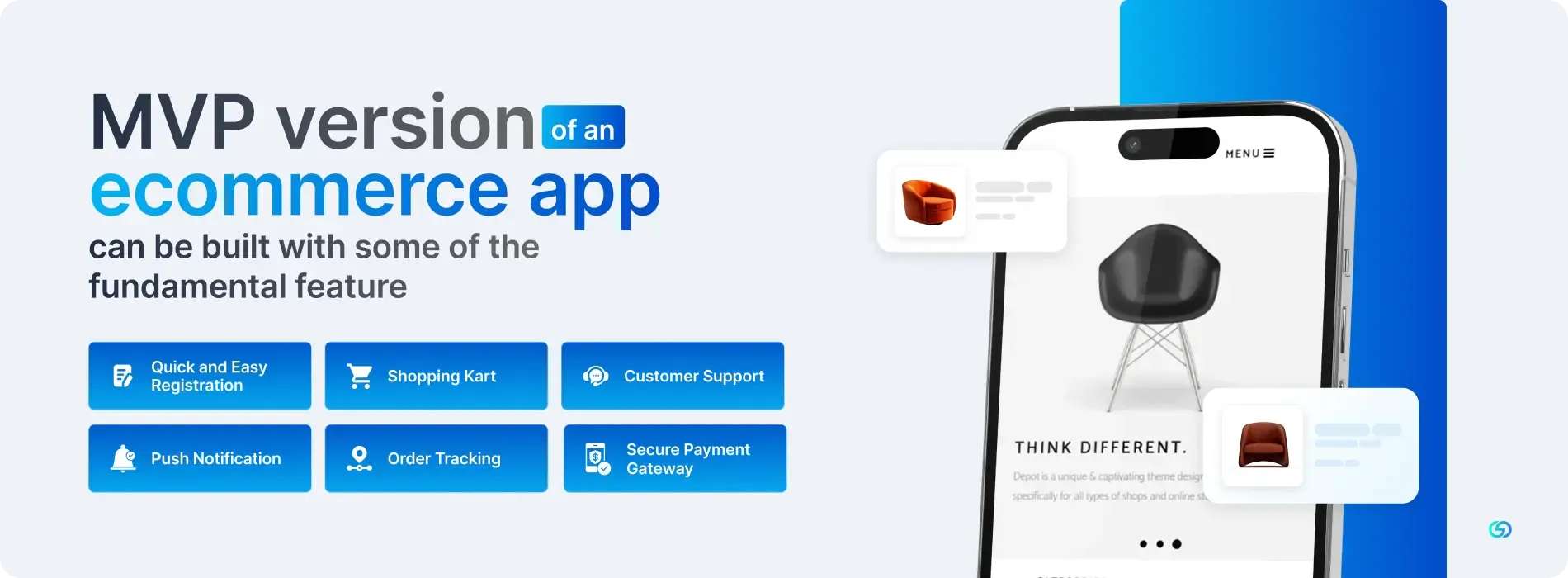
The expense of making an ecommerce app with basic features such as secure payment gateway and shopping kart can range in between 15000$ to 60000$. Ecommerce mobile app development with advanced functionalities such as AI, IoT, AR can cost you about $ 80,000 to $1,20,000 and more.
The exact price of developing an ecommerce app depends on various factors, including complexity of the project, features and functionalities, tech stack, UI/UX design, location of development team and so on.
What are Some of the Must-Have Features for an ECommerce App?
The user expectations in today's competitive market are greater than ever. An ecommerce mobile app development project needs to incorporate features that not only enhance usability but also enhance business operations and provide the best security. These features have been categorized as User-Side Features, Admin-Side Features, and Advanced Features.
1. User-Side Features
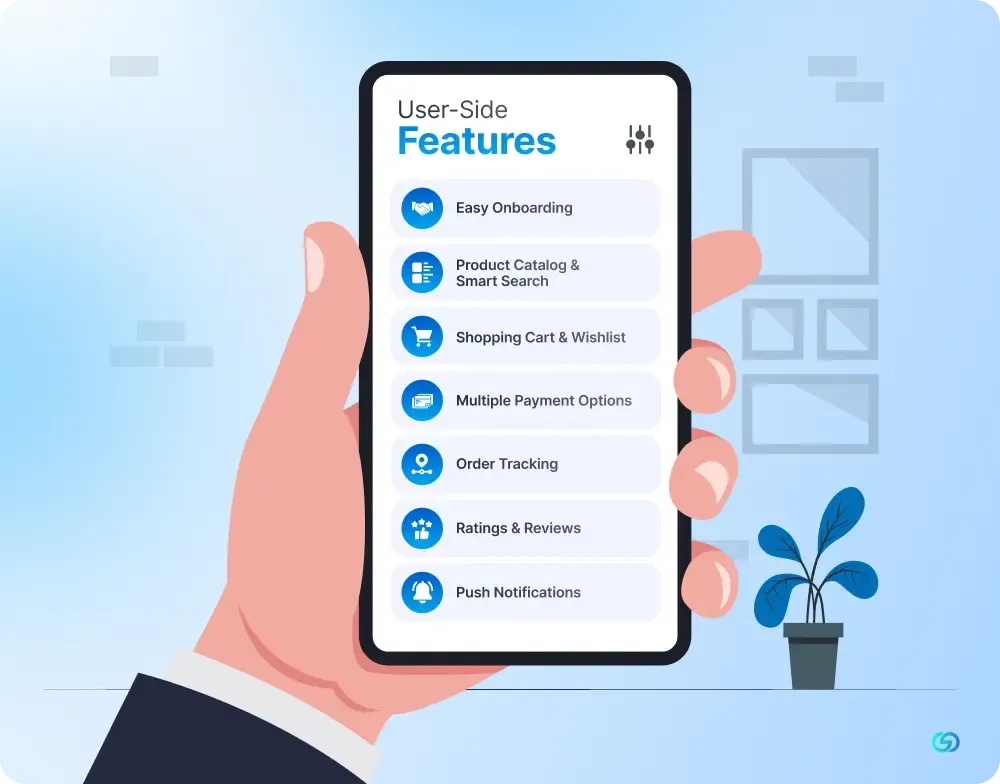
These are features that are directly felt by customers, hence most important for engagement and retention.
-
Easy Onboarding: Streamlined sign-up/login using email id, mobile number, or social media does not let customers fall off before they get to look around the app.
-
Product Catalog & Smart Search: A well-organized product catalog with filters, categories, AI-driven search, and voice-enabled browsing allows users to easily get their desired products.
-
Shopping Cart & Wishlist: Customers must be able to add, delete, or save for later with an effortless checkout process.
-
Multiple Payment Options: From credit/debit cards, UPI, PayPal, digital wallets, BNPL (Buy Now Pay Later), to COD—providing varied and secure modes of payments increases trust and raises conversions.
-
Order Tracking: Live order updates (processing, shipping, delivery) improve transparency and user trust.
-
Ratings & Reviews: Genuine customer reviews enhance credibility and enable businesses to enhance offerings.
-
Push Notifications: Customized notifications regarding offers, order status, or cart reminders enhance engagement and retention.
2. Admin-Side Features
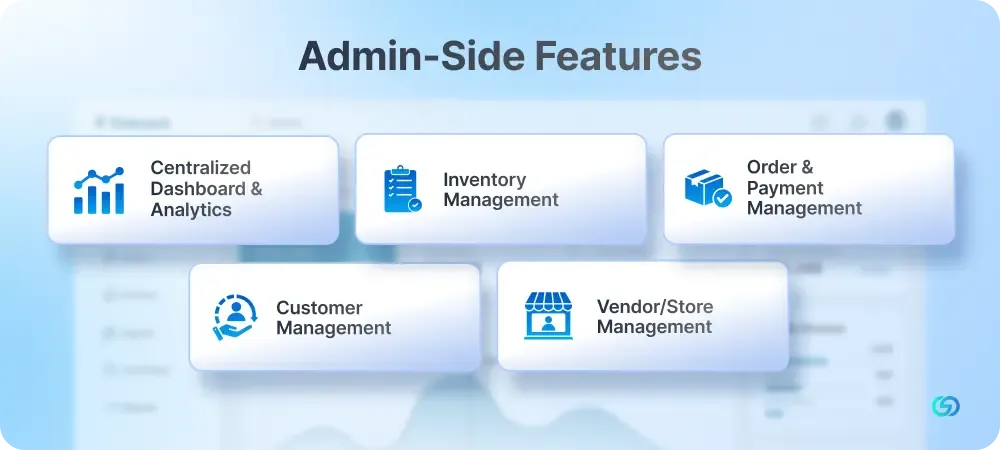
Admin features enable companies to operate ecommerce app development with ease while growing the business.
-
Centralized Dashboard & Analytics: Provides insights into sales, user actions, revenue trends, and marketing performance.
-
Inventory Management: Manages product stock levels, automates restocking notifications, and avoids over-selling.
-
Order & Payment Management: Smoother management of orders, refunds, cancellations, and secure transaction tracking.
-
Customer Management: Offers functionality to handle user profiles, loyalty schemes, complaints, and support requests.
-
Vendor/Store Management: For marketplace-type apps, multiple sellers, commissions, and product listings can be handled by admins.
3. Advanced Features
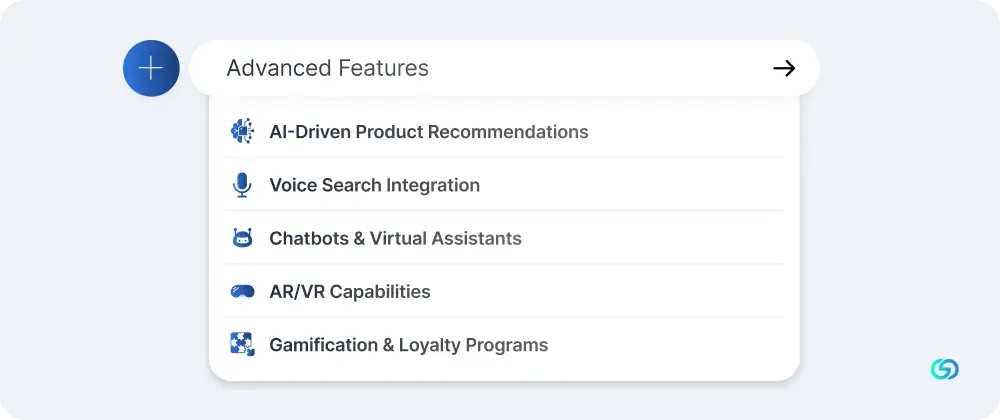
To stand out in a saturated market, advanced features are vital in ecommerce mobile app development.
-
AI-Driven Product Recommendations: Machine learning algorithm-driven personalized shopping experiences drive up conversions.
-
Voice Search Integration: Enables hands-free browsing, especially helpful for mobile-first consumers.
-
AR/VR Capabilities: "Virtual Try-On" for fashion, beauty, or furniture visualization fills the offline-online shopping gap.
-
Chatbots & Virtual Assistants: Offer 24/7 immediate customer service, answering FAQs and helping with purchases.
-
Gamification & Loyalty Programs: Reward schemes, referral rewards, and gamified experiences foster repeat business.
[Other Useful Resource: Top 10 E-Commerce App Features You Need in 2026 to Win Customers]
Choosing the Right Technology Stack for Powerful eCommerce App Development
When it is about picking the tech stack, every ecommerce mobile application developer prefers different technologies according to their expertise and cost. Given below are the most common technologies for ecommerce app development.
What are the Key Challenges of Ecommerce App Development?
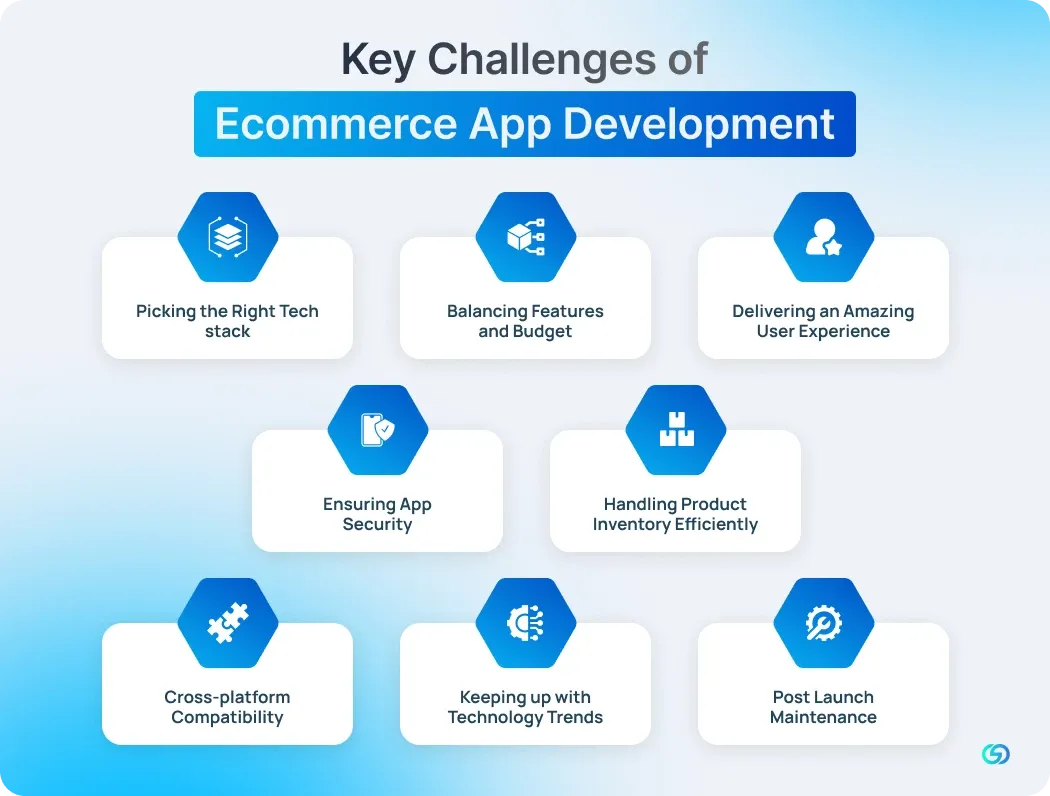
Developing an ecommerce app is not a very easy job. Given below are some of the concerns that one my come across while dealing with ecommerce mobile app development.
1️⃣ Picking the Right Tech stack
Several businesses struggle with picking the right programming languages, tools and framework of the app.
2️⃣ Balancing Features and Budget
Integrating too many features everything at once can accelerate cost and cause a delay in the launch while a few can leave users unimpressed.
3️⃣ Delivering an Amazing User Experience
Building a fast, easy to use and visually appealing app becomes a challenge if you hire unexperienced developers.
4️⃣ Ensuring App Security
Managing personal and financial information during the process of ecommerce app development process needs robust security measures, or else you can risk losing the trust of the customer.
5️⃣ Handling Product Inventory Efficiently
Without a trustworthy backend system, tracking orders, stocks and updates becomes problematic as you scale.
6️⃣ Cross-platform Compatibility
Developing a seamless app experience while ecommerce mobile app development process can be time-taking and complex.
7️⃣ Keeping up with Technology Trends
Technology is evolving faster, and it is not easy to figure out which trends are just a hype and which are worth adopting
8️⃣ Post Launch Maintenance
A lot of businesses underestimate the cost and effort required for keeping the app updated, relevant and bug-free after the launch.
Ecommerce App Builder 🆚 Custom Ecommerce App Development- The Difference
When companies decide to develop an ecommerce app, they are usually confronted with a critical decision: either use an ecommerce app builder or opt for custom ecommerce app development.
🔸 Ecommerce App Builders
These are readymade platforms where businesses can develop apps in a short time with limited coding expertise. They are cheaper, quicker to deploy, and perfect for startups or small businesses trying out the market. Their drawbacks, though, are limited customization, scalability concerns, and reliance on third-party vendors for security and updates.
🔸 Custom Ecommerce App Development:
A custom mobile app development method for ecommerce entails developing an app customized to your business requirements. While the cost of ecommerce app development is greater than that of app builders, custom applications provide superior integrations, robust security, flexibility, and scaling with business expansion. For companies with long-term vision and special needs, taking up custom ecommerce mobile app development is the best option.
What to Consider When Choosing an Ecommerce Platform?
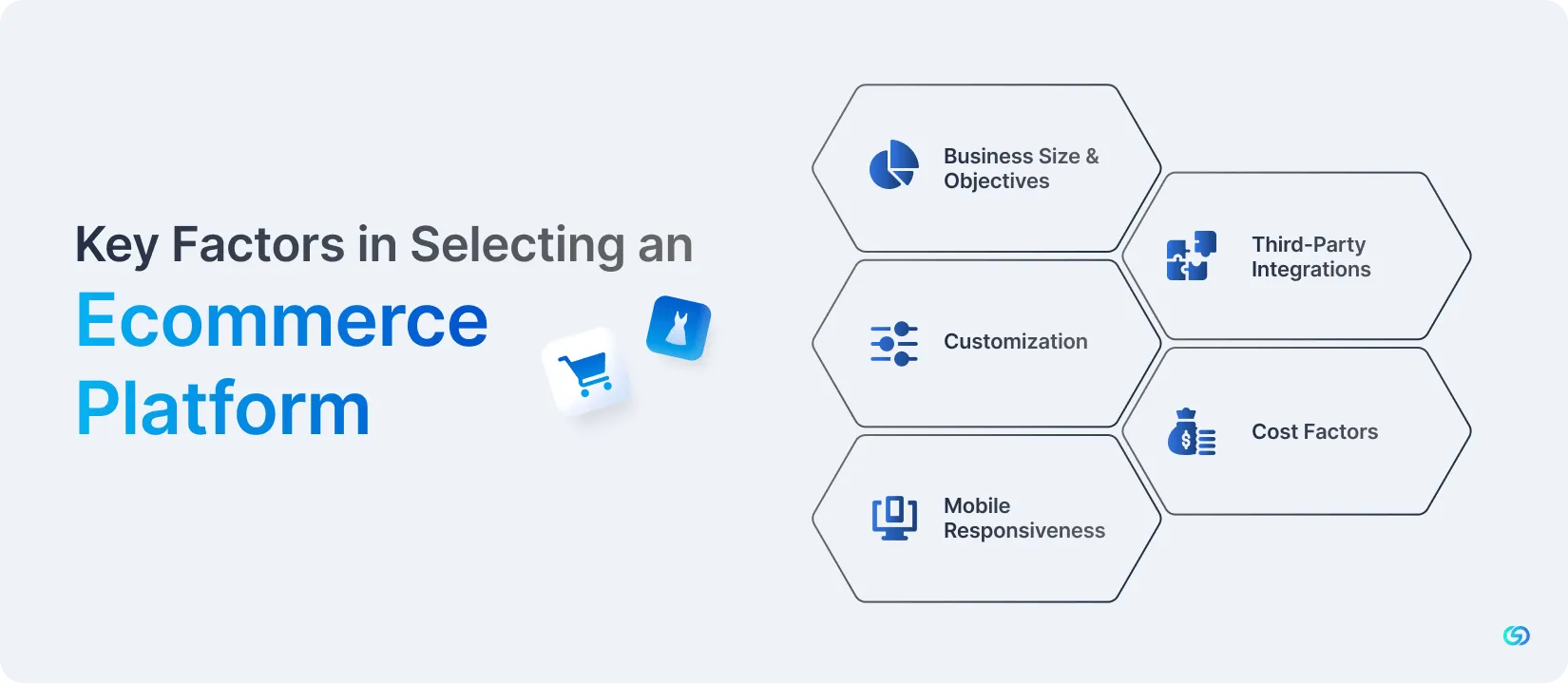
Platform selection is among the most important ecommerce app development steps. The platform decides scalability, performance, and integration features of your app. Some things to think about:
-
Business Size & Objectives: Startups might find Shopify or WooCommerce preferable for quicker launch, whereas businesses tend to need Magento, BigCommerce, or headless platforms for higher-end features.
-
Customization: Platforms ought to facilitate customized ecommerce app development, allowing special features such as personalized shopping or AI-based recommendations.
-
Mobile Responsiveness: With ecommerce mobile app development leading the market, your platform needs to be responsive and provide seamless app integration.
-
Third-Party Integrations: A suitable platform must support effortless integration with payment gateways, CRMs, ERPs, and marketing tools.
-
Cost Factors: While open-source platforms lower initial expenditure, they can hike maintenance costs. SaaS platforms can charge recurring fees, affecting ecommerce app development cost in the long term.
What are the Various Custom Ecommerce App Development Trends?
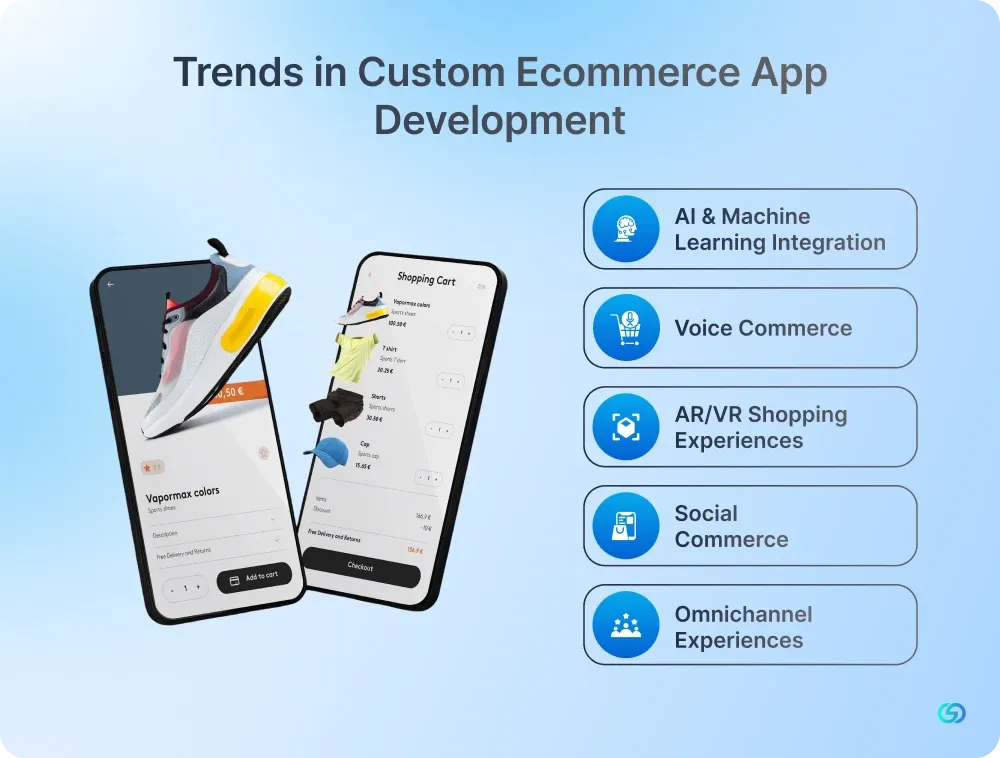
The ecommerce mobile app development scene is changing fast, influenced by shifting consumer behaviour and technological progress. Following is some of the major trends:
-
AI & Machine Learning Integration: Personalized product suggestions, smart search, and predictive analytics are becoming table stakes in bespoke ecommerce mobile app development.
-
Voice Commerce: With the prevalence of smart speakers and voice assistants, consumers use more voice commands for buying, compelling companies to implement voice-enabled ecommerce mobile app development.
-
AR/VR Shopping Experiences: Augmented Reality (AR) enables customers to try products virtually prior to purchase, increasing engagement and decreasing returns.
-
Social Commerce: Merging social media platforms with ecommerce apps is assisting companies in generating sales directly from sites like Instagram and TikTok.
-
Omnichannel Experiences: Companies are shifting emphasis toward seamless interconnection between web, mobile, and physical stores to provide integrated shopping experiences.
Conclusion
Ecommerce development is a cornerstone when it comes to the digital growth of a business. It is revolutionizing how companies are establishing connection with customer and driving sales. Starting from choosing the correct business model and platform to balancing budget, features, security, each decision taking helps in shaping the success of the ecommerce application.
While choosing application builders offer affordability and speed, custom ecommerce app development enables flexibility, scalability, and long-term competitiveness. The rising option of AR/VR, AI, Voice Commerce and more is highlighting that innovation is not an option anymore but a necessity. While mobile commerce accounts most of the online sale, companies that invest in robust apps are at a better position to improve loyalty of the customers, enhance conversions, and expand globally.
Looking a custom ecommerce app development company? ConvexSol has experienced and professional ecommerce application developers to help you build a user-friendly, visually aesthetic application with robust features as per the needs of your business.
FAQs
Is developing an ecommerce application worth it?
Yes, custom ecommerce app development is absolutely worth it. It helps enhance customer engagement, expand revenue options, and reach a wide user base. With the growing usage of mobile devices, having an ecommerce application helps businesses stay competitive.
How to develop an ecommerce app?
Developing an ecommerce application includes conducting thorough market research, defining the app type and business model, UI/UX design, choosing a suitable tech stack, building core features, integrating advanced features, conducting testing and quality assurance, and finally deployment.
How much does it cost to develop an ecommerce mobile app?
The cost of ecommerce app development with basic features can range between 15000$ to 60000$. While advanced functionalities such as AI, IoT, and AR can cost you about $ 80,000 to $1,20,000 and more.
The exact price depends on various factors, like project complexity, features and functionalities, tech stack, UI/UX design, location of development team, etc.
What are the 7 stages of app development?
The 7 stages of ecommerce app development are as follows-
- Conduct Market Research
- Define Business Model & App Type
- UI/UX Design
- Select the Best Technology Stack & Development
- Testing & Quality Assurance
- App Deployment & Launch
- Post-Launch Maintenance
How long does it take to build an ecommerce app?
The time required for ecommerce app development can range from 3 to 9 months. The exact time depends on the complexity of the app, the customization needs, and the number of features required. While a basic app with standard features can take between 4 to 3 months while, building an app with advanced features can take about 6 to 9 months.
What is the needed team size for ecommerce app development?
In order to build a scalable ecommerce application, a well-rounded team with specific roles is required. Here are the roles required-
- Project Manager
- UI/UX Designer
- Frontend Developer
- Backend Developer
- QA Tester
- DevOps Engineer
- Business Analyst
What are the ongoing costs after launch?
The cost of ownership goes beyond the launch of the app. The ongoing expenses that you have to bear include-
-
Updates and maintenance: This involves fixing bugs, improving performance, and adding new features based on user feedback. The cost of ongoing updates can be around 15–20% of the initial cost of development yearly.
-
Marketing and promotion: Marketing and promotional efforts, such as App Store Optimization (ASO) and social media marketing, are required for attracting users.
-
Server and infrastructure: The fees for hosting will go up with the user base and traffic of the app.
-
Security: Consistent security audits are important for protecting user information and ensuring compliance.