- FinTech Web Development
- 2026-05-18
FinTech Web Development in 2026: Trends and Innovations
Audio Track
Table of Contents
Key Takeaways:
- FinTech web development in 2026 is about building AI-ready and compliance-first platforms that users can trust.
- Modern FinTech platforms must scale fast, integrate seamlessly with 3rd party services, and adapt to evolving regulations.
- From digital banking and lending to RegTech, today’s FinTech ecosystem is diverse.
- Features like AI-driven fraud detection, real-time analytics, biometric authentication, and responsive design directly impact growth and retention.
FinTech Web Development in 2026: Why Has Everything Changed?
It’s 2026 and FinTech web development is functioning altogether in a different game space with the implementation of AI. Rising user expectations, compliance demands, FinTech is no longer about merely building functional platforms but creating compliance-ready, intelligent, and highly secure ecosystems that customers can rely on.
To answer what makes FinTech web development different today is that users now demand a seamless digital experience, a platform that allows smooth navigation. On the other hand, businesses look for platforms that integrate easily, adapt to technological changes, and scale instantly.
Custom website development service providers convey that web development in 2026 isn’t just “build the platform and be done with,” rather it is an integration of AI-first logic, trusted design, secure, high-end architecture, and regional localization.
Find out in detail why 2026 looks different for FinTech web development and how the industry is evolving.
FinTech Web Development Market Statistics
Even the traditional financial services have been embracing digital transformation, resulting in the FinTech space increasing manifold. Let’s have a look at the FinTech statistics to understand the quick increase in adoption.
- The total revenue of the FinTech industry globally surged between 2017 and 2023. From $79.83 billion in 2023, the market is projected to exceed $141.8 billion by 2028.
- In 2024, digital payments saw over three billion users, which are expected to reach $4.45 billion by 2029.
- AI in the FinTech market is expected to grow from $30 billion in 2025 to $83.1 billion by 2030.
- 53% of in-person shopping value is estimated to be conducted via smartphones by 2030, approximately $25 trillion.
Key Types of FinTech Platforms Transforming Finance Today
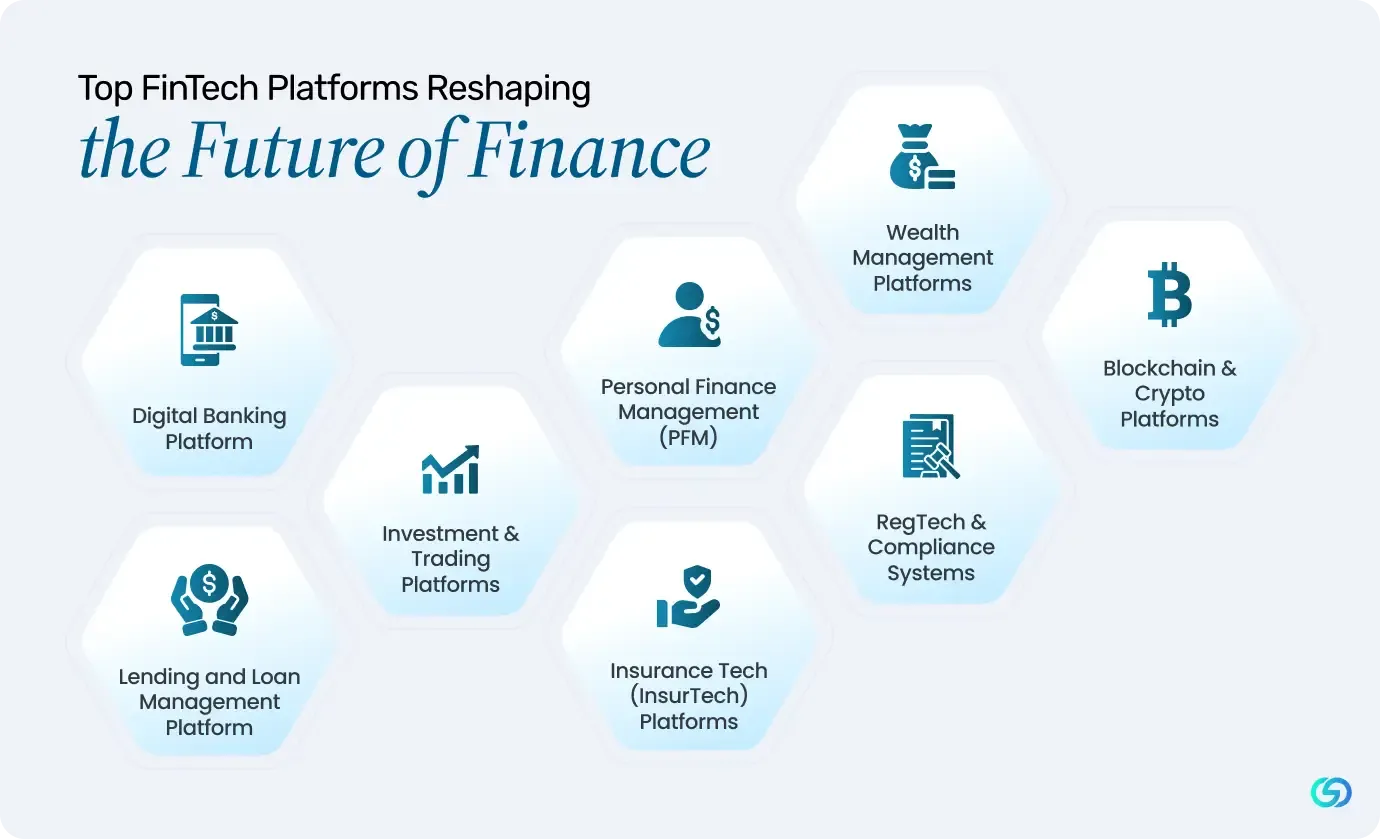
Everyone knows that FinTech web development is transforming the way people manage money. What began as a simple online banking platform has made a powerful presence in the global industry.
Consumers now expect financial platforms to perform more than just transactions; they want control and insights that align with their lives. Let’s explore the modern type of FinTech web development leading the way.
🔷 Digital Banking Platform
The new platforms are comparatively smarter and more personalized. Digital banks are full-service hubs, which are designed around the way people spend and choose a lifestyle today, and AI plays a huge role in this.
Neobanks offer real-time spending alerts, custom insights, and budgeting solutions based on user behavior. These web solutions help customers manage their money better with a focus on their experience.
With digital banking, people can easily manage currencies, link accounts, and transfer money internationally. These platforms are not just built for convenience but for control and simplicity.
🔷 Lending and Loan Management Platform
The lending and loan management system is a web-based system, simplifying the entire lending process for borrowers and financial institutions. The platform automates credit assessment, loan approval, and repayment, integrating features like secure payment gateways, real-time credit scoring, and document verification. This improves turnaround times and minimizes errors.
The web-based platform also provides borrowers with transparent loan status, notifications, and repayment schedules. This ensures lenders remain compliant and manage risk.
🔷 Investment & Trading Platforms
Buy, sell, and manage mutual funds, stocks, and bonds with web-based investment and trading platforms. The platform is designed to provide users with real-time data on the market, analytics, portfolio tracking, and automated tools (like robo advisors and trading algorithms). Additionally, it also makes investment much more accessible and transparent.
With user-friendly interfaces and optimum security and speed, these FinTech platforms empower professionals and investors to make informed decisions.
🔷 Personal Finance Management (PFM)
PFM allows users to set a savings goal, track their spending, and make smarter decisions. These apps easily connect with your bank accounts for a complete picture of your finances. Monitor trends, categorize expenses, and gain AI insights. Furthermore, open banking APIs offer real-time data with which users receive alerts on low balances, bills, and future expenses.
🔷 Insurance Tech (InsurTech) Platforms
InsurTech web-based solutions are making major breakthroughs. Users can buy policies, receive quotes, and file claims in a few taps, eliminating the need for endless calls and manual paperwork. FinTech web development leverages AI and ML solutions to detect fraud and accelerate approvals.
Real-time visibility and clean interfaces make people rely on your solution and feel protected. The process offers lower costs, improved customer experience, and better efficiency across the insurance lifecycle.
🔷 Wealth Management Platforms
More than 40% of wealth managers agree that clients look for smooth interfaces and live insights. These web-based platforms allow financial advisors and individuals to manage their assets with features like risk assessment, portfolio tracking, performance analytics, and more.
Wealth management platforms integrate investment accounts, provide insights, and analyze market trends for smart decisions. A secure and intuitive platform smooths complex financial planning, making it convenient for individuals to achieve short and long-term wealth goals.
🔷 RegTech & Compliance Systems
This type of FinTech web development platform is ideal for companies and individuals to stay compliant. The FinTech tools automate tasks like anti-money laundering reviews, identity checks, audit logs, and more, ensuring that the platform meets PCI-DSS and GDPR. This helps the team to remain compliant and act fast.
With RegTech apps, spot red flags to safeguard both the customer and the company. Those leveraging RegTech solutions face lower costs and manual work, and improved accuracy. With data protection being the topmost priority, RegTech remains the core part of establishing confidence and scaling.
🔷 Blockchain & Crypto Platforms
A secure, tamper-proof, and transparent way to record transactions, blockchains, and crypto is a gateway to the financial ecosystem. Trade, lend, stake, or earn rewards without the need for a bank.
Decentralized finance gives complete control over assets. The FinTech platform supports features such as token swaps, yield farming, and governance voting.
Must-Have Features of Modern FinTech Web Development
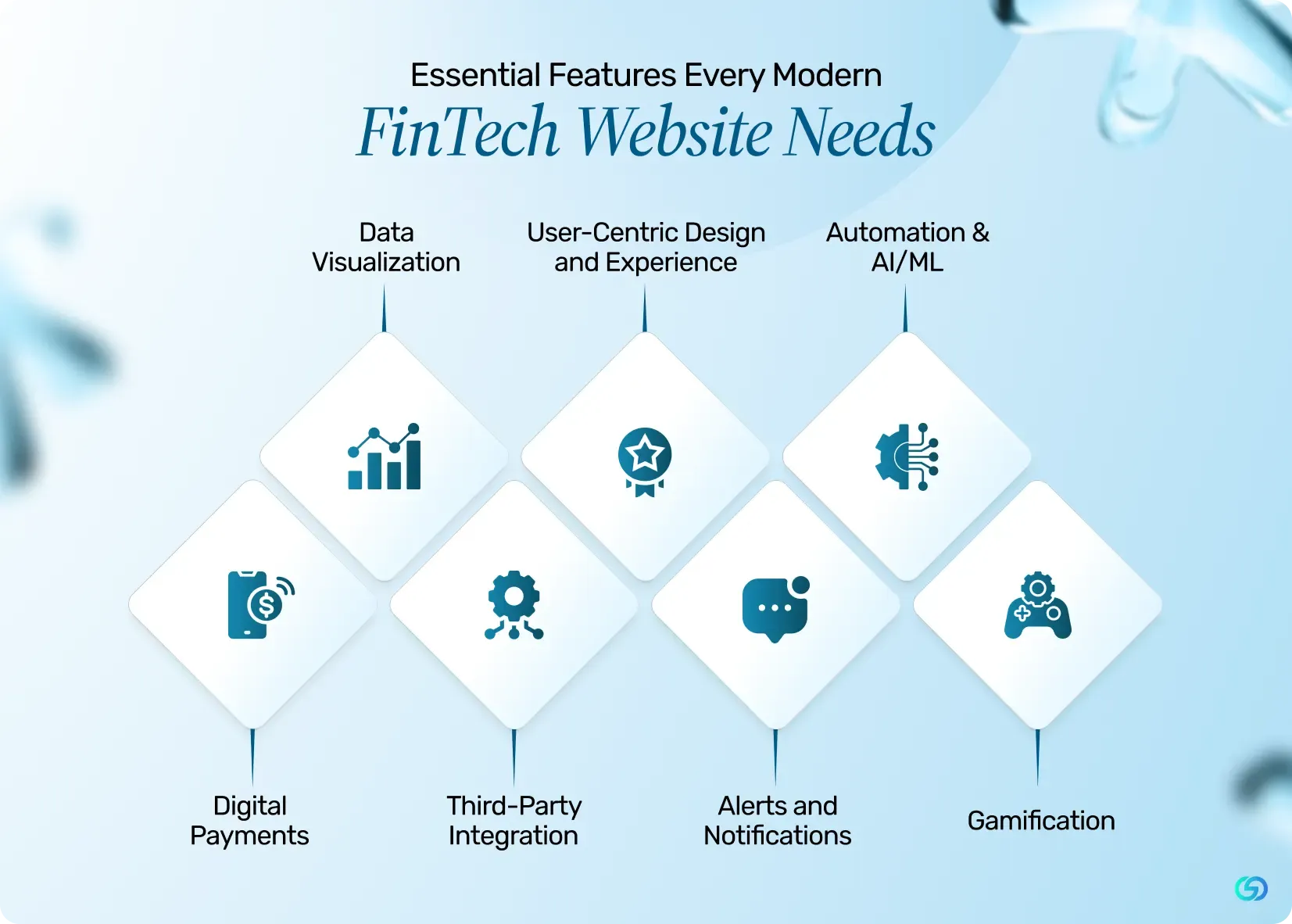
Technology has completely changed the way we deal with money, whether it is investing, banking, or borrowing. FinTech web development is at the heart of this transition, improving security and creating accessibility. The best FinTech solutions are designed keeping functionalities in mind to cater to specific needs. Let’s go through the essential features for 2026:
➡️ Data Visualization
A FinTech web development solution must offer data visualization features, which help turn complex data into intuitive charts, graphs, and dashboards. This allows users to understand spending patterns, risk levels, and investment performance.
➡️ User-Centric Design and Experience
One of the key features of FinTech web development is user experience. The end-users look for user-friendly UI that is crucial for smooth navigation through complex financial services. Seamless designs allow customers to manage finances, resulting in user retention and satisfaction.
➡️ Automation & AI/ML
The integration of AI and ML in finance web development results in efficient risk management, better customer service, and enhanced decision-making. This feature allows your platform to do more work on its own—the system automatically reviews data, spots patterns, and makes quick, smart decisions.
➡️ Digital Payments
A FinTech web platform offers seamless payment and transaction features. With multiple payment methods, using mobile wallets, crypto, ACH, credit/debit cards, recurring billing, and subscriptions, allows for a faster digital payment experience.
➡️ Third-Party Integration
FinTech web development supports third-party integrations with payment gateways, investment services, banks, and financial systems, allowing a seamless experience for banking.
➡️ Alerts and Notifications
One of the highly engaging FinTech web development features is alerts and notifications—notifying the users regarding activities such as upcoming bills, low balance, or a successful payment, or even an unusual activity. The alerts allow users to remain on top of their finances.
➡️ Gamification
The process of adding game-like features such as cashbacks, rewards, and discounts to FinTech web-based systems is what gamification is. This feature leads to an increase in user engagement, resulting in user acquisition and retention.
What are the Benefits of FinTech Web Development
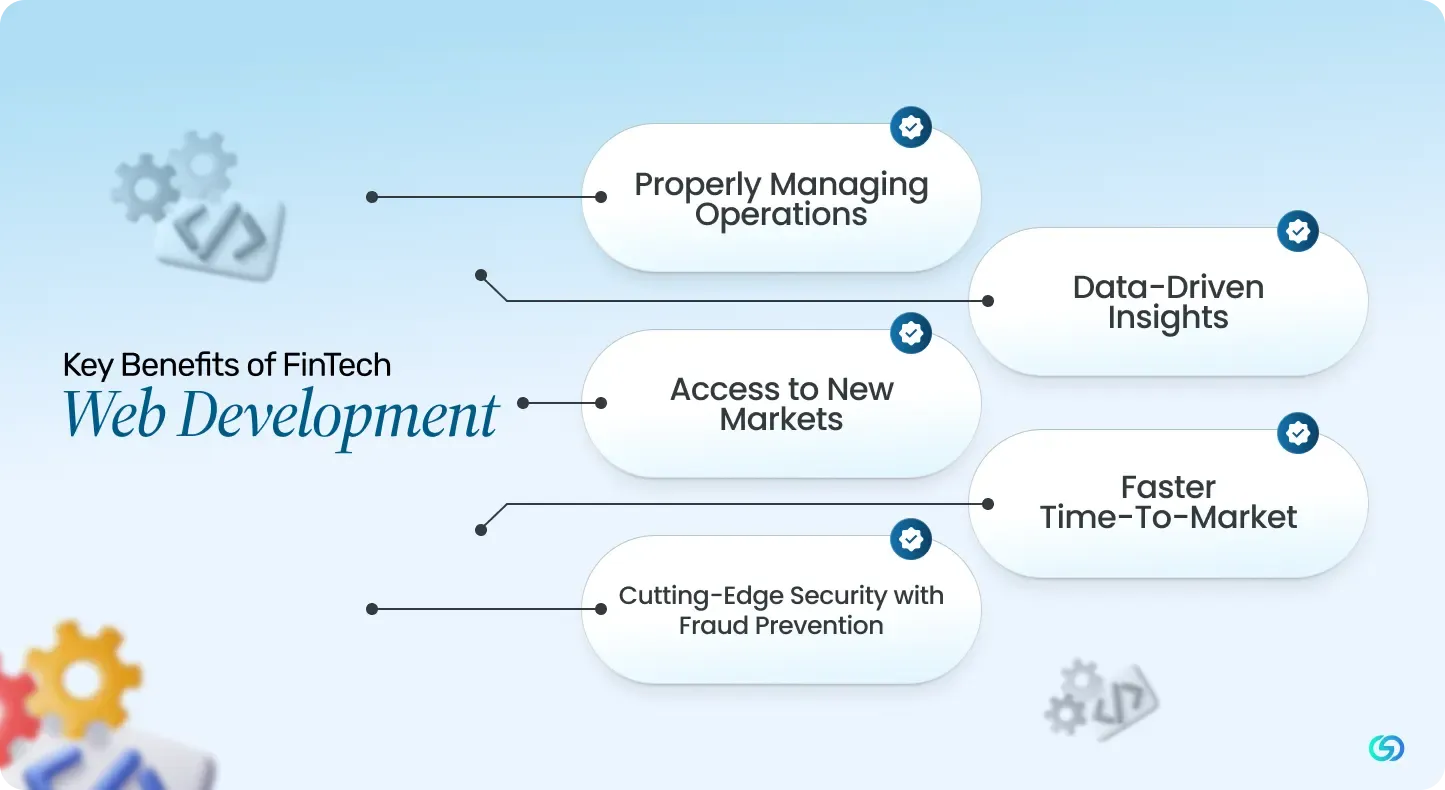
In the FinTech industry, businesses of all sizes are choosing web development services to boost user experience, workflow, and innovative solutions. The following are the advantages the FinTech sector can enjoy:
▶️ Properly Managing Operations
Traditional processes are cumbersome. The major benefit lies in choosing FinTech web development services for a smooth workflow. Traditional procedures are time-consuming and require several intermediaries. FinTech web apps automate crucial tasks such as customer onboarding, payment processing, and more, delivering accurate and faster transactions.
▶️ Access to New Markets
With FinTech web development, businesses can reach global markets, giving access to new regions and increase in reach. Especially in the areas where banks are not accessible to the public, these web apps can make a lasting impact.
▶️ Cutting-Edge Security with Fraud Prevention
Security is the most important aspect of the FinTech industry. Using advanced security features, like authentication and encryption, helps protect the user’s financial and personal data. Experts help you make the platform more robust with advanced features such as two-factor authentication and integrating ML to detect fraud.
▶️ Data-Driven Insights
FinTech web platforms leverage data analytics to offer users insights into their behavior. They can make more informed decisions by understanding their spending patterns, which leads to improved financial health.
▶️ Faster Time-To-Market
This means your platform can go live much faster instead of spending time on repetitive tasks, automation, and smart tools to help you build, test, and launch faster. This results in reaching customers sooner, staying ahead of the competition, and starting to see value right away.
FinTech Security and Compliance to Safeguard Businesses & Customers
The FinTech world is facing a wide threat due to the online nature of financial services. Phishing attacks, malware, ransomware, identity theft, and deepfake technology stands as significant risks to FinTech operations.
A secure architecture creates a solid foundation for any FinTech app. Experts help you embed security right from the initial phase itself. This approach ensures every component remains protected against potential threats, be it data storage or the user interface.
- Establishing robust authentication & authorization models
- Implementing HTTPS/TLS protocols
- Safeguarding against data manipulation and injection attacks
- Secure API gateways
- Microservices design
- Database encryption
Beyond these measures, daily security audits are important to spot vulnerabilities before they can be exploited. Monitoring of network traffic helps detect suspicious activity way earlier and reduce the risk of breaches.
How to Choose the Best FinTech Web Development Company?
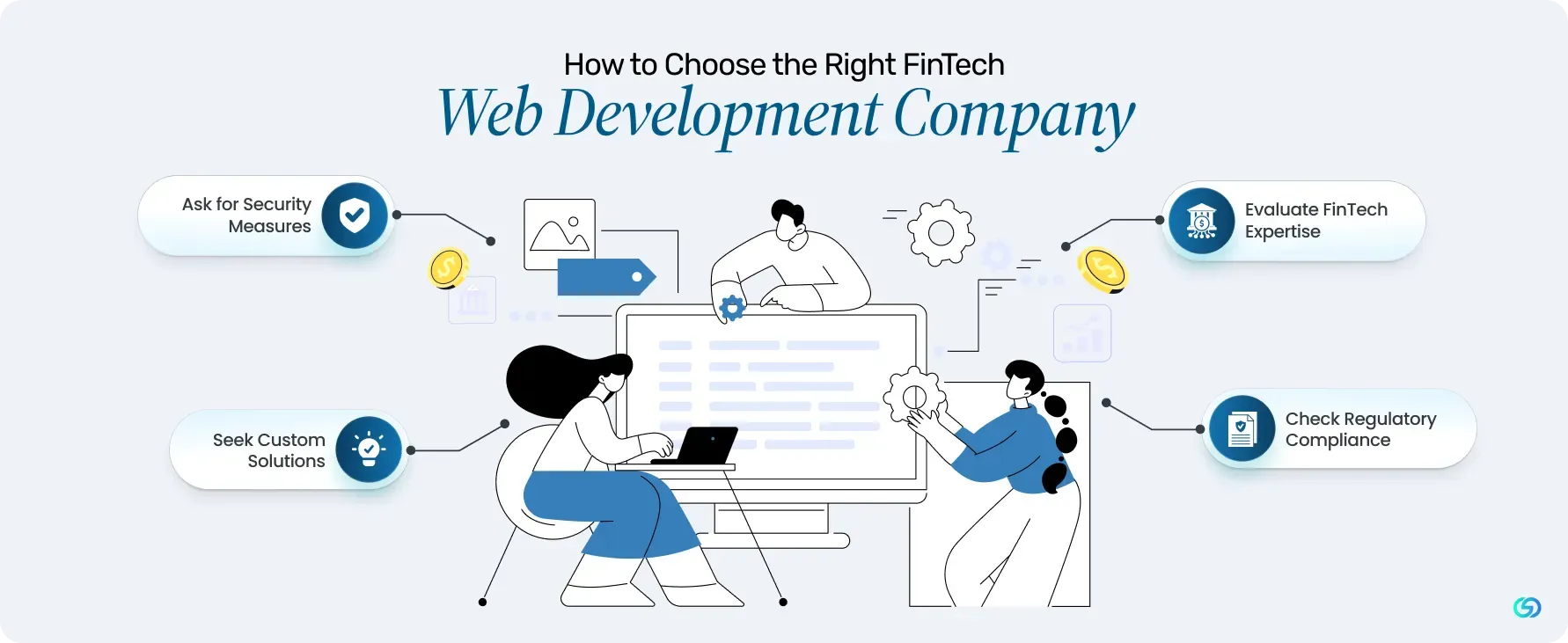
Choosing the perfect FinTech web development partner can make or break your success. A trustworthy service creates a safe, compliant, and flexible platform, assisting you in business growth.
❇️ Evaluate FinTech Expertise
The experience of a FinTech web development company is crucial in delivering quality solutions. Check for organization’s track record and the output of their web development service. A renowned company comes with a thorough knowledge of advanced finance technology that perfectly helps in meeting industry standards. By going through the portfolio, you get an overall idea of their expertise.
❇️ Check Regulatory Compliance
Make sure that the FinTech web development company you collaborate with has a good understanding of regulatory compliance. Knowledge of both regional and global compliance standards is important to ensure legally compliant web systems, reducing legal complexities, and streamlining operations.
❇️ Ask for Security Measures
Security is crucial for building financial web platforms. The company you choose for your FinTech needs must follow security measures such as GDPR, PCI DSS compliance, two-factor authentication, and AI-powered fraud detection. Adherence to the latest security measures to help safeguard sensitive data and prevent cyber threats.
❇️ Seek Custom Solutions
If yours is a FinTech business, you, of course, have unique requirements. A leading FinTech web development company provides customized solutions as per business goals. Whether you need a crypto integration, a digital banking solution, or an InsurTech platform, a FinTech web development agency provides solutions that align with your needs.
Step-by-Step Roadmap to FinTech Web Development
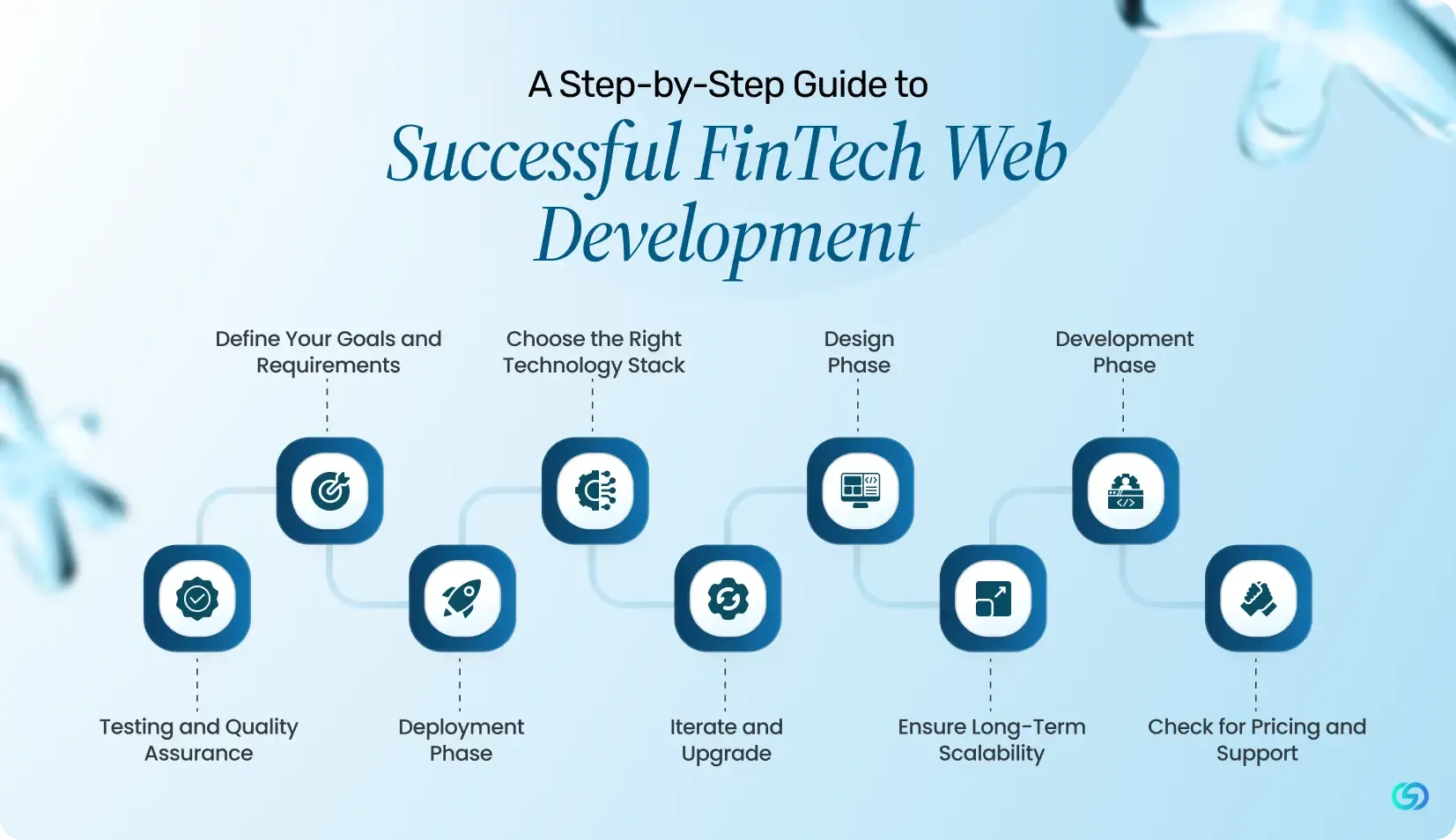
A FinTech web development project requires careful planning and execution, which ensures compliance, security, and a seamless user experience. Here’s a step-by-step approach:
🔶 Define Your Goals and Requirements
Your FinTech journey should kick off by understanding who your user is and what matters to them. Additionally, find out the FinTech platform you wish to invest in. Developers will help you create a complete roadmap with the core features and business objectives. This will be done while remaining compliant with the market.
🔶 Choose the Right Technology Stack
Once done with the initial step, it's time to choose the apt tech stack. Choose front-end frameworks for UI responsiveness. Backend technologies for security and scalability. Additionally, choose databases optimized for high performance and encryption.
🔶 Design Phase
Even before you meet your customers, the FinTech web design service translates your services with a user-friendly interface and immersive design. Dashboards, real-time notifications, and secure payment flows are all incorporated to ensure your web-based system appears top-notch.
🔶 Development Phase
The next step is development. The front-end and backend team get to work to build the whole unique experience. During this phase, gateway connections and API integration are built to form a completely functional FinTech website.
🔶 Testing and Quality Assurance
Expert developers test your FinTech web-based system thoroughly. They run the platform for functionality checks, phase safeguards, and security audits for a detailed QA process. Experts also perform vulnerability assessments to ensure robust protection.
🔶 Deployment Phase
After the platform is tested, it’s time to deploy and launch. Developers launch the platform in a scalable and secure environment. Experts will be monitoring performance, security, and user behavior continuously.
🔶 Iterate and Upgrade
By gathering user feedback, you can improve UX and features for a better platform experience. By staying updated with the latest technologies, market trends, and compliance requirements, you sign up for long-term success.
🔶 Ensure Long-Term Scalability
The right FinTech web development firm ensures long-term scalability. The platform should be able to handle higher traffic, new updates, and changing business needs. A scalable solution guarantees that the design will grow with the business and adapt to future technological developments while maintaining performance stability.
🔶 Check for Pricing and Support
When choosing a FinTech web development company, cost is another significant factor. Ensure the services provided by the company match your budget. Additionally, consider post-launch support for a well-maintained web platform that users can trust.
Top FinTech Web Development Trends to Watch in 2026
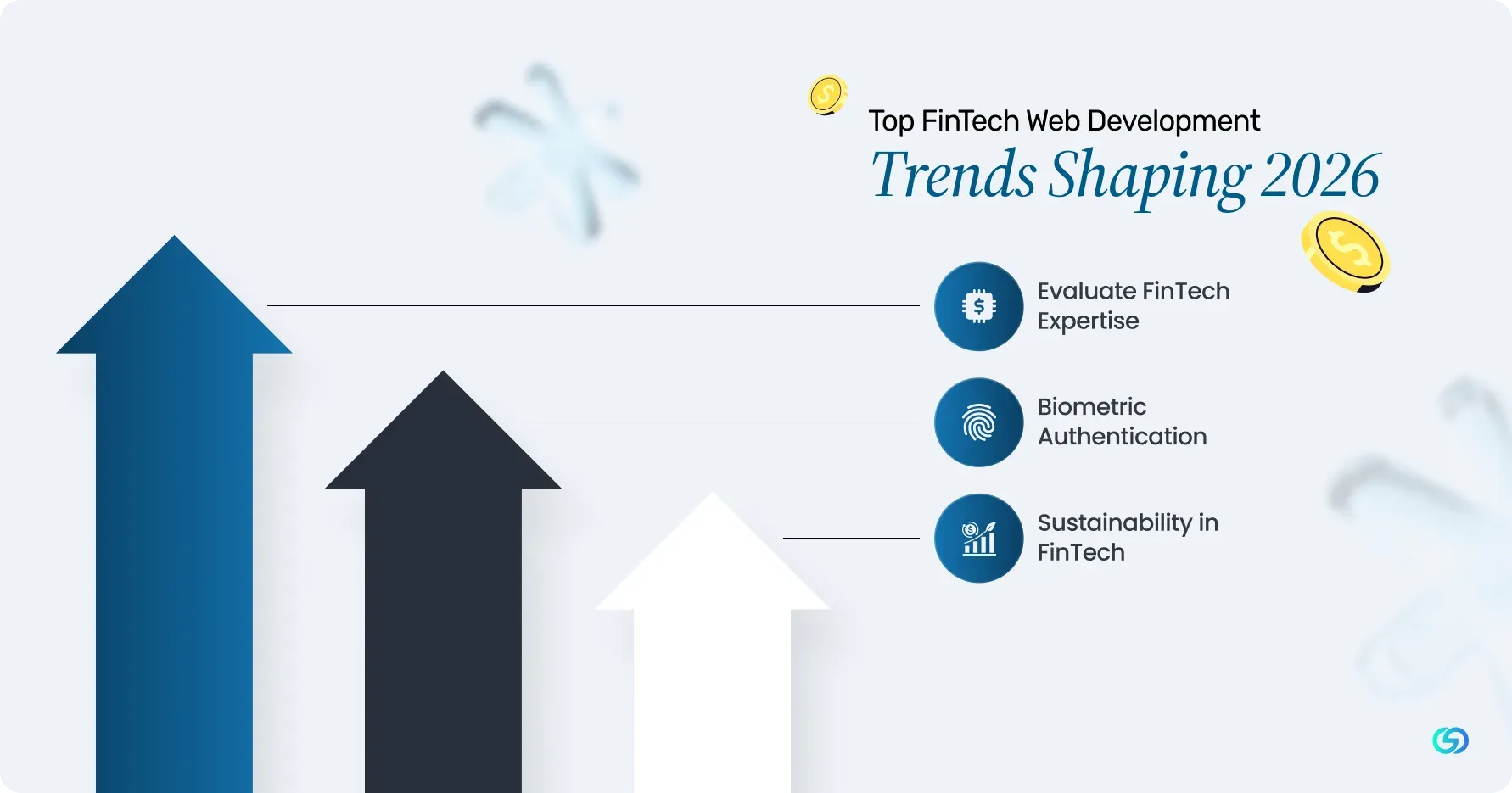
With the financial services being redefined in the way they operate due to AI-driven insights, it’s crucial to adapt to the trends and innovations reshaping payments, global banking, and investment models. Let’s find out the top web development trends for FinTech.
*️⃣ Embedded Finance
As per Grand View Research, the global embedded finance market was valued at $83 billion. The projects specify that by 2030, this could reach $588 billion. Now you get a clear picture of why embedded finance persists in dominating, allowing non-financial businesses to integrate investment functionalities, payments, insurance, lending, and so on. Embedded finance streamlines the user journey, boosts retention, and opens new channels.
*️⃣ Biometric Authentication
Compared to PINs and passwords, biometric authentication is highly secure and ideal for the FinTech industry. With biometrics, users no longer need to remember letters and numbers or update passwords. Voice biometrics will soon develop as a go-to data security method. Without manual entry, users can pay for goods and check their balance with voice commands alone.
*️⃣ Sustainability in FinTech
Sustainability is not an option anymore but an absolute necessity. FinTech products that are ESG-led are driving forward green finance, impact investing, and carbon tracking. Today, FinTech innovation is bridging the gap between profit and purpose. By applying sustainability to a financial organization’s core workflow, businesses can build a stronger reputation.
Key Examples of Real-Life FinTech Web Solutions
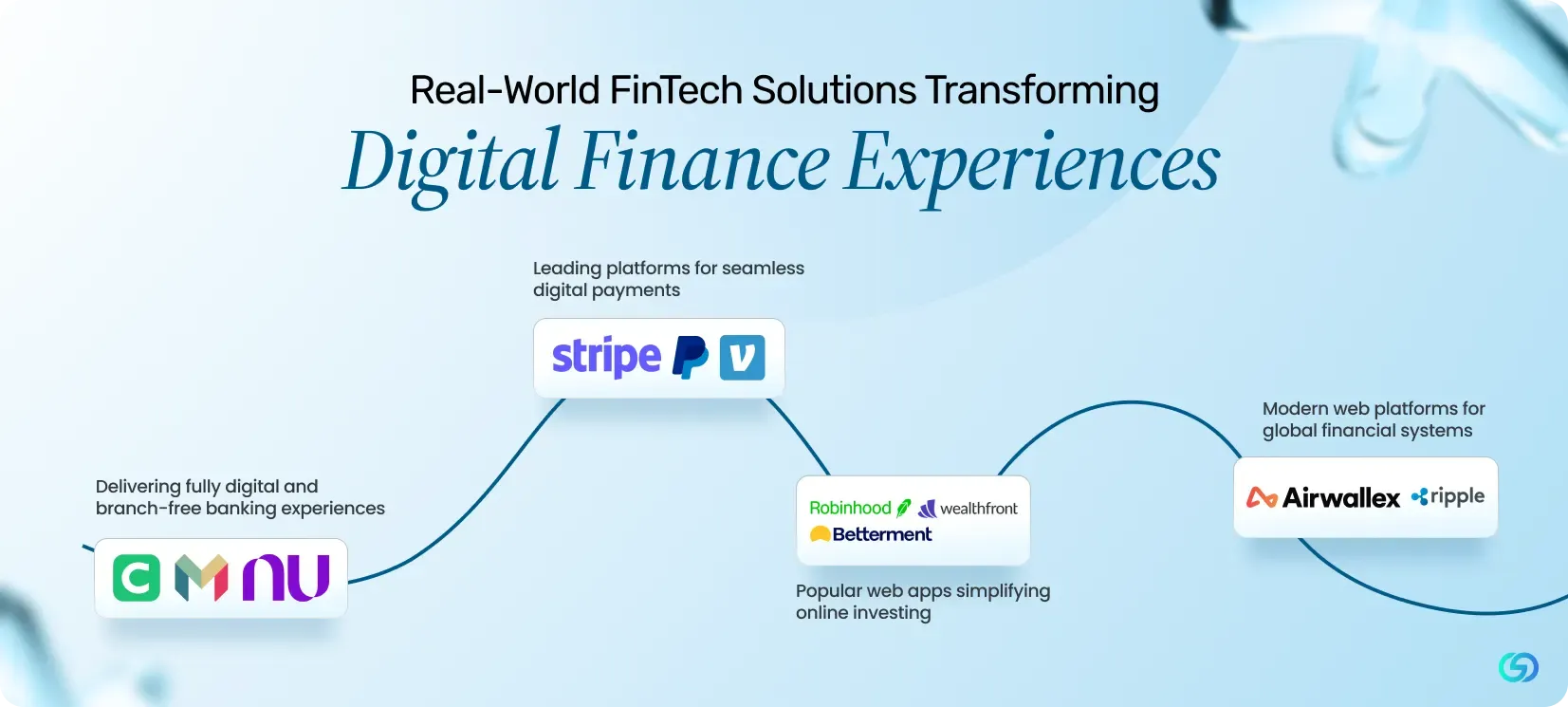
The rapid growth of the FinTech market doesn’t limit it to digital banking and payments only; it is revolutionizing a wide range of businesses within the sector. These tech-powered innovations are streamlining the workflow, enhancing customer experience, and finding new revenue models.
1️⃣ Chime, Monzo, Nubank: Offering 100% digital and branchless banking experience, these platforms also offer real-time payment alerts, instant money transfer, and automated saving tools.
2️⃣ Stripe, PayPal, Venmo: These are major digital payment platforms that integrate multiple payment methods, like crypto, credit/debit cards, and digital wallets into merchant websites, resulting in quick and seamless checkout.
3️⃣ Robinhood, Betterment, Wealthfront: These are popular investment web apps, offering commission-free and user-friendly trading interfaces with real-time data, robo-advising, AI-powered portfolio management, resulting in accessible investment.
4️⃣ Airwallex, Ripple: These are key platforms in modernizing web systems, offering secure, decentralized ledgers for low-cost international and cross-border transactions.
How ConvexSol Helps You Build Smart FinTech Web Solutions?
At ConvexSol, we don’t just focus on design alone but build robust FinTech platforms that scale and win trust. Our web development approach focuses on UX strategy, AI-ready architecture, and compliance-first thinking to help FinTech businesses:
- Launch digital platforms that scale
- Redesign complicated user journeys into conversion-driven user flows
- Integrate AI-powered FinTech features
- Drive UX audits to reveal friction and boost retention
- Execute complete FinTech web development
Backed by 10 years of experience, ConvexSol is a best-in-class FinTech software development company, providing world-class solutions across the globe. Whether you need a custom FinTech solution or an enterprise, proper steps ensure an efficient and secure platform.
Frequently Asked Questions
Can AI and automation be integrated into FinTech platforms?
Yes, ConvexSol integrates AI and automation to detect fraud, streamline work, personalize user journeys, and produce smart insights. This will help your platform operate smarter, faster, and with far less manual effort from day one.
What technologies are commonly used in FinTech web development?
We leverage Angular, Vue, and React for responsive web interfaces. Java, Node.JS, and Python for backend development, cloud platforms like Azure and AWS for scalability, and APIs for security and performance.
Can you modernize or migrate existing FinTech systems?
We modernize FinTech web platforms by upgrading frontend frameworks, migrating to cloud infrastructure, and enhancing performance and security. This ensures your web app becomes scalable, compliant, and ready for future business growth.
Is FinTech web development suitable for businesses of all sizes?
Yes, FinTech web development works for businesses of all sizes—from startups to large businesses. ConvexSol builds flexible platforms that launch quickly, scale easily, and evolve with businesses as transactions, users, and regulatory needs change.