- Healthcare Web Development
- 2026-05-25
Healthcare Web Development in 2026: Features, Compliance, Costs & Trends
Audio Track
Table of Contents
Key Takeaways:
- In 2026, healthcare web development is more than online presence. Modern healthcare websites operate as secure and patient-centric hubs supporting data access, telemedicine, engagement, and care continuity.
- Successful healthcare web platforms are developed with GDPR, HIPPA as well as regional regulations at the core, supported by role-based access control, supported by encryption, audit trails, and ongoing security monitoring.
- Features such as real-time appointment, patient portals, telehealth, and personalized experiences majorly improve engagement of the patients, satisfaction, and long-term retention.
- Predictive analytics, AI, wearable integrations, as well as smart dashboards, enable proactive care and data-driven decision-making for healthcare businesses.
- Partnering with an experienced healthcare web development service provider offering custom web development services ensure regulatory compliance and long-term digital growth.
Overview of Healthcare Website Development
Digital transformation in healthcare has become a premier shift in the industry. In 2026, a healthcare website is not simply an online brochure. It works as the main operational hub and a fundamental channel for patient acquisition.
The digital presence of a healthcare brand directly impacts patient acquisition, retention, and the quality of care we offer. As the patients largely depend on online resources for making healthcare decisions, you also need to have an optimized and accessible website.
Custom website development Service includes creating websites customized to the healthcare industry, with a focus on security, user-friendly design, and regulatory compliance. These websites provide important features, including patient portals, appointment booking, telemedicine integration, and access to medical resources, while assuring compliance with privacy laws like HIPAA.
In this comprehensive guide, we will walk you through the major components, features, development process, costs, challenges, and more.
Why Should you Develop a Healthcare Website?
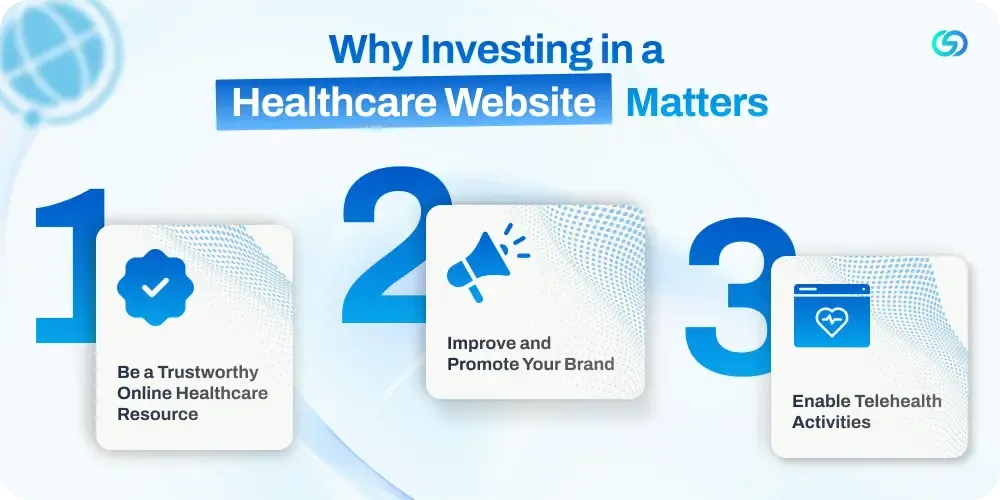
Developing a hospital or website for a healthcare clinic is important to meet the needs of the patients and community effectively. A powerful and well-developed healthcare website is capable of:
*️⃣ Be a Trustworthy Online Healthcare Resource
More than 70% of Americans say that they have been exposed to healthcare misinformation, and 44% reported that they were not confident in their capability to tell whether their medical data was accurate. A healthcare website will be able to serve as a trustworthy resource for the members of the community for receiving correct medical information and support.
*️⃣ Improve and Promote Your Brand
A robust and professionally designed healthcare website can improve the brand value of your organization, helping you bring more patients on board as well as retain existing ones.
*️⃣ Enable Telehealth Activities
54% of Americans have experienced a strong telehealth visit at some point in their lives. Creating a user-friendly, strong healthcare website is important if your business wants to start providing telehealth services or expand the capabilities of telehealth.
Types of Healthcare Websites and Web Applications
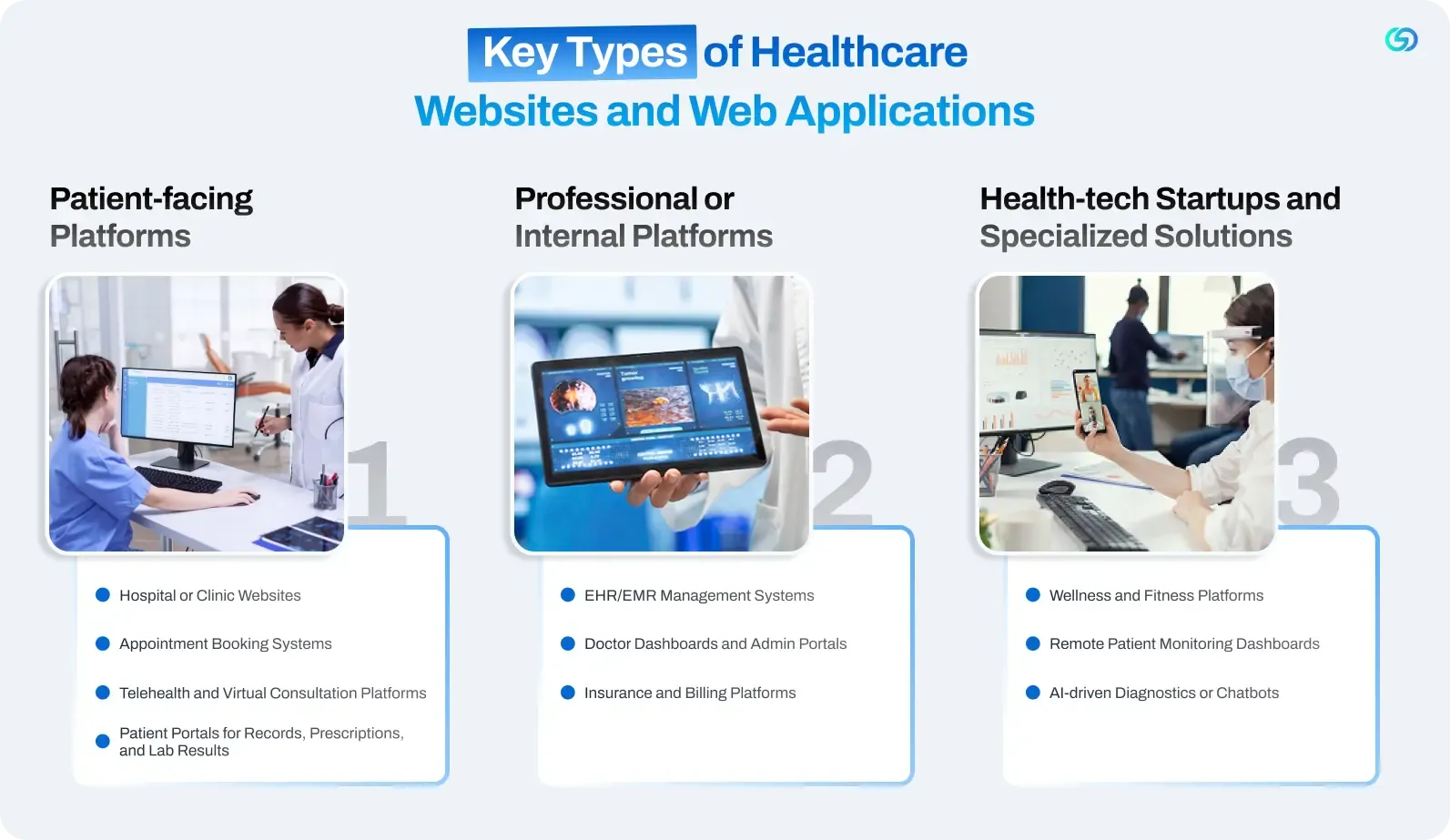
Healthcare web development covers an extensive spectrum of platforms, all of which are designed to serve various users. This involves everyone, starting from the patients seeking care to the doctors handling clinical information, or startups that are launching new solutions in digital health. Let’s have a look at the key types of healthcare websites and web applications shaping the present-day digital healthcare ecosystem.
🔷 Patient-facing Platforms
These platforms are development with the experience of the patients at the core. They make healthcare more transparent, accessible, and convenient by enabling patients to handle their health journeys online.
🔷 Hospital or Clinic Websites
These can be defined as the digital front doors of healthcare businesses. A well-designed clinic or hospital clinic offers necessary information about doctors, services, specialities, and facilities while reflecting the credibility of the business. Many also involve patient education content, direct booking options, and online forms.
🔷 Appointment Booking Systems
Online scheduling tools help in simplifying how patients book consultations. They enable users to check the availability of the doctor, select the slots of appointment, and receive immediate confirmations, decreasing missed appointments and administrative workload.
🔷 Telehealth and Virtual Consultation Platforms
Telehealth platforms make it possible for patients to connect with healthcare providers remotely via chat, video calls, or voice consultations. These systems mostly include digital prescriptions, secure payment gateways, and follow-up reminders, making care accessible anywhere and anytime.
🔷 Patient Portals for Records, Prescriptions, and Lab Results
Patient portals allow individuals to control their healthcare information. They offer access to medical histories, prescriptions, test results, and upcoming appointments, all within HIPAA-complaint and secure interface.
🔷 Professional or Internal Platforms
These platforms are developed for administrative teams, clinics, and healthcare providers. The focus is on enhancing efficiency, workflow management, and data accuracy within medical environments.
🔷 EHR/EMR Management Systems
Electronic Health Record or Electric Medical Record (EMR) systems manage and store information of the patient digitally, making it easy for the healthcare professional to update, access, and share medical information securely. Integration with pharmacies, labs, and insurance systems ensures the continuity of care.
🔷 Doctor Dashboards and Admin Portals
These are the internal tools for handling patient appointments, schedules, communications, and medical notes. They assist the clinicians and the support staff in a healthcare facility to remain organized, maintain efficient operations, and monitor workloads.
🔷 Insurance and Billing Platforms
Healthcare medical billing software development platforms optimize claims processing, patient billing, and insurance verification. The decrease in manual errors accelerates reimbursements and offers real-time visibility into financial information for administrators.
🔷 Health-tech Startups and Specialized Solutions
Innovation-powered health-tech startups are expanding what healthcare web apps can do. Their focus remains on offering personalized, AI-powered, and data-driven experiences.
🔷 Wellness and Fitness Platforms
These apps help in promoting preventive healthcare by providing features such as nutrition planning, workout tracking, and mental wellness programs. They mostly integrate with wearable devices to offer real-time progress insights.
🔷 Remote Patient Monitoring Dashboards
Remote monitoring systems allow doctors to track patients’ vitals and health data from the devices connected. These platforms enhance chronic disease management and decrease the need for frequent in-person visits.
🔷 AI-driven Diagnostics or Chatbots
AI-based solutions help in early diagnosis, analysis of symptoms, and 24/7 patient support. Chatbots can answer health queries and assisting in appointment scheduling, enhancing engagement and response time.
Benefits of Investing in Healthcare Web Development
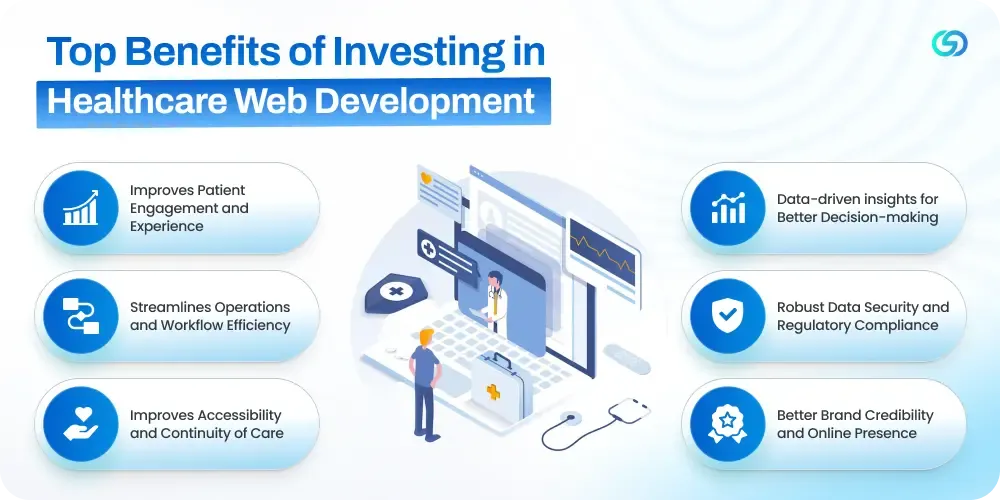
Investing in healthcare web development is not simply about developing a digital platform. It is about revolutionizing how patients contest with care and how the healthcare businesses work behind the scenes. Starting from improving patient engagement to ensuring scalability and compliance, the right web development solution can help in creating long-term value for healthcare providers and patients.
❇️ Improves Patient Engagement and Experience
A well-developed healthcare website or web app puts patients at the core of care. It enables them to book appointments online, access medical records, request prescriptions, or communicate securely with doctors, all from one place.
By enabling patient to have control over their health interactions, digital platforms enhance transparency and convenience. Features such as chat support, reminders, and personalized dashboards develop robust engagement and trust, resulting in higher satisfaction and better health results.
❇️ Streamlines Operations and Workflow Efficiency
Building a healthcare web app also simplifies internal work. Integrated systems help in automating repetitive administrative tasks like appointment management, record updates, or billing, freeing up the staff from focusing on patient care.
Unified data systems and dashboards make sure that the nurses, doctors, and administrative team operate in sync. This kind of streamlined coordination decreases delays, minimizes manual errors, and improves complete workflow efficiency across departments.
❇️ Improves Accessibility and Continuity of Care
Digital healthcare solutions can break down geographical barriers. Telehealth platforms and mobile-friendly portals make it easy to connect with specialists without having to visit the clinic.
Multilingual interfaces, accessibility features, and 24/7 availability ensures that the healthcare remained inclusive and convenient for everyone, even in undeserved and remote areas. The continuity of care helps in strengthening relationships between patients and providers, encouraging ongoing health management instead of one-time visits.
❇️ Data-driven insights for Better Decision-making
Modern healthcare web apps do not just store information; they do not just turn into insights. Analytics dashboards are capable of tracking appointment trends, patient behaviour, and treatment results, assisting providers in taking informed clinical and business-related decisions.
For instance, hospitals can utilize data for forecasting demand, streamlining resources, or personalizing patient communication. These insights allow smart decision-making that enhances efficiency and patient results alike.
❇️ Robust Data Security and Regulatory Compliance
Security is one of the greatest concerns in healthcare web development. Professional solutions are developed with strong encryption, multi-factor authentication, as well as access control mechanisms for protecting sensitive patient information.
They also ensure compliance with the main healthcare regulations like GDPR, HIPAA, and HL7, decreasing risks as well as maintaining patient trust. With compliance developed into the development process, businesses can focus on providing care without worrying about information breaches or violations.
❇️ Better Brand Credibility and Online Presence
A modern, secure, and well-optimized healthcare website develops credibility. It shows patients that your business gives to professionalism, accessibility and trust. When users can find information easily, schedule visits, and interact with your brand online, it strengthens reputation and loyalty.
Moreover, SEO-friendly and responsive designs help your platforms have a high rank on search engines. This helps in expanding the reach and position of the business as a trustworthy leader in digital healthcare.
Key Features to Include When Building a Healthcare Website
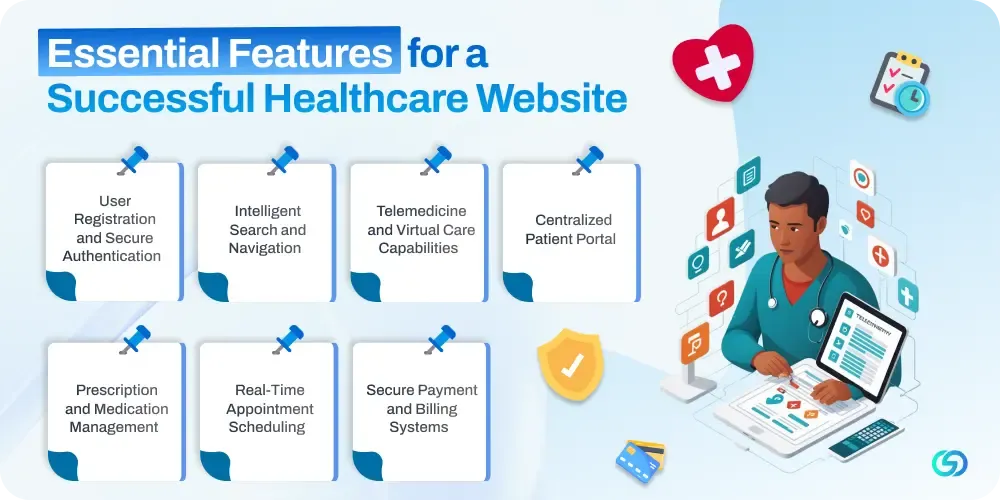
A healthcare website is not just a digital presence; it is a critical touchpoint that directly influences patient trust, care delivery, and operational efficiency. To ensure usability, security, and compliance, certain core features are essential for any modern healthcare web platform.
➡️ User Registration and Secure Authentication
A seamless and secure onboarding experience is the foundation of any healthcare website. Patients should be able to register easily using email, phone numbers, or secure identity verification methods. Multi-factor authentication (MFA), role-based access controls, session timeouts, and secure password recovery workflows are essential to protect sensitive patient data and comply with healthcare data protection standards.
➡️ Intelligent Search and Navigation
Healthcare users expect fast and accurate access to information. An intelligent search feature allows patients to quickly find doctors, specialties, medical conditions, services, or educational resources. Advanced filters, auto-suggestions, and location-based results significantly enhance user experience and reduce friction across the platform.
➡️ Telemedicine and Virtual Care Capabilities
Telemedicine has become a standard component of healthcare delivery. A healthcare website should support secure video consultations, encrypted messaging, and digital prescription workflows. Integration with electronic health records (EHRs) ensures that clinicians have full patient context during virtual visits, improving care quality and continuity.
➡️ Centralized Patient Portal
The patient portal acts as the digital front door to the healthcare ecosystem. It provides patients with secure access to medical records, lab results, prescriptions, appointment history, insurance details, and billing information. A well-designed portal improves patient engagement, reduces administrative workload, and promotes transparency.
➡️ Prescription and Medication Management
Effective medication management features enable patients to upload prescriptions, request refills, and track medication schedules. Automated approvals, pharmacist verification, drug interaction checks, and encrypted storage ensure safety, compliance, and convenience for both patients and healthcare providers.
➡️ Real-Time Appointment Scheduling
Real-time appointment scheduling eliminates manual booking inefficiencies. Patients can view provider availability, book appointments instantly, and receive automated reminders via email or SMS. Calendar synchronization with platforms like Google or Outlook helps reduce no-shows and improves operational planning.
➡️ Secure Payment and Billing Systems
Healthcare websites must support secure, compliant payment processing. PCI DSS–compliant gateways, transparent billing, digital invoices, and multiple payment options simplify financial interactions while protecting sensitive payment data through encryption and tokenization.
Advanced Features to Include for Competitive Advantage
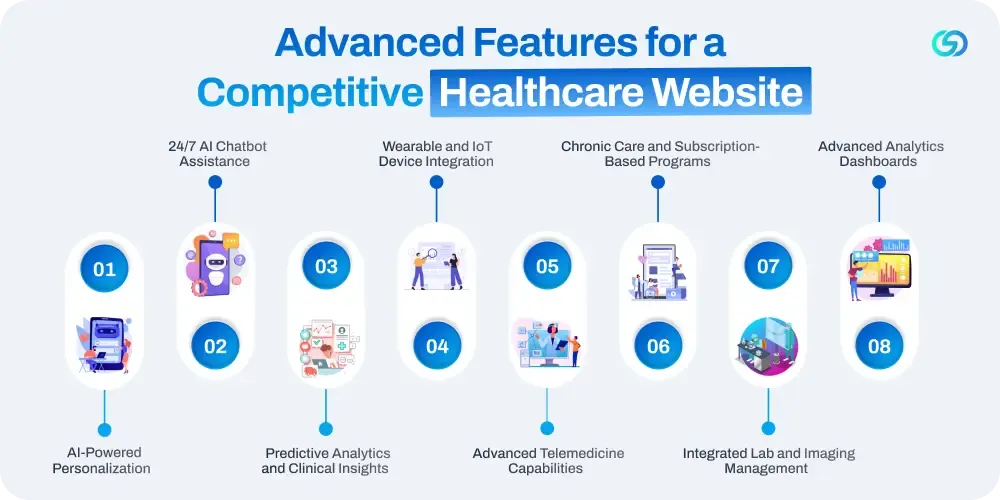
Once the foundational features are in place, advanced capabilities help healthcare platforms differentiate themselves, enhance patient outcomes, and achieve measurable business growth. These features leverage emerging technologies to create smarter, more connected healthcare experiences.
🔶 AI-Powered Personalization
Artificial intelligence enables personalized patient journeys by analyzing behavioural patterns and health data. AI-driven systems can recommend preventive care resources, send personalized reminders, and identify early health risks, transforming reactive care models into proactive wellness strategies.
🔶 24/7 AI Chatbot Assistance
AI-powered chatbots provide round-the-clock support by handling routine queries such as appointment booking, prescription refills, and FAQs. By resolving a majority of repetitive requests instantly and escalating complex issues to human agents, chatbots improve response times while reducing operational costs.
🔶 Predictive Analytics and Clinical Insights
Predictive analytics helps healthcare providers anticipate patient needs and operational demands. By analyzing historical and real-time data, healthcare organizations can identify high-risk patients, forecast appointment volumes, optimize staffing, and improve care outcomes through data-driven decision-making.
🔶 Wearable and IoT Device Integration
Integration with wearable devices such as smartwatches and fitness trackers allows continuous health monitoring beyond clinical visits. Real-time data collection enables early detection of abnormalities, automated alerts, and patient engagement through activity tracking and wellness incentives.
🔶 Advanced Telemedicine Capabilities
Next-generation telemedicine goes beyond video calls. Features such as virtual waiting rooms, asynchronous consultations, multi-specialist collaboration, screen sharing, and session recordings enhance the quality and efficiency of remote care delivery while maintaining strict data security standards.
🔶 Chronic Care and Subscription-Based Programs
Subscription-based care models support long-term patient engagement, particularly for chronic disease management. These programs may include scheduled virtual consultations, automated medication refills, personalized coaching, and progress tracking to improve adherence and patient retention.
🔶 Integrated Lab and Imaging Management
Advanced healthcare platforms integrate laboratory and imaging workflows directly into the website. Patients can schedule tests, access digital reports, and receive AI-assisted insights, enabling faster diagnoses and improved clinical decision-making.
🔶 Advanced Analytics Dashboards
Comprehensive analytics dashboards provide administrators and executives with real-time visibility into platform performance. Metrics such as user engagement, appointment trends, revenue, and clinical outcomes help healthcare organizations optimize operations and scale sustainably.
Healthcare Website Development Process
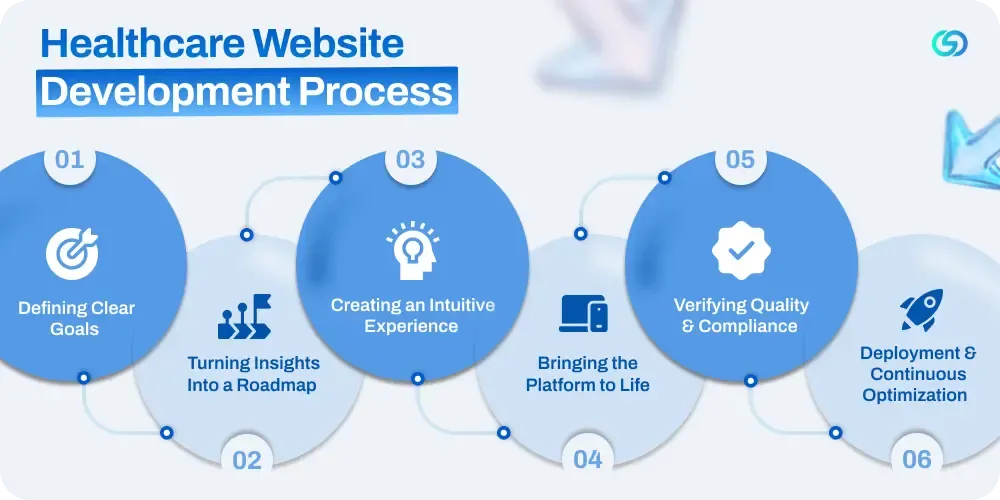
Developing a healthcare web solution is not like building a regular website. It is a multi-layered process that needs technical precision, regulatory compliance, and a comprehensive understanding of real-world medical workflows. Here is a full web development process you require to follow for developing your healthcare web platform.
1️⃣ Defining Clear Goals
This phase focuses on understanding business objectives, patient needs, clinical workflows, and regulatory requirements. Stakeholder interviews and market analysis help define clear goals, functional scope, success metrics, and long-term platform vision.
2️⃣ Turning Insights Into a Roadmap
Insights gathered during discovery are translated into a structured development roadmap. This includes technology selection, feature prioritization, compliance planning, timelines, and resource allocation to ensure controlled, scalable, and risk-managed execution.
3️⃣ Creating an Intuitive Experience
User-centric UI/UX design ensures accessibility, clarity, and ease of navigation for patients, providers, and administrators. Wireframes and prototypes are built to align usability with healthcare workflows and compliance-driven interface requirements.
4️⃣ Bringing the Platform to Life
Frontend and backend components are developed using secure, scalable architectures. APIs, EHR integrations, databases, and security frameworks are implemented while following healthcare standards to ensure performance, interoperability, and data protection.
5️⃣ Verifying Quality and Compliance
Comprehensive testing validates functionality, performance, security, and compliance. This includes usability testing, vulnerability assessments, interoperability checks, and regulatory audits to ensure the platform meets healthcare standards before deployment.
6️⃣ Deployment and Continuous Optimization
Once testing confirms readiness, deployment starts with robust monitoring and long-term streamlining. Roll out to a small number of users for collecting feedback. Performance monitoring is crucial and includes tracking uptime, user activity, and speed. Ongoing maintenance will include security patches, streamline performance, and remain updated with new regulations.
Compliance and Regulatory Requirements in Healthcare Web Development
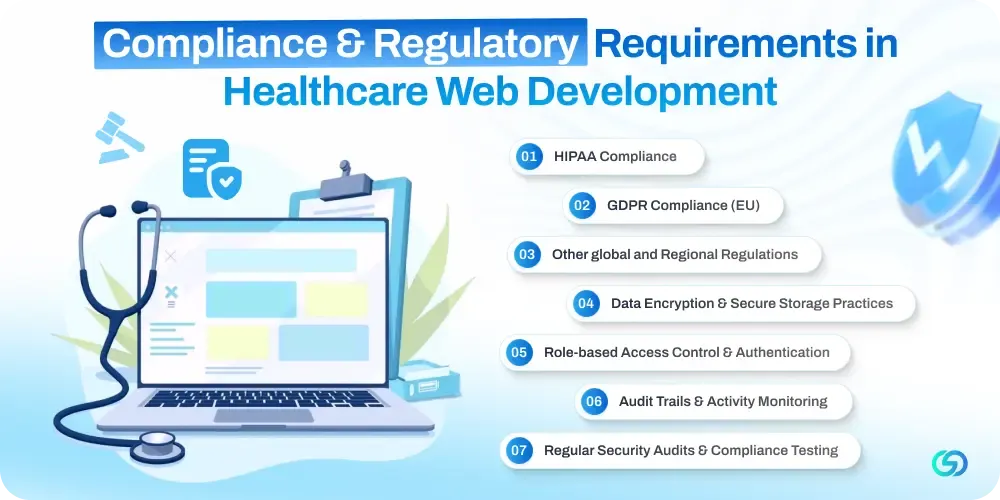
Developing a complaint and secure web platform needs strategic planning starting from the inception of the project, mainly when working with custom software development services. These specialized services realize the unique regulatory security and landscape demands of the sector. If you partner with a healthcare web development company, given below are the compliance needs you should consider when planning to build a healthcare web platform.
⏭️ HIPAA Compliance
The HIPAA or Health Insurance Portability and Accountability Act sets the standard that protects sensitive patient health data in the US. Any healthcare website or web app handling Protected Health Information or PHI, starting from the records of patients to appointment details, should be complying with HIPAA.
In order to achieve this, platforms require robust data encryption, secure hosting, role-based access control, and detailed audit logs. HIPAA also helps in mandating disaster recovery and data backup mechanisms for ensuring continuity of business and preventing loss of data.
⏭️ GDPR Compliance (EU)
The GDPR, or General data Protection Regulation, helps in protecting the personal information of EU citizens and applies to all the web platforms that are serving patients in the European Union. GDPR helps in emphasizing the consent of the user minimizing data, and the right to access or delete personal information.
Healthcare businesses should clearly inform users how their information will be used, get clear content before processing it, and store only what is needed.
Healthcare business should clearly inform users how their information will be used, get explicit content before you process it, and store what is important. Data breaches should be reported within 72 hours.
⏭️ Other global and Regional Regulations
Before HIPAA and GDPR, several regions enforced their own healthcare data protection laws. In Canada, the PIPEDA or Personal Information Protection and Electronic Documents Act governs how personal health information is shared and collected.
The U.K.’s NHS Data Security Standards define how patient data should be handled within healthcare systems. Several countries in the Middle East and Asia have similar privacy frameworks. For worldwide healthcare solutions, adhering to the local laws is crucial or avoiding operational and legal risks.
⏭️ Data Encryption and Secure Storage Practices
Encryption can be defined as the backbone of healthcare data security. It makes sure that even here are unauthorized users who are accessing your system, patient information stays unreadable. A powerful healthcare web platform should encrypt information both in transit and at rest.
Moreover, strong storage involves tokenization, secure key management, and redundant backups across compliant and trusted cloud environments.
⏭️ Role-based Access Control and Authentication
RBAC ensures that only the users who have the authority like nurses, doctors, or administrators, can access particular sections of the system based on their role. This helps in preventing unauthorized exposure of sensitive information and decreases insider threats.
Complementing RBAC with multifactor authentication (MFA) or password-less authentication strengthens complete platform security, ensuring that even legitimate users can verify their identity securely.
⏭️ Audit Trails and Activity Monitoring
Audit trails record all the interactions within your healthcare system, starting from logins to data edit.
By maintaining comprehensive logs, healthcare business can find out unauthorized access, track system behaviour, and simplify the regulatory audits.
⏭️ Regular Security Audits and Compliance Testing
Compliance is not only a single-time process, but it is continuous. Daily or regular security audits and compliance testing help in finding out vulnerabilities before they lead to breaches. This involves penetration system, vulnerability assessments, as well as third-party compliance reviews.
Such proactive checks not only protect your business but also maintain patient reliability and regulatory approval.
How Much Does a Healthcare Website Cost?
The cost of developing a healthcare website will depend on how complex the site is. In case you are a small solo practitioner with more basic website requirements, your website will be less affordable than a website for a big hospital system with several factors.
As a result of a varied range of requirements, the cost of healthcare web development can largely vary, starting from less than $10K from small practitioners to more than $250K for businesses with more complex requirements. A lot of additional factors go into the cost of web development, including-
- The Scope of the Project: Refreshing a website is typically less affordable than a complete build.
- Ongoing Support/ Maintenance Required: An extremely complicated website will need better maintenance, resulting in higher maintenance costs over time.
- The Project’s Timeline: If you only have a few weeks for getting a new healthcare website up and running, your developer should charge more as they have to devote more time for the project.
- Design and Features Complexity: A relatively basic, simple website will be generally less affordable for building and maintaining than a strong, complex website with several features. Your healthcare website may be required to serve as a detailed patient resource with telehealth functionality and a patient portal, which can be more expensive.
Common Implementation Challenges and How to Overcome Them
Developing a healthcare web platform includes navigating complicated technical, operational, and regulatory hurdles. The six challenges given below represents the most important obstacles healthcare business’s face. Every proven solution when strategically addressed strategically from project inception.
Challenge 1: Legacy EHR Integration Complexity
Problem: The present EHR systems mostly work on proprietary formats and outdated protocols with limited API documentation. Attempts of integration result in incomplete access of data, manual workarounds, and failed synchronization that undermine the objectives of automation.
Solution:
- Partner with developers who have successfully incorporated your EHR system.
- Implement phased incorporation: start with read-only access, expand to a bidirectional sync after validation.
- Request formal API documentation as well as integration support in writing from the vendor.
- Budget 20 to 30% additional timeline allocation for integration of EHR vs. Standard integrations.
Challenge 2: HIPAA Compliance Uncertainty
Problem: HIPAA regulations span 1600+ pages covering organizational, technical, and administrative needs. Development teams give frequent priority to technical security while overlooking the compulsory policies, audit procedures, training documentation, and vendor agreements. Non-compliance post-launch results in substantial penalties.
Solution:
- Engage a HIPAA compliance consultant in the discovery phase.
- Establish data handling policies before the development starts.
- Embed security controls in the system architecture, other than retrofitting post-development.
- Establishing data handling policies before the development starts.
- Budget for yearly security assessments and yearly penetration testing.
Challenge 3: Real-time Data Synchronization
Problem: Multi-system environments need instantaneous information updates across EHRs, pharmacy networks, and billing systems. Delayed synchronization can lead to data inconsistencies like billing errors and duplicate transactions. Trustworthy real-time sync needs sophisticated handling of errors and management of transactions.
Solution:
- Implement event-driven architecture utilizing message queues.
- Deploy detailed handling errors with automatic retrying logic for failed tasks.
- Execute detailed testing of failover scenarios as well as degradation protocols.
- Apply idempotency keys to prevent duplicate processing of transactions.
- Validate a two-system synchronization before expanding to additional systems.
Challenge 4: Clinical Staff Adoption
Problem: Healthcare professionals resist modifications of workflow despite platform enhancements. Established legacy system and patterns familiarity develop barriers of adoption. Resistance results in a parallel system operation, duplicated entry of data, and business inefficiency.
Solution:
- Incorporate clinical staff in the design and iterative testing phase.
- Provide comprehensive, several-modal training (instructor-led, documentation, video).
- Maintain legacy system access for 2 to 4 weeks during the parallel work phase.
- Designate department super users for serving as peer trainers as well as support resources.
- Find out and prioritize one workflow element with measurable time-saving enhancements.
- Establish responsive post-launch support with fast resolution of issues.
Challenge 5: Prescription Image Verification
Problem: Patient-submitted prescription images largely vary in blurred photos, quality, illegible handwriting, and incomplete documentation. Manual pharmacist verification remains time intensive. Optical character recognition (OCR) automation inconsistently succeeds on unclear images needing hybrid approaches for verification.
Solution:
- Deploy AI-powered OCR tools (AWS Textract, Google Vision) for automated initial extraction.
- Offer patient guidance with visual examples for acceptable quality of images.
- Maintain a compulsory human pharmacist review and approval for all prescriptions.
- Allow simple re-submission workflows without penalty and friction.
- Communicate verification timelines clearly.
- Implement chat support or a fallback phone for unresolvable verification cases.
Challenges 6: Competitive Market Positioning
Problem: Established healthcare platforms command significant funding, brand recognition, as well as user scale. Complete competition on pricing and features proves unwinnable for the new entrants. Generic development of a platform against dominant competitors guarantees failure in the market.
Solution:
- Find out undeserved market segments.
- Develop regional dominance before pursuing national expansion.
- Differentiate via superior user experience rather than parity of features.
- Establish strategic partnerships with local healthcare systems and providers.
- Prioritize implementing user feedback for particular target segments.
- Develop white-label solutions allowing other businesses to brand your technology.
Healthcare Web Development Trends and Considerations for 2026
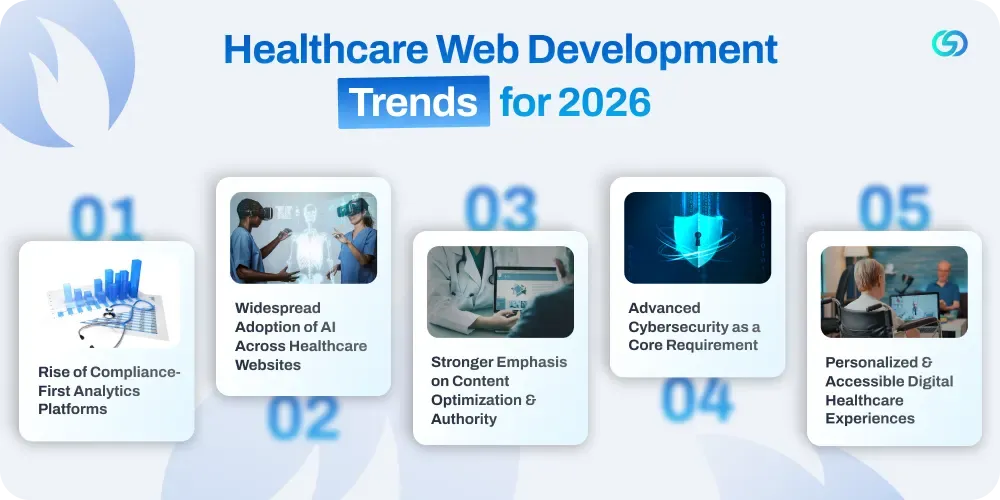
As digital healthcare continues to mature, web platforms are evolving beyond basic information portals into intelligent, secure, and patient-centric ecosystems. In 2026, healthcare organizations must balance innovation with compliance, trust, and usability while adapting to rapidly changing technologies and patient expectations.
⏩ Rise of Compliance-First Analytics Platforms
Data-driven decision-making remains critical in healthcare, but regulatory compliance is now non-negotiable. In 2026, healthcare organizations are increasingly adopting analytics tools built specifically for HIPAA and healthcare data protection requirements. These platforms enable behavioural tracking, performance insights, and conversion optimization without exposing protected health information (PHI), ensuring privacy, security, and regulatory alignment.
⏩ Widespread Adoption of AI Across Healthcare Websites
Artificial intelligence is becoming deeply embedded in healthcare web development. AI-powered tools are being used for symptom triage, personalized content delivery, clinical decision support, and operational automation. However, healthcare organizations must implement AI responsibly, with clear data governance, explainability, and privacy safeguards to maintain patient trust while leveraging intelligent automation.
⏩ Stronger Emphasis on Content Optimization and Authority
Healthcare websites are increasingly functioning as trusted educational hubs. In 2026, optimized, medically accurate, and search-friendly content plays a critical role in patient engagement and lead generation. Blogs, condition-specific pages, and resource centres help organizations build authority, improve discoverability, and educate patients throughout their care journey.
⏩ Advanced Cybersecurity as a Core Requirement
With healthcare remaining a prime target for cyberattacks, security is a foundational consideration in web development. Modern healthcare websites must incorporate advanced security measures such as encryption, secure APIs, continuous monitoring, vulnerability testing, and zero-trust architectures. Proactive cybersecurity planning is essential to protect sensitive data and ensure uninterrupted care delivery.
⏩ Personalized and Accessible Digital Healthcare Experiences
Patient expectations are shifting toward personalized, convenient, and inclusive digital experiences. Features such as personalized dashboards, AI-driven recommendations, chatbots, location-based services, and accessibility-first design help healthcare organizations deliver tailored interactions that improve engagement, satisfaction, and long-term patient relationships.
How to Find Healthcare Website Developers?
Finding healthcare website developers is a challenging task, especially if you are searching for professionals with an extraordinary set of skills. In-house hiring is going to take loads of time as well as money and finding a professional healthcare web development company will need you to through a detailed process for assessment. There are a lot of outsourcing options available, but the real challenge is to find a dedicated outsourcing partner who not only delivers but is also really invested in your success.
In order to ensure that you are working with a professional, follow this evaluation process:
💠 Check Quality and Professional Approach
Go for the consultation process in order to get a clear idea of the process and development technology. This will help you understand the company’s approach and whether they can meet your development needs.
💠 Check References
Ensure to go through the reviews on the company’s website and other platforms like Clutch. In case you already have a list of the potential outsourcing partners, another crucial step will be to get recommendations from the previous clients of the outsourcing partner. This way, you can get a deeper insight into how organized the healthcare development company is and the range and quality of services they offer, their style of communication, and complete client satisfaction.
💠 Conduct Detailed Research
After finding out the objectives of IT outsourcing, the next step is to look for an IT company that would fit the requirements of your business. Most of the firms make the mistake of conducting research only in Google. However, the truth is you will not get all your answers from Google; you will have to dig deeper: review client testimonials, evaluate portfolios, and look for proven experience in your industry.
Conclusion
Healthcare web development, majorly custom website development services has come up as a strategic necessity for businesses that aim to deliver accessible, secure, and patient-centric digital care. In the year 2026 and beyond, a healthcare website is not simply a communication tool but also a unified platform driving operational efficiency, patient engagement, and regulatory compliance. Starting from the core features, such as telemedicine patient portals to AI and analytics-powered advanced capabilities, the correct approach can majorly elevate care delivery and brand credibility.
By partnering with an experienced healthcare web design and development company, healthcare businesses can build compliant, scalable, and future-ready platforms. By investing in the correct technology today, hospitals and healthcare clinics can ensure better results, sustainable growth, and an increasing digital healthcare ecosystem.
Frequently Asked Questions
How can AI improve healthcare websites?
AI enhances healthcare web development by utilizing symptom checkers, predictive analytics, personalized dashboards, automated appointment reminders, and 24/7 chat assistance, thereby improving both patient engagement and operational efficiency.
How do you ensure data privacy in healthcare web applications?
ConvexSol ensures data privacy via encryption, secure cloud hosting, regulatory compliance audits, strict access controls, and transparent consent management processes.
Can telemedicine be integrated into an existing healthcare website?
Yes. Telemedicine features like secure video consultations, digital prescriptions, appointment scheduling, digital prescriptions, and EHR syncing can be incorporated into an existing platform via custom healthcare web development.
How do healthcare websites handle real-time patient data?
Healthcare websites utilize event-driven architecture, secure APIs, and encrypted databases for synchronizing patient information across EHRs, billing systems, and telehealth modules in real-time while maintaining compliance.
Can healthcare websites support multi-location hospital networks?
Yes. ConvexSol chooses a scalable healthcare web development approach that enables centralized multi-branch hospital management, involving shared EHR access, unified dashboards, and appointment systems.
What role does API integration play in healthcare web development?
API allows secure integration with insurance platforms, EHR systems, pharmacy networks, third-party health tools, and wearable devices, ensuring interoperability and seamless exchange of data.