- IoT Industry Specific Use Cases
- 2026-03-03
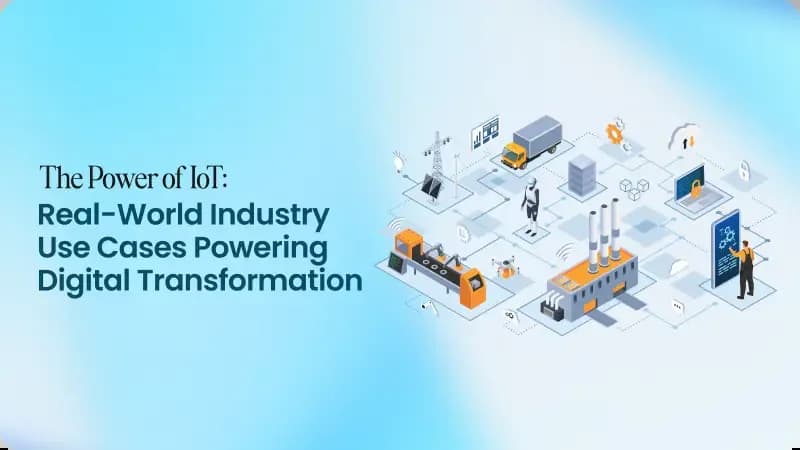
The Power of IoT: Industry Use Cases Driving the Next Wave of Digital Transformation
Audio Track
Table of Contents
Key Takeaways:
- IoT is redefining every crucial industry, starting from manufacturing to agriculture and the public sector, by allowing connectivity, automation, and real-time decision-making.
- Real-time monitoring and predictive maintenance remain among the most impactful IoT apps, enabling businesses to decrease downtime, enhance safety, and streamline operational efficiency.
- Smart environments are currently the new normal, including smart cities, smart homes, transportation, and connected infrastructure that decrease energy waste and enhance quality of life.
- IoT helps drive customer experience and personalization, allowing everything from smart room automation in hospitality to personalized retail journeys, as well as intelligent insurance policies.
- Businesses that are adopting IoT now gain a competitive edge, with opportunities for enhanced sustainability, improved risk management, lower costs, and data-driven innovation, making IoT ideal for future-ready digital transformation.
Overview
The IoT, or Internet of Things, has become one of the most transformative technologies defining the current digital economy. Connecting machines, devices, sensors, and software into a smart network allows simplified data exchange, real-time insights, and scaling automation. This transformation is assisting businesses in uncovering new efficiencies, decreasing operational costs, and enhancing decision-making across all industries.
Starting from smart factories and connected systems for healthcare to intelligent logistics and energy-efficient buildings, IoT is making a data-driven and more responsive world. Businesses can at present monitor assets remotely, improve customer experiences, predict issues before they take place, and develop a completely new model for digital service.
As industries speed up their journeys of digital transformation, IoT is not a future possibility anymore; it has become a strategic need. Its speedy adoption is making a way for smarter workflow, sustainable growth, and innovative business models that will shape the next era of worldwide competitiveness.
Why is IoT Rapidly Gaining Popularity?
The prevalent reach of IoT or Industry Internet of Things has affected every industry virtually, driven mainly by factors such as population growth and urbanization. While the utilization of IoT is mainly seen in smart cities, it majorly transforms other sectors, like healthcare and manufacturing. These industries are projected to hold the largest share of the worldwide IoT market. Owing to its revolutionary impact across sectors and its infinite potential for connectivity, the IoT cements its status as an omnipresent phenomenon.
IoT Statistics for 2026 & Beyond
- Connected Devices: The number of connected IoT devices worldwide is estimated to reach approximately 39 billion by 2030 and is expected to exceed 40.6 billion by 2034.
- Market Value: The worldwide IoT market is projected to increase from an estimated $547.06 billion in 2025 to $865.20 billion by 2030, a compound yearly growth rate of 9.6%.
- Data Generation: The volume of information generated by IoT devices is expected to dramatically increase, necessitating the utilization of edge computing and real-time processing.
- Market Share by Region: The Asia-Pacific region is expected to be the largest IoT market, driven by speedy industrialization and government support for smart infrastructure. North America is also an important market, with the U.S accounting for more than 90% of regional connections.
Top IoT use cases across industries
There remains a wide variety of ways in which IoT can add value both to the corporate world and the modern lifestyle. It enables businesses to optimize operations and make informed decisions, and thus, it is largely adopted across sectors. IoT technology allows a varied range of apps across several domains, including smart home devices, wearables, consumer electronics, industrial sensors, healthcare devices, and more. So, let’s explore the top industries that can benefit from IoT apps.
🔶 Manufacturing
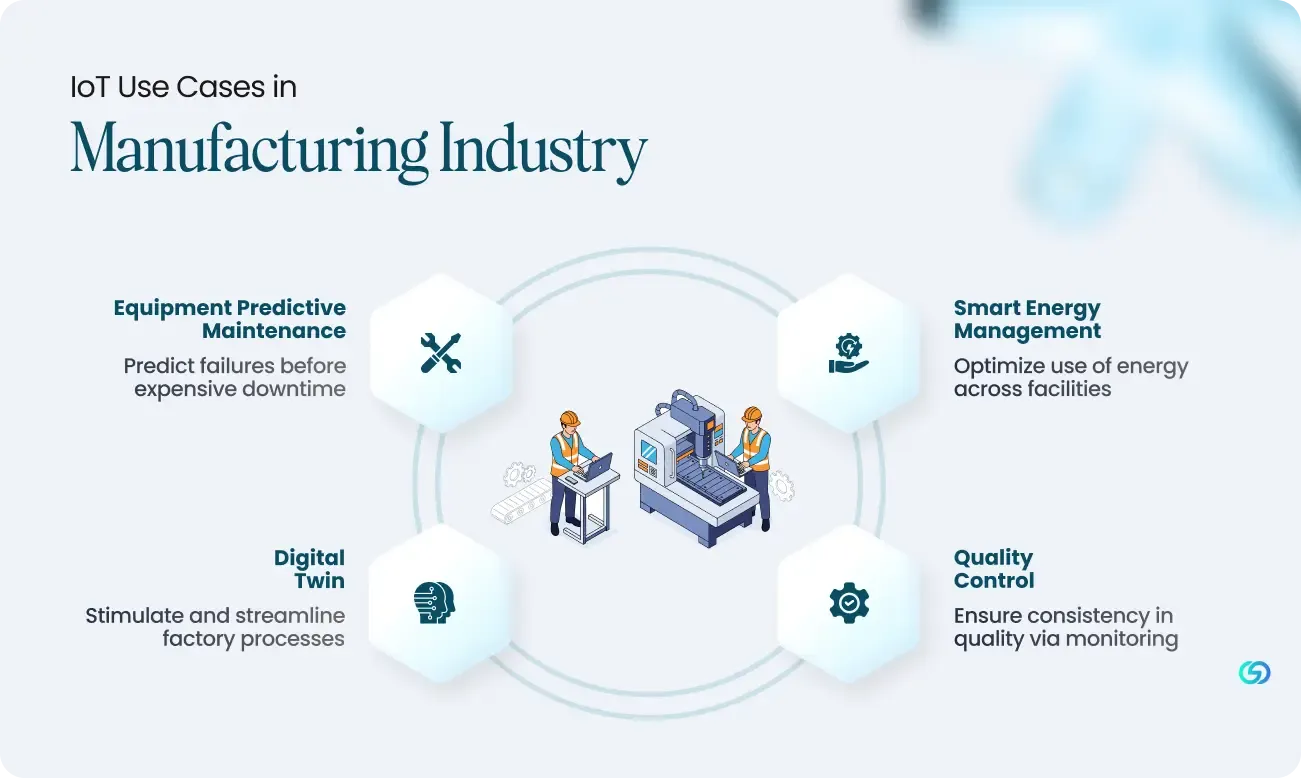
🔷 Equipment Predictive Maintenance
Industrial IoT solutions collect real-time information from equipment endpoints, allowing remote monitoring of the conditions of machines and helping in predicting potential issues, therefore providing the personnel time for preventing expensive failures and production downtime.
🔷 Digital Twin
When IoT sensors are installed densely enough for collecting information on everything within a factory, manufacturing businesses can develop a virtual copy of the manufacturing facility, or a digital twin, with the help of cloud computing technologies and machine learning. Digital twins are manufacturing let engineers stimulating production floor processes, making experiments, and discovering process bottlenecks or chances for product improvement without interfering in real-life manufacturing workflows.
🔷 Smart Energy Management
By implementing IoT-allowed smart meters throughout the facility and connecting them to energy management systems, plants can optimize energy audits and detect abnormalities faster in energy consumption, thus saving high costs and ensuring energy efficiency.
🔷 Quality Control
Businesses can utilize IoT sensors for tracking such production floor metrics as humidity, temperature, or pressure for controlling the conditions of manufacturing processes and thus ensuring the quality of the end-product. Additionally, IoT sensors allow factories to make efficient monitoring more rigorous and have it at every step of the product manufacturing instead of only at the end stage.
🔶 Healthcare
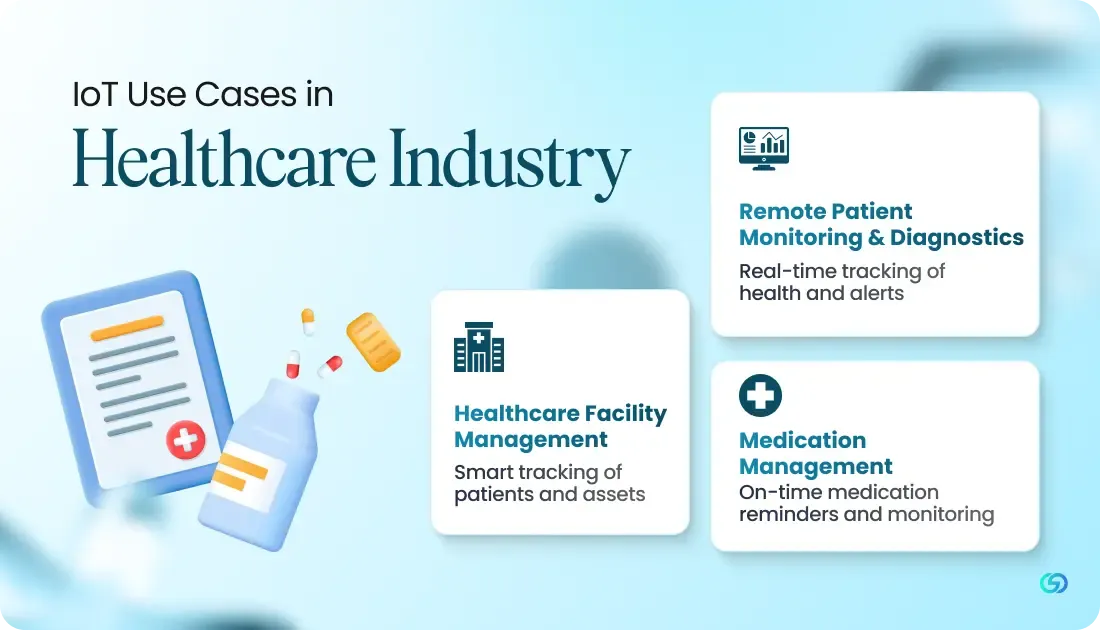
🔷 Remote Patient Monitoring & Diagnostics
Patient trackers, as well as other wearables equipped with IoT sensors, can monitor the health conditions of the patient and alert the doctor in the case of an emergency. Additionally, IoT-powered medical devices can foster diagnostics of a patient by collecting comprehensive information about a person’s condition.
🔷 Healthcare Facility Management
Hospitals can utilize IoT in combination with video surveillance for improving the tracking of hospital equipment, such as dialysis stations, wheelchairs, or smart beds, and the flow of patients around the facility. Depended on IoT data from across the healthcare facility, the administration of the hospital can also offer correct information on the availability of treatment rooms or theatres for surgery.
🔷 Medication Management
Patient devices with integrated IoT sensors can manage by sending notifications or alerts when it is time for an injection and taking medicine. Additionally, connected implantable devices can help patients keep track of the medication doses, such as insulin or other hormonal implants.
🔶 Automotive
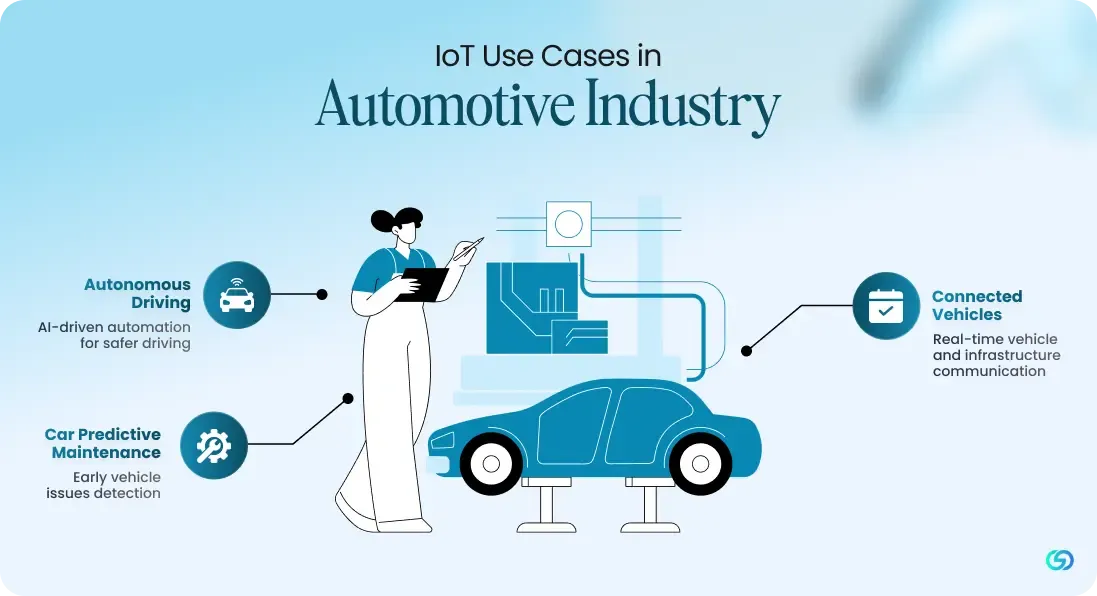
🔷 Connected Vehicles
IoT is the main enabler of connected vehicle technology, facilitating the interactions between the road infrastructure elements and cars. Vehicles, traffic lights, and pedestrian devices all exchange information when connected to one IoT network, helping to abolish congestion of traffic, enhance road safety, and streamline car and road infrastructure energy usage.
🔷 Autonomous Driving
Along with computer vision and AI, IoT is a crucial element of autonomous vehicle technology. At present, there are driver-assistance systems offering multiple levels of automation, spanning from just assisting the driver with cruise control or lane centering to fully taking the driver over, with no human intervention needed.
🔷 Car Predictive Maintenance
IoT sensors installed across the vehicle can collect information about its state, including fuel consumption, engine performance, tire pressure, and oil levels. This streamlines car diagnostics, helping owners to detect and prevent potential mechanical issues faster, saving maintenance costs, enhancing the complete safety of vehicles, and decreasing its downtime.
🔶 Oil & gas
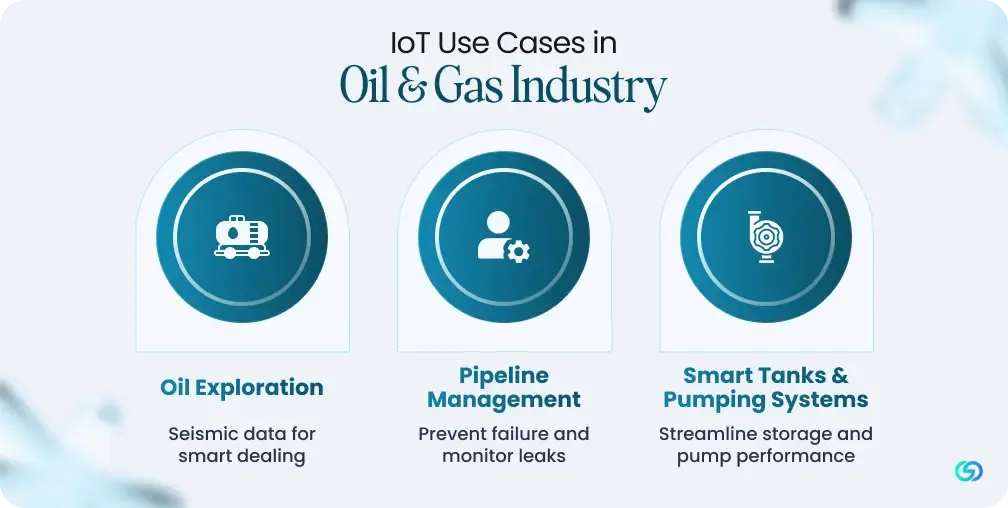
🔷 Oil Exploration
Connected IoT sensors collect seismic information as well as transmit it to the geologists for more analysis to help with the making of subsurface structure images, detecting hydrocarbon reservoirs, and choosing the most optimal drilling sites, thus speeding up the exploration.
🔷 Pipeline Management
IoT sensors can monitor pipelines for signs of leaks, corrosion, and other issues, finding out problems before they happen, for more effective predictive maintenance of the pipeline and decreasing the production downtime.
🔷 Smart Tanks & Pumping Systems
IoT sensors assist in monitoring oil levels in a tank, assisting employees in dispatching trucks only when it is time for refilling the reservoir. Moreover, IoT sensors can observe the performance of the pump as well as alert the maintenance team for possible hazards for avoiding injuries and keeping employees safe.
🔶 Telecom
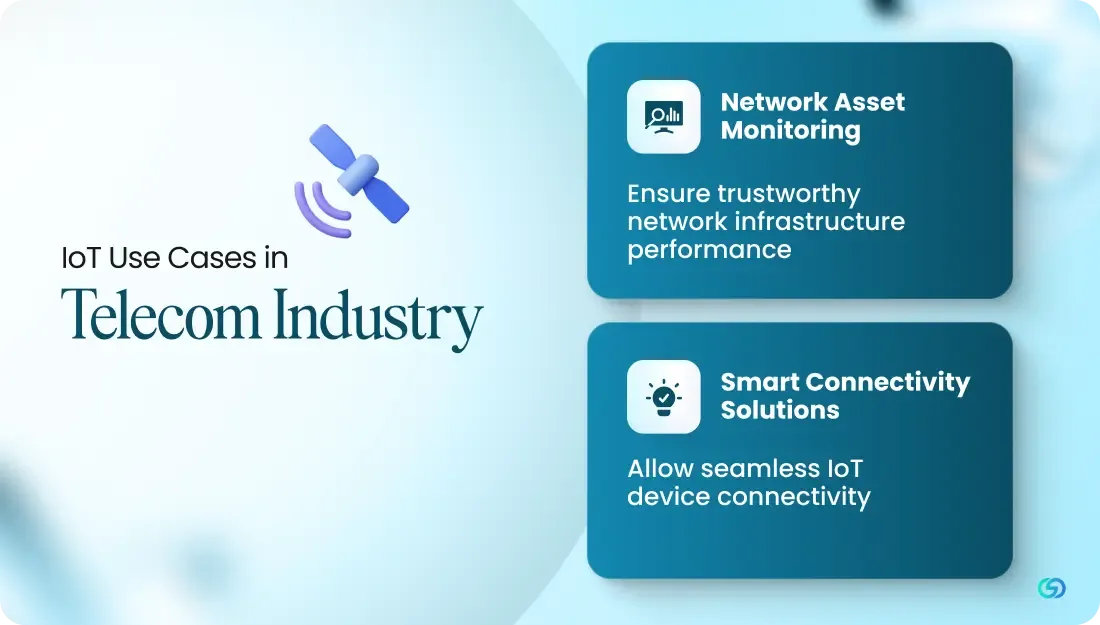
🔷 Network Asset Monitoring
The telecom business can use IoT sensors for tracking the health of network infrastructure and assets across various locations. Processing the information with predictive analytics solutions, they can detect potential issues early as well as addressing them to ensure steady network performance.
🔷 Smart Connectivity Solutions
Telecom providers can expand their service provision with devoted IoT connectivity solutions, like eSIMs and SIM cards for IoT platforms, connected devices, and IoT management tools for healthcare, manufacturing, logistics, and other types of businesses.
🔶 Travel & Hospitality
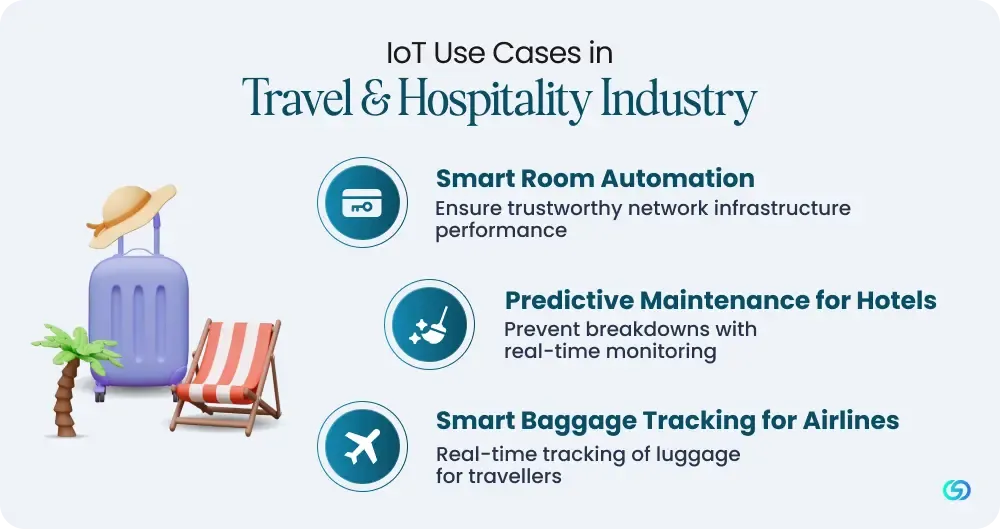
🔷 Smart Room Automation
IoT-powered smart rooms enable guests to control temperature, lighting, curtains, as well as entertainment systems via mobile app or voice assistant occupancy sensors and make automatic adjustments for the lighting and HVAC to decrease energy waste. Hotels take advantage of significantly low utility costs and improved guest comfort. The personalized experience increases scores of satisfactions, while automation decreases the manual workload of staff. Smart room automation is currently the main differentiator for modern hospitality brands that are focused on sustainability and convenience.
🔷 Predictive Maintenance for Hotels
IoT sensors can be installed in HVAC systems, boilers, and kitchen equipment to help in performance monitoring in real-time. These sensors can detect vibrations, inefficiencies, early malfunction signs, or temperature changes. Maintenance teams get immediate alerts, allowing proactive repairs before breakdown takes place. This decreases downtime, enhances equipment lifespan, and ensures uninterrupted guest services. Predictive maintenance improves operational trustworthiness, lowers maintenance costs, and prevents negative guest experiences caused by sudden failures in equipment.
🔷 Smart Baggage Tracking for Airlines
IoT enables beacon sensors and budget tags, enabling travellers to track their luggage from check-in to arrival with the help of a mobile app. Real-time location updates decrease the risk of mishandled or lost bags and provide better transparency for passengers. Airlines get an advantage for seamless flow of baggage, fewer customer complaints, and reduced compensation costs. Automated baggage tracking improves the complete travel experience by providing reassurance, convenience, and control for travellers all over the world.
🔶 Retail
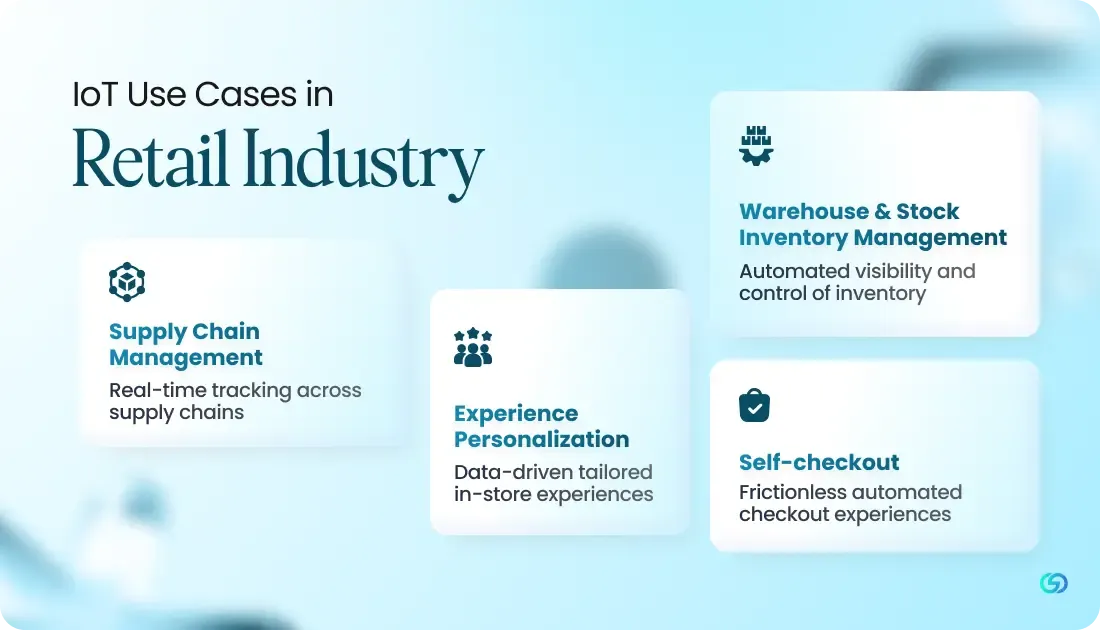
🔷 Supply Chain Management
IoT sensors such as NFC tags and RFID can track goods in real-time at the production line, in the store, and during transportation, offering retailers complete visibility into the state and location. IoT proves beneficial mainly for keeping track of the delivery of perishable products, enabling retailers to keep a check on their location and transportation conditions, get notified in case of any disruptions, as well as streamline delivery routes and conditions in real-time.
🔷 Warehouse & Stock Inventory Management
By using IoT sensors, retailers can optimize complicated manual inventory management processes as well as partially automate retail warehouse management, keeping in check remotely the inventory levels throughout the day, as well as helping in avoiding stockout or overstock.
🔷 Experience Personalization
Retailers can implement IoT devices throughout their shop floors for gathering behaviour data and customer movement, and make the experience of shopping more interesting, depending on the detected insights from changing store layouts in line with customer preferences for making personalized ads as well as marketing campaigns.
🔷 Self-checkout
With smart IoT-powered self-checkout services installed on the floors of the shop, customers no longer need to manually scan their credit cards or the products. Instead, systems like these can automatically detect products that are added to the cart and charge the mobile app accounts of the customers, decreasing long queues and making shopping more convenient.
🔶 BFSI
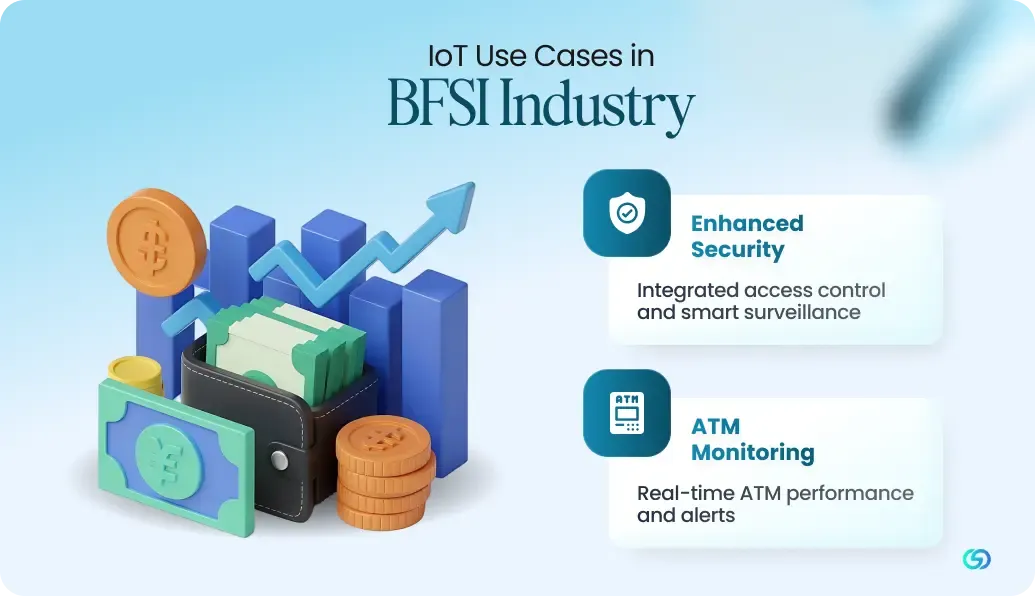
🔷 Enhanced Security
Financial businesses and banking can bring together smart security devices and CCTV cameras into a unified IoT infrastructure for protecting their buildings and assets. For more sensitive facilities, security can be strengthened with IoT-focused biometric attendance systems featuring devices such as fingerprint readers or face ID installed throughout certain business floors for controlling access.
🔷 ATM Monitoring
IoT technology helps banks in monitoring ATMs in several locations for malfunctions, the need for replenishment, or possible tampering, which enables more effective allocation of human resources as well as servicing ATMs when only required.
🔶 Logistics
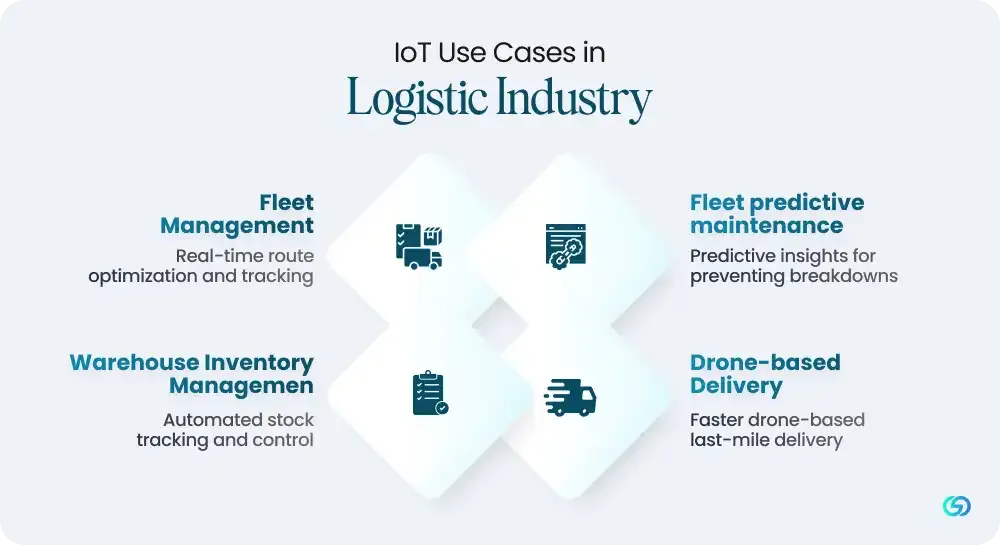
🔷 Fleet Management
By using IoT sensors, fleet managers can track the locations, cargo weight, speed, engine performance, and the drivers’ state of the vehicle, and utilize this data for planning optimal routes and enhancing them.
🔷 Fleet predictive maintenance
IoT sensors embedded in fleet cars can collect a varied range of data, including driving patterns of each vehicle, braking conditions, and oil levels. Analyzing this data, businesses can predict potential breakdowns as well as schedule proactive fleet maintenance activities.
🔷 Warehouse Inventory Management
IoT technology can be extremely useful for warehouse management, handling logistic businesses to keep a track of the stock levels, ensure safe storing of goods, as well as automate some manual information collection operations, thus decreasing labour expenses.
🔷 Drone-based Delivery
Logistic businesses can make drones a component of their IoT infrastructure and utilize them for offering perishable products or medication right to the doorstep of the customer.
🔶 Agriculture
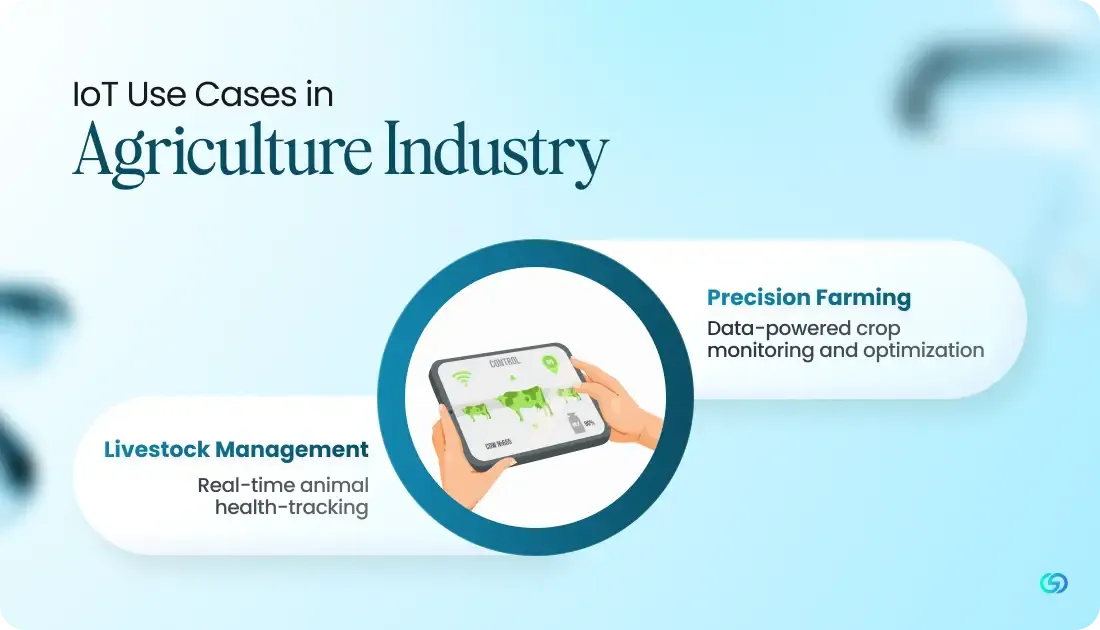
🔷 Precision Farming
IoT systems are a significant component of precision farming, collecting such information as humidity, pest infections, temperature, and complete soil condition to help farmers make decisions on the ideal use of water and fertilizers, saving expenses and making farming more efficient.
🔷 Livestock Management
Farmers can use IoT sensors to instantly track the location and health conditions of their cattle. Depending on the gathered information, advanced analytical solutions can detect illness, possible health issues, and cycles of reproduction, as well as alert farmers about them.
🔶 Public Sector
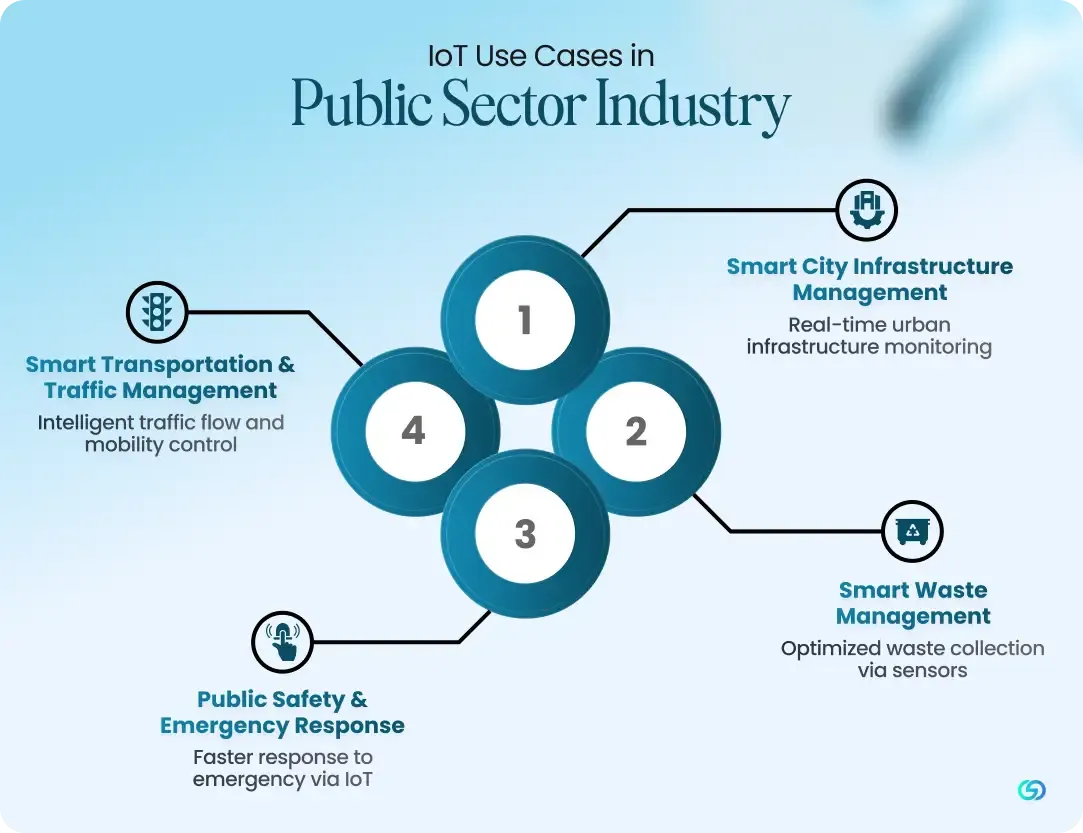
🔷 Smart City Infrastructure Management
Public authorities utilize IoT sensors for monitoring bridges, roads, streetlights, and public spaces in real-time. Smart city lights can adjust brightness automatically for saving energy, while infrastructure sensors detect vibrations, structural stress, and cracks for preventing failures. This kind of proactive monitoring allows faster repairs, decreases maintenance costs, and improves public safety. By continuous data collection, cities can enhance infrastructure planning, extend the lifespan of the assets, and provide more efficient services to the citizens.
🔷 Smart Waste Management
IoT-enabled waste bins equipped with fill-level sensors help municipalities optimize waste collection routes. When bins reach capacity, alerts are sent to collection teams to prevent overflow and maintain city cleanliness. Real-time tracking reduces unnecessary pickups, saving fuel and labor. This system improves operational efficiency, lowers environmental impact, and enhances hygiene standards. Smart waste management helps cities keep public environments cleaner while using resources more effectively.
🔷 Public Safety & Emergency Response
IoT devices strengthen emergency response systems through connected alarms, surveillance cameras, and environmental sensors. These tools detect fires, gas leaks, floods, or suspicious activities and notify authorities instantly. Real-time data enables faster decision-making, faster dispatch of emergency units, and improved coordination across departments. IoT-powered public safety solutions help reduce risks, protect communities, and prevent large-scale incidents. This creates safer, more resilient urban environments.
🔷 Smart Transportation & Traffic Management
IoT sensors integrated into traffic lights, roadways, and public transport systems help cities improve mobility and reduce congestion. Real-time traffic data enables dynamic signal control, smarter route planning, and smoother public transit operations. Connected vehicles and GPS-based fleet monitoring enhance safety and punctuality. Smart transportation systems help reduce travel time, lower emissions, and improve the overall commuting experience for citizens, making urban mobility more efficient and sustainable.
🔶 Smart Cities
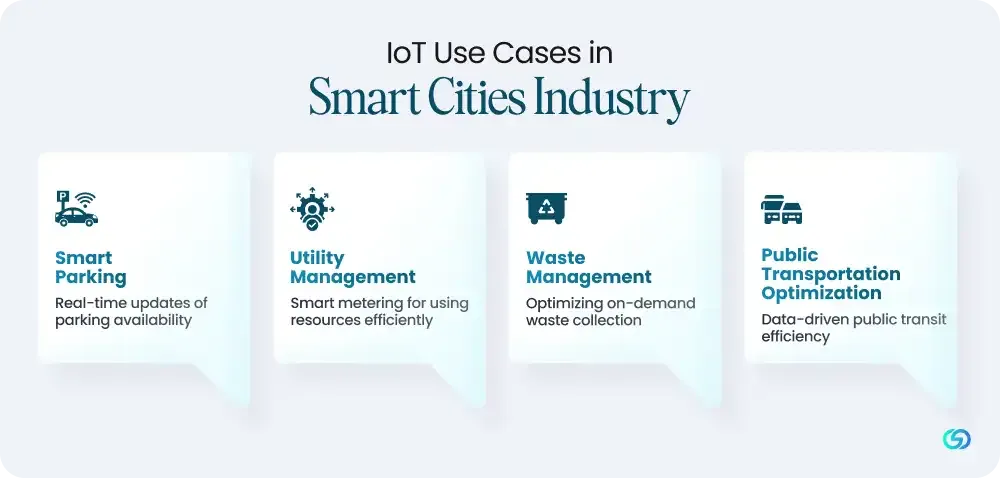
🔷 Smart Parking
An IoT system integrated with sensors installed across the parking lot will be able to send the drivers notifications about the nearest available parking spots through a mobile or an app. It can help in decreasing emissions as well as improve the complete driver experience. Collected from the parking lots across the city, data like this helps in city administration, detecting the most popular parking areas, and effectively addressing the scarcity of parking places.
🔷 Utility Management
Smart meters installed in residential areas throughout the city allow resource supply and demand monitoring in real-time, as well as ensure correct power, water, and gas consumption billing. This is how smart utility management solutions offer consumers improved control of the utilities, while the utility businesses can ensure improved sustainability via wiser management of resources.
🔷 Waste Management
IoT systems can monitor waste levels in the trash cans all over the city. This replaces the scheduled collection of waste with the zones on demand. Additionally, these IoT systems can also assist truck drivers in making ideal routes for collecting garbage, making the collection more time effective.
🔷 Public Transportation Optimization
Municipalities can utilize IoT sensors for tracking the utilization of public transport patterns. Thereafter, using IoT analytics, municipalities can detect overloaded bus or train routes as well as streamline the allocation of transport resources across the city.
🔶 Smart Homes
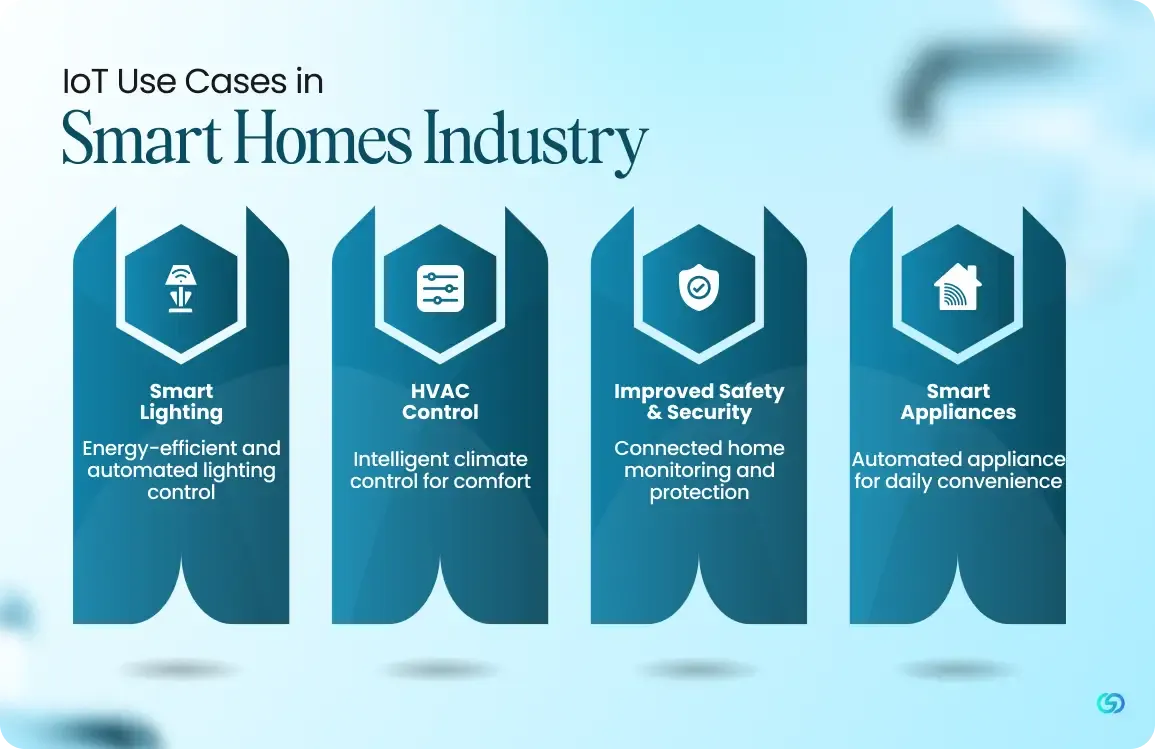
🔷 Smart Lighting
IoT-powered smart lighting allows homeowners to control lights remotely, automate schedules, and adjust brightness based on occupancy or natural light. Sensors detect motion and turn lights on or off automatically, ensuring energy isn’t wasted. Smart bulbs can also create a personalized ambience through adjustable color tones and preset scenes. These systems not only enhance comfort and convenience but also significantly reduce electricity consumption. With seamless integration into mobile apps and voice assistants, smart lighting is one of the most practical and impactful IoT home applications.
🔷 HVAC Control
Smart HVAC systems use IoT sensors and connected thermostats to maintain optimal indoor conditions while maximizing energy efficiency. They automatically adjust heating or cooling based on occupancy, time of day, and user preferences. Some systems manage climate on a room-by-room basis, reducing unnecessary energy usage. Remote control through mobile apps allows homeowners to pre-set temperatures before arriving home. By ensuring consistent comfort and lowering utility costs, IoT-driven HVAC control has become a core feature of modern smart homes.
🔷 Improved Safety & Security
IoT enhances home safety through connected sensors, smart locks, and intelligent surveillance. Smoke, gas, and water leak detectors provide instant alerts and can trigger automatic shutdowns to prevent damage. Smart cameras offer 24/7 monitoring with real-time notifications, while smart locks enable secure, remote access control. Homes can even simulate occupancy through automated lighting to deter intruders. Together, these IoT-enabled solutions deliver proactive protection, faster emergency response, and peace of mind for homeowners, making safety and security one of the strongest drivers of smart home adoption.
🔷 Smart Appliances
IoT-enabled appliances like refrigerators, washing machines, ovens, and dishwashers streamline daily routines through remote control and automation. They can start cycles, preheat, or adjust settings based on user commands from a mobile app or voice assistant. Many appliances also offer predictive maintenance by detecting performance issues early and sending alerts. Smart refrigerators track inventory, while connected ovens optimize cooking time and temperature. These intelligent devices enhance convenience, reduce energy wastage, and contribute to a more efficient and connected home ecosystem.
🔶 Insurance
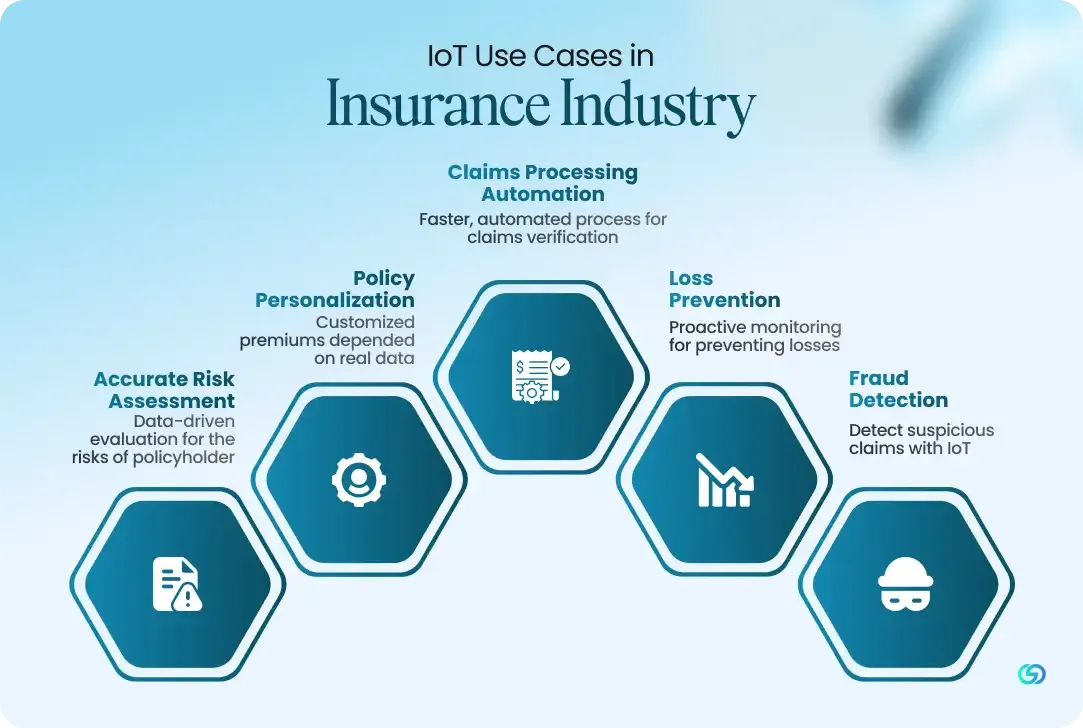
🔷 Accurate Risk Assessment
By collecting information from the IoT devices, the insurance specialists are capable of determining insurance risks depending on actual data about the lifestyle of the policyholders, driving habits, workplace safety, and property safety.
🔷 Policy Personalization
With trustworthy data on hand, insurance businesses can personalize policies for customers as well as customer groups, like providing affordable premiums for holders of low-risk policies, as well as offering extra discounts and rewards for proactively handling risks.
🔷 Claims Processing Automation
IoT in insurance speeds up claims intake as well as investigation, automatically reporting and detecting accidents, and assisting the insurers with verification, as well as payout amount determination.
🔷 Loss Prevention
IoT insurance allows ongoing monitoring of health, property, and environmental conditions, alerting users to the possibility of an accident, preventing extreme damage, as well as saving insurance carriers' money on high-cost compensations.
🔷 Fraud Detection
By helping insurers spot suspicious information discrepancies, IoT information helps in preventing fraud, like staged collisions, as well as overstated injury claims.
Conclusion
The Internet of Things is not just an emerging technology but has become the backbone of modern digital transformation. Starting from manufacturing and healthcare to public services as well as smart homes, IoT is redefining how various sectors work, innovate, and provide value. The ability to generate real-time insights, decrease costs, automate processes, and improve user experiences makes it vital for future-ready businesses. As IoT adoptions are increasing globally, businesses that invest now will gain a major competitive edge in sustainability, efficiency, and customer satisfaction.
So, if you are ready to build an intelligent, connected system that will drive tangible impact, ConvexSol is your reliable technology partner, empowering businesses with cutting-edge solutions customized for long-term digital success.