- SaaS for E-commerce
- 2025-10-27
The Rise of SaaS E-commerce Platforms: Transforming Online Business in 2025
Audio Track
Table of Contents
Key Takeaways:
- In 2025, about 2.7 billion people will be shopping online, which means retailers will be transitioning from traditional e-commerce setups to SaaS platforms.
- Software-as-a-Service is a cloud-based model that fits perfectly with the e-commerce business, offering scalability, reduced costs, flexibility, and automatic updates.
- SaaS is transforming the e-commerce landscape by personalizing customer experience, global accessibility, seamless integration, data-driven decision making, faster time to market, and more.
- Emerging SaaS trends shaping e-commerce business include hyper-personalization, headless and front-end flexibility, MACH architecture, no-code/low-code solutions, and voice and conversational commerce.
Is SaaS Powering the Next E-commerce Wave?
Software-as-a-Service (SaaS) is becoming increasingly interesting for businesses looking to start online. And honestly, there’s no better time to make a switch. The numbers might startle you!
The global digital buyer is a rapidly growing segment, with over 2.7 billion people shopping online across the world as of early 2025.
To meet this growing demand without spending much, retailers are transitioning from traditional e-commerce setups to SaaS platforms that provide ease of adoption, flexibility, and affordability.
The e-commerce website’s growth and the rise of SaaS go hand-in-hand, with SaaS e-commerce platforms being the main driver in this new wave. This usage-based model is cost-efficient for buyers and appears to be a revenue stream for tech companies.
It’s a perfect balance!
Understanding SaaS in E-commerce
SaaS runs on a simple cloud-based model, where applications are hosted by a server provider and made accessible to users over the internet. Customers can subscribe to the software instead of purchasing or installing it.
Think of platforms like Slack, Shopify, or Salesforce. All are popular SaaS examples.
SaaS fits perfectly with the rapidly moving e-commerce space because of its scalability, flexibility, reduced costs, and automatic updates. With these advantages, retailers can launch businesses quickly and adapt to changing customer demands. Besides, SaaS-based e-commerce platforms help manage operations efficiently without any upfront infrastructure cost.
How is SaaS Transforming the E-commerce Landscape in 2025?
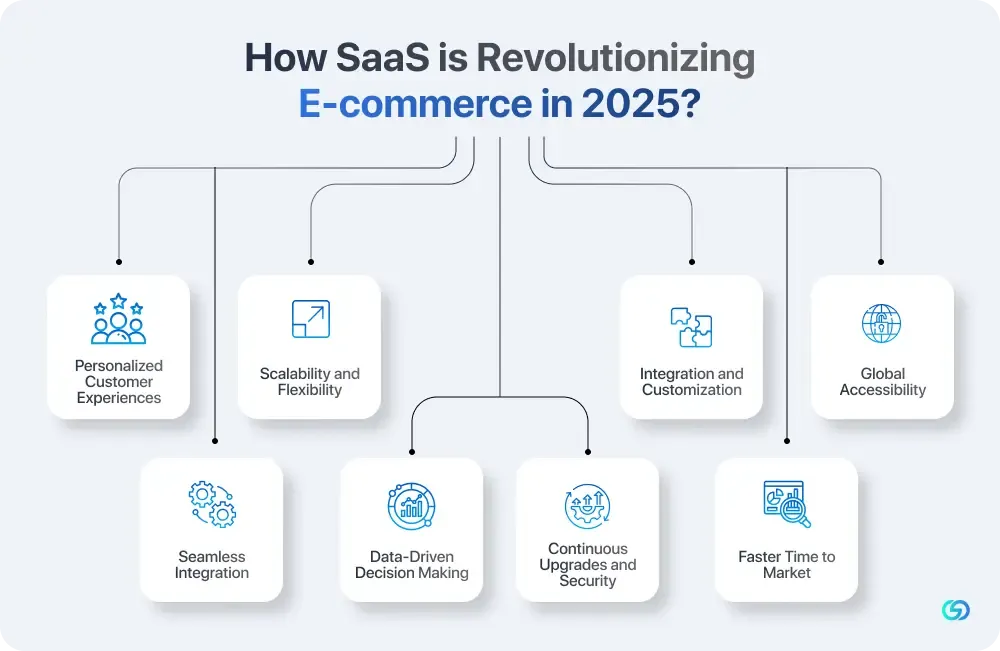
SaaS for e-commerce offers real value to businesses, effortless scaling, and lower costs. Here’s why SaaS is transforming the e-commerce landscape:
▶ Personalized Customer Experiences
In 2025, personalization is no longer a choice but a must-have. SaaS apps that are AI-powered analyze customer data in real-time. This helps in delivering personalized product recommendations, custom shopping experiences, and targeted marketing campaigns. SaaS performs this by understanding buyer behavior and preferences, which boosts customer satisfaction.
▶ Scalability and Flexibility
SaaS e-commerce solutions are strategized and implemented to scale with your business. No matter the size of your business, these platforms are capable of handling different densities of inventory, traffic, and transactions. This is what ensures your online store grows seamlessly. The flexibility offered to retailers helps them stay competitive in 2025’s ever-evolving digital marketplace.
▶ Integration and Customization
SaaS platforms are reshaping the e-commerce landscape due to their seamless integration with various third-party apps. This lets organizations customize their online stores to meet their needs, including marketing tools, payment gateways, and inventory management systems.
▶ Global Accessibility
SaaS-based e-commerce platforms prove to be highly beneficial due to their cloud-based nature, which allows retailers to operate from anywhere. This eases:
- Tapping into the international market easily
- Serving diverse customers across different time zones
- Carrying out operations even with a large team
Flexibility, as such, accelerates paradigm shift, opening doors to massive growth.
▶ Seamless Integration
Technological advancements are all about creating a connected ecosystem, and SaaS for e-commerce excels in that area. Integration is effortless with business tools, such as Customer Relationship Management (CRM), Enterprise Resource Planning (ERP), and other marketing automation software.
▶ Data-Driven Decision Making
Digital shift prospers on analytics and insights, and e-commerce platforms are designed to turn data into actionable strategies. By gathering and analyzing real-time data, businesses understand buyer preferences, supply chain and inventory, and marketing campaign success.
▶ Continuous Upgrades and Security
In 2025, staying updated is essential. SaaS e-commerce platforms offer automatic updates, which help enterprises operate with the latest technologies, features, and compliance standards.
▶ Faster Time to Market
SaaS platforms come with pre-built e-commerce functionalities, which help ease businesses into launching their online stores quickly. The platform is designed to adapt to different market requirements, supporting varied languages, multiple currencies, and tax systems. For instance, one can set up an e-commerce store, like Shopify, with a built-in payment gateway processing integration, allowing quick entry into the market without much customization. Compared to traditional platforms, this reduces time and effort.
Core Features for Your SaaS E-commerce Platform
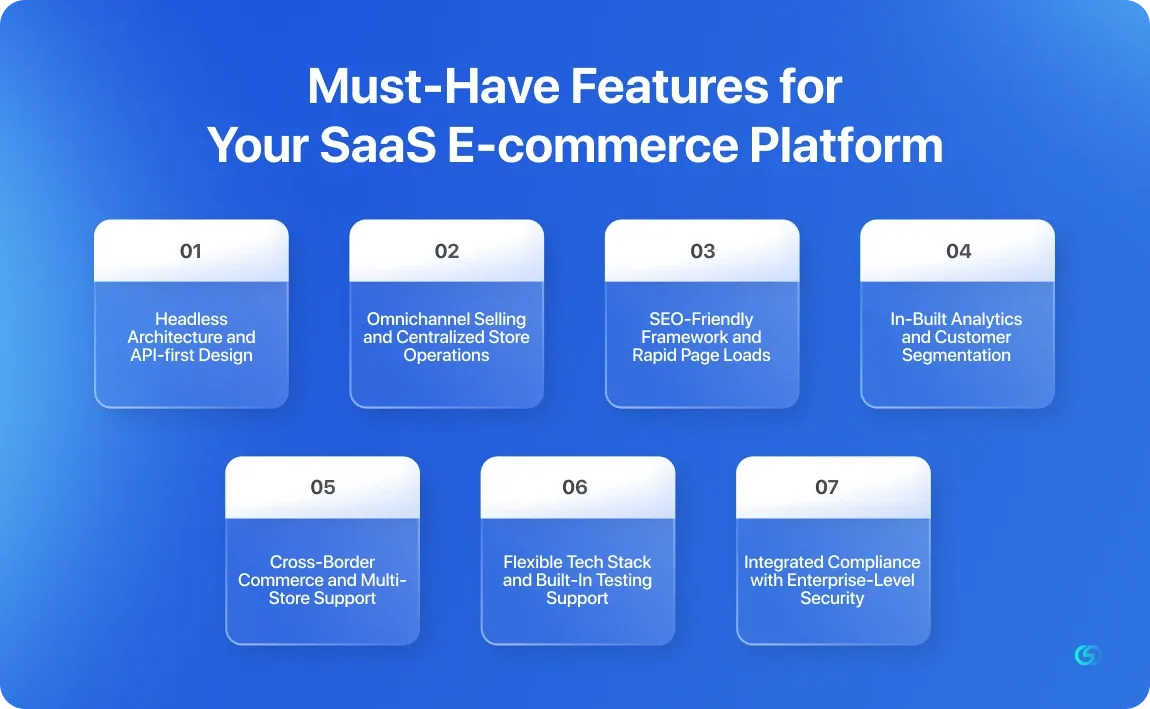
If you want a comprehensive SaaS platform, you need a suite of features that address the core business functionalities. Let’s check out some must-have features:
🔹 Headless Architecture and API-first Design
Select a platform that separates backend and front-end layers for better customization. This allows skilled developers to design and develop high-performing SaaS-based e-commerce platforms using frameworks like Vue or React. This speeds up changes and enhances UX across platforms.
🔹 Omnichannel Selling and Centralized Store Operations
Make sure that your e-commerce SaaS platform allows seamless integration with marketplaces, social commerce, POS systems, and mobile apps. A centralized backend management helps manage products, orders, and inventory. This reduces errors and eventually boosts customer satisfaction.
🔹 SEO-Friendly Framework and Rapid Page Loads
The SaaS platform feature should offer editable meta tags, a clean URL structure, and schema markup. An SEO-ready framework ensures your e-commerce site ranks, while faster page loads reduce bounce rates and enhance user experience, which drives more traffic and conversions effortlessly.
🔹 In-Built Analytics and Customer Segmentation
Select SaaS e-commerce platforms that provide real-time reporting, integrated dashboards, and audience insights. Funnel analysis, behavioral segmentation, and cohort tracking features help with smart targeting and optimizing sales.
🔹 Cross-Border Commerce and Multi-Store Support
A multi-store management feature from a single backend is a must-have. Localized languages, multiple currency support, taxes, and content variations are important features to look for. This is perfect for global and multi-brand strategies.
🔹 Flexible Tech Stack and Built-In Testing Support
Settle for an e-commerce SaaS platform that offers REST or GraphQL APIs, SDKs, CLI tools, and webhooks. These lead to faster development of custom features or integrations. Sandbox environments allow experts to prototype and test safely, ensuring reliable deployment without impacting the live store.
🔹 Integrated Compliance with Enterprise-Level Security
Platforms must comply with GDPR and PCI-DSS and provide firewalls, SSL, and role-based access. Pair this with uptime SLAs and Distributed Denial of Service (DDoS) protection to maintain smooth business operations and safeguard customer data.
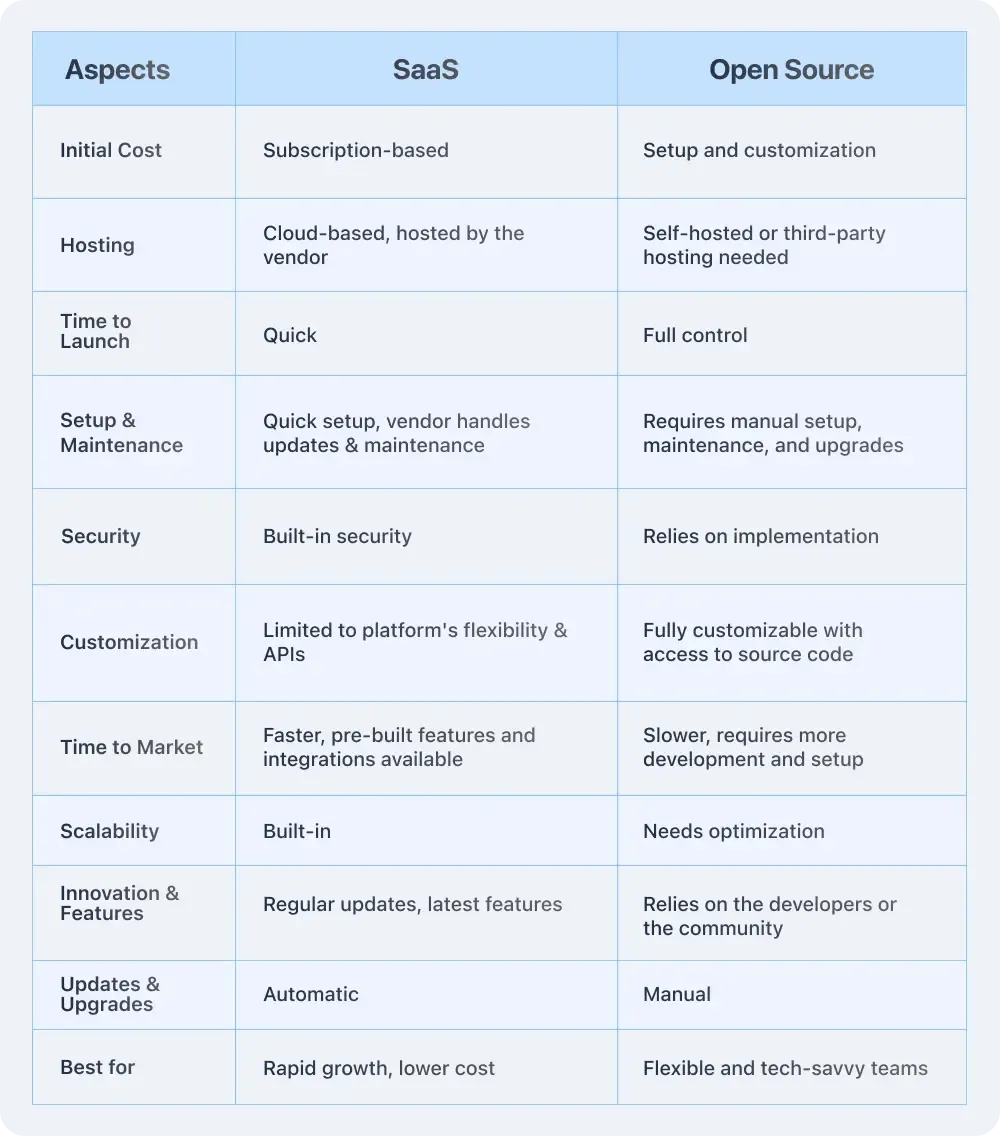
SaaS vs. Open-Source E-commerce: Which Is Better?
SaaS, as well as open source, is designed keeping simplicity in mind, which makes installation easy. Before you settle, navigate through the differences between SaaS vs. open source.
Emerging SaaS Trends Shaping E-commerce in 2025
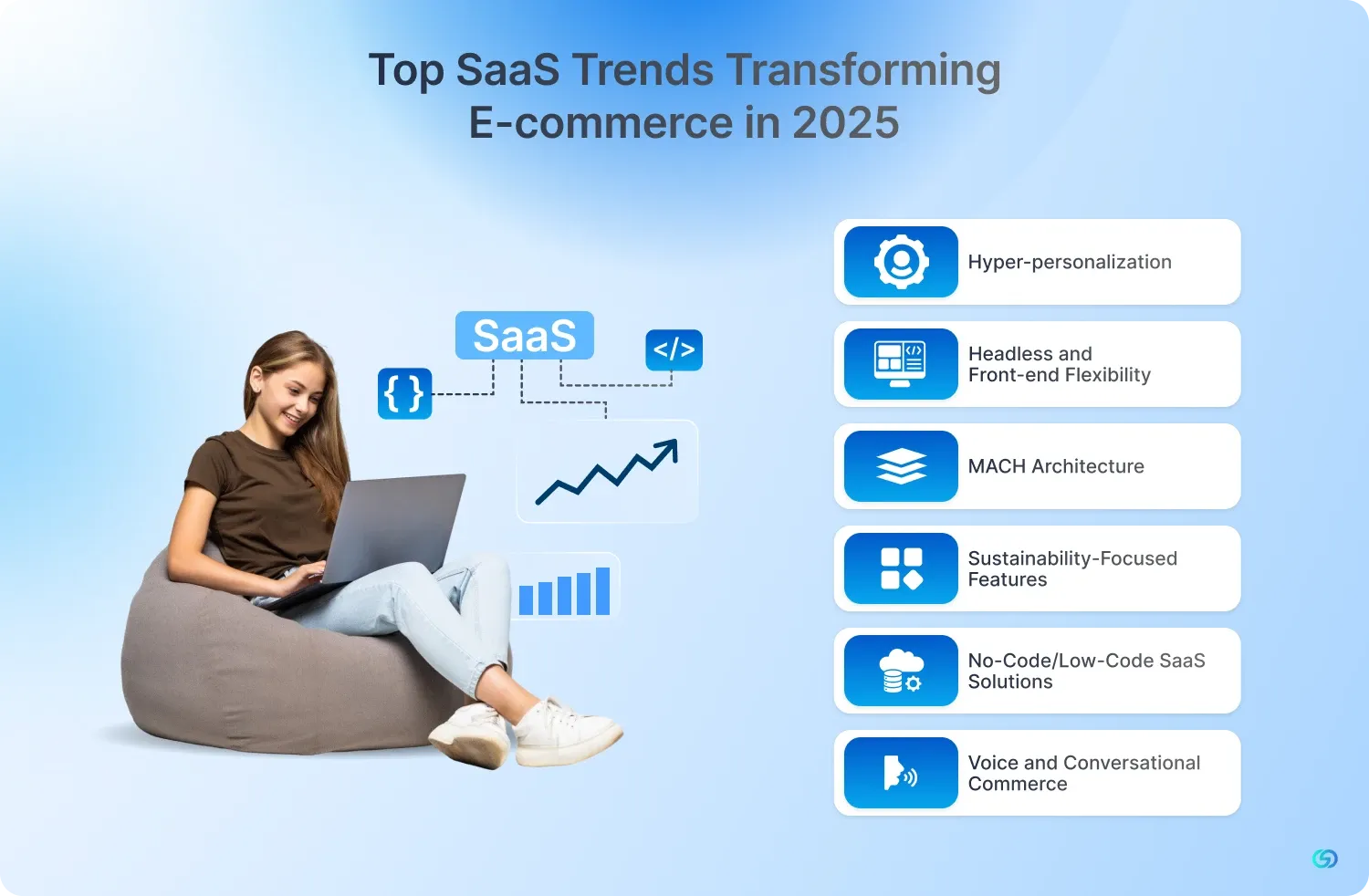
By now you know that the e-commerce industry is evolving at a fast pace, and the use of SaaS technologies is also growing.
Looking at the landscape of 2025, more and more businesses are adopting SaaS e-commerce solutions to streamline their operations, remain competitive, and boost customer experience. And fortunately, SaaS, with its flexible approach, offers several advantages, like an increase in workflow efficiency, reduced infrastructure costs, and more. Businesses are looking for ways to meet the customer demands. Therefore, the transition to SaaS will play a key role in shaping the upcoming phase of the e-commerce industry.
These are the various trends that can be witnessed:
⏯ Hyper-personalization
Hyper-personalization will set buyer engagement to the next level by setting unique experiences for every type of shopper. SaaS platforms adapt product recommendations and homepage layouts in real-time according to individuals’ product preferences.
Organizations can leverage advanced analytics to categorize customers and craft campaigns as per their demographics and shopping habits. SaaS e-commerce platforms also offer incentives and reward points tailored to every buyer. This strengthens brand loyalty and boosts repeat business.
⏯ Headless and Front-end Flexibility
The emerging SaaS trends for e-commerce platforms focus on headless architecture and front-end flexibility, allowing businesses to decouple user experience from the backend, use modern frameworks, and create highly customized online stores. This allows for greater agility and scalability to support innovations, like AI and AR/VR to deliver superior customer experiences.
⏯ MACH Architecture
Microservices, API-first, Cloud-native, Headless (MACH) architecture is reshaping agility and scalability in e-commerce. It maintains quick updates, future-ready solutions, and modular integrations that adapt to changing market demands.
⏯ Sustainability-Focused Features
Sustainability is not an option in today’s scenario. Customers are always on the lookout for brands practicing eco-conscious activities. SaaS platforms are coming up with solutions that fit this demand. SaaS-based e-commerce platforms include features that track carbon emissions, giving businesses insights into environmental effects.
Cloud-based SaaS platforms use less energy compared to conventional systems, reducing overall environmental footprint.
⏯ No-Code/Low-Code SaaS Solutions
In 2025, no-code and low-code platforms will redefine how e-commerce businesses build and customize their online stores. Instead of relying solely on developers, these solutions allow teams to create and launch features with simple drag-and-drop interfaces or minimal coding. This speeds up time to market, reduces costs, and empowers non-technical users to take ownership of digital experiences.
⏯ Voice and Conversational Commerce
With the rise of AI chatbots and smart assistants, voice and conversational commerce are gaining momentum. SaaS platforms allow customers to browse and shop through voice commands or engage in natural conversations with AI-based chat interfaces. This trend provides faster product discovery and delivers a more interactive shopping experience.
Challenges Solved Using SaaS E-commerce
SaaS solutions are a cornerstone for handling critical challenges in the e-commerce marketplace. SaaS platforms offer innovative features and affordable solutions, helping businesses to overcome challenges that might hinder growth.
Here are some complexities in the e-commerce landscape. Check how SaaS solutions are resolving them:
1️⃣ Problem: Upfront Costs
Whether you are upgrading your existing platform or starting out with an e-commerce business, it often comes with a heavy chunk of investments in different areas, like software, development, and infrastructure.
How SaaS Helps:
SaaS offers subscription-based pricing models, eliminating hefty initial costs. Businesses need to pay a monthly or annual fee in place of pricey software or hardware. This is a cost-effective approach, allowing enterprises to access advanced technology.
2️⃣ Problem: Lack of Technical Expertise
Sometimes, businesses wanting to set out for SaaS e-commerce platform development may lack in-house technical expertise, which is important to customize or handle traditional e-commerce platforms.
How SaaS Helps:
Leading SaaS development company designs SaaS platforms with user-friendly interfaces and intuitive features, which prove to be easy for non-technical users to manage their online store. For instance, some features like pre-built templates and drag-and-drop editors allow business executives to handle operations without relying on the IT team.
3️⃣ Problem: Downtime and Maintenance
Maintaining the reliability of the platform and ensuring consistent uptime can be tough for businesses with inadequate resources. Lost sales, reputational damage, and frustrated customers can all be the result of downtime.
How SaaS Helps:
SaaS platforms offer guaranteed uptime due to their cloud-based hosting, which ensures the online platform remains operational even during heavy traffic or peak seasons. In the background, the SaaS e-commerce platform manages updates and maintenance without disrupting the platform and remains secure at all times.
4️⃣ Problem: Integration Complexities
E-commerce platforms rely on several systems, like ERPs and CRMs. Integrating these tools can be expensive and time-consuming.
How SaaS Helps:
SaaS for e-commerce has built-in integrations for popular tools, which makes syncing easy between the systems. Integration allows better customer communication, marketing automation, and smart inventory management.
5️⃣ Problem: Security Concerns
Cybersecurity handles sensitive customer data, which is crucial for e-commerce businesses. A lack of it can lead to heavy financial losses and loss of customer trust.
How SaaS Helps:
Security is the main concern for SaaS providers, such as multi-factor authentication and encryption. For example, SaaS-based e-commerce platforms update their system regulations to meet compliance standards, like PCI DSS or GDPR, giving businesses a sense of security and confidence.
6️⃣ Problem: Ineffective Analytics
It is difficult for businesses to make quick and smart decisions without actionable insights. Traditional e-commerce platforms often lacked the necessary features for real-time data analysis.
How SaaS Helps:
SaaS provides an e-commerce platform with real-time insights regarding the sales performance, customer behavior, and marketing strategies. For instance, platforms using e-commerce system capabilities help businesses spot trends, optimize operations, and build strategies that fit the business goals. SaaS analytics allow businesses to make informed decisions.
Top Use Cases of SaaS for E-commerce
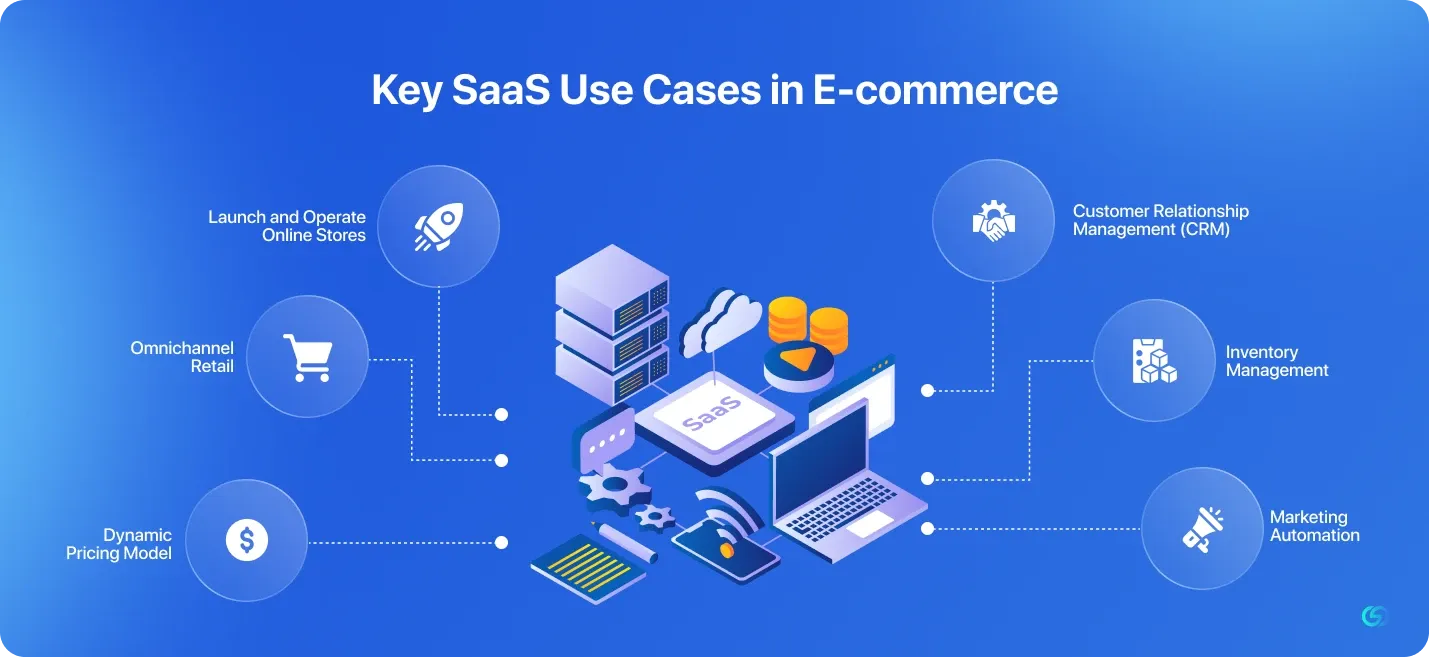
SaaS helps e-commerce businesses with various operational needs. Let’s find out each use case to understand how SaaS can lead to business growth:
1. Launch and Operate Online Stores
The SaaS platform makes the complete process of building and handling online e-commerce stores easier. Non-technical users can leverage the user-friendly dashboard and drag-and-drop editors to build online platforms without coding. This is beneficial for SaaS e-commerce platforms, offering ready-to-use tools. Additionally, the templates can be customized to match the branding, making them more visually appealing.
2. Omnichannel Retail
Customers seek a seamless shopping experience, and SaaS platforms allow integration and management of multiple sales channels from a single dashboard.
Real-time inventory tracking ensures consistent availability of goods, preventing overstocking and stockouts. Customers can browse online, purchase, or return items, making the journey hassle-free.
3. Dynamic Pricing Model
Pricing is an important aspect of e-commerce in order to stay competitive. SaaS adjusts prices for businesses based on internal strategies and market conditions. For instance, during the peak season, brands can increase prices or create discounts to get rid of overstocked items. Some e-commerce platforms come with features for managing demand fluctuations.
Additionally, SaaS for e-commerce helps monitor competitor pricing in real-time to maximize profitability.
4. Customer Relationship Management (CRM)
CRM is a crucial aspect of business to understand and cater to evolving customer needs. Fortunately, SaaS is equipped with CRM tools, letting businesses enhance customer interactions.
CRM allows centralized data storage, meaning customer details, purchase history, and interactions are stored in one place to make services and campaigns more personalized. CRM tools are capable of tracking customer complaints and queries, ensuring a timely response.
5. Inventory Management
In an e-commerce business, managing inventory and orders is one of the most crucial aspects. And SaaS platforms can automate these processes to reduce errors and boost operations.
SaaS streamlines the entire process, right from placing an order to shipping. This ensures customers receive their products right on time.
6. Marketing Automation
SaaS platforms offer powerful automation tools, and marketing is the core of e-commerce success. Send targeted messages with automated emails to customers, such as holiday promotions and personalized recommendations.
SaaS platforms remind customers about items abandoned in the cart, encouraging them to complete the purchase.
Top SaaS E-commerce Platforms to Choose for Your Business in 2025
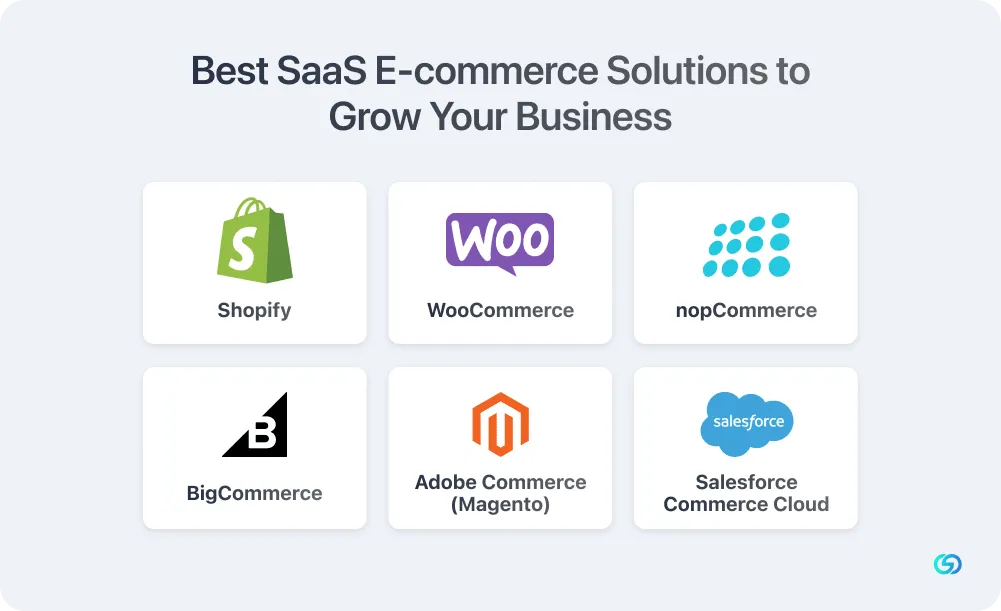
As a brand, e-commerce business visibility is important to keep up with the expanding customer base choosing to shop online. However, developing a successful online store depends on the online platform that you choose to host your website on.
By acknowledging your business needs, careful planning can help you choose e-commerce software.
Here are some of the best SaaS e-commerce platforms in 2025:
🔸 Shopify
One of the most popular platforms for building e-commerce platforms is Shopify, which currently powers more than 4.9 million stores across the globe. All businesses can leverage Shopify to build a user-friendly and fully hosted platform. Sales tracking, marketing, and built-in customization, the platform offers plenty of benefits. Its highly sophisticated and flexible nature delivers powerful features.
🔸 WooCommerce
WooCommerce is an open-source WordPress plugin, offering unique and robust e-commerce capabilities. It comes with the power to redefine the website into a functional e-commerce store with its standout features and growth-oriented solutions. WooCommerce offers thousands of extensions and comes as a cost-effective solution for businesses that favor WordPress e-commerce solutions. It integrates well with POS systems and ERPs.
🔸 nopCommerce
NopCommerce comes with powerful functionality for all e-commerce store owners. It combines all functionality for sales, both locally and globally. This popular ASP.NET open-source e-commerce platform comes with a huge number of features for small and mid-sized businesses with built-in enterprise features such as multi-vendor and multi-store functions, marketing settings, SEO settings, one-page checkout, and many others.
🔸 BigCommerce
Boasting a full suite of tools from analytics and marketing to plenty of design options, BigCommerce is one of the leading open SaaS e-commerce platforms best suited for enterprises and mid-level brands. BigCommerce is known for its scalability, customizability, and feature-rich solutions, along with out-of-the-box advanced tools.
🔸 Adobe Commerce (Magento)
Formerly Magento Commerce, Adobe Commerce is an open-source, robust platform for developing enterprise-level, customizable e-commerce solutions. You can modify every aspect of the Adobe Commerce store, which offers high-end customization options. It is ideal for mid and large businesses for managing high traffic, complex e-commerce operations, more with ease.
🔸 Salesforce Commerce Cloud
For enterprise-grade businesses, Salesforce Commerce Cloud is an ideal fit, offering customizable e-commerce solutions. The platform comes with AI-based customization potential and omnichannel selling features, which make it a go-to among large-scale operations. This platform includes CRM, CMS, and headless functionality.
In Conclusion
Are you ready to scale your SaaS e-commerce platform? It's 2025, and SaaS will stay the cornerstone of e-commerce. With its power to boost operations, build customer loyalty, and increase conversion, SaaS gives an upper hand against competitors. By embracing these developments, companies meet buyer needs to succeed in the global e-commerce market.
At ConvexSol, we help you integrate advanced SaaS e-commerce solutions, positioning your brand to succeed in 2025 and beyond. Our experts help you adopt the latest innovations in SaaS and expand globally.
With over 9 years of experience, our team of skilled designers and developers are here to build you a flexible e-commerce platform. Invest in a smart move, invest for long-term success!
Frequently Asked Questions
Which businesses benefit most from SaaS e-commerce?
Businesses benefiting the most from SaaS e-commerce include startups and small-to-medium enterprises (SMEs) that need an affordable and scalable platform to expand online. Large enterprises also take advantage by focusing on major business activities instead of managing their e-commerce infrastructure. Apart from them, merchandisers and manufacturers are also transitioning from offline to online sales.
How do you choose the right SaaS e-commerce platform in 2025?
Make the best choice for your business by choosing the right SaaS e-commerce platform in 2025:
- Evaluate Your Business Needs: Analyze the complexity of your operations and your business needs.
- Fix a Budget: Evaluate the cost of the platform by factoring in software, hardware, developers, and time spent in maintenance.
- Ensure Integration Capabilities: You need a strong system for critical functions. Integrate with existing systems, such as CRM, ERP, and so on.
- Connect with the Best SaaS Development Company: The experts will offer you next-level support and expertise, depending on your business and customer requirements.
- Understand Future Potential: Map out your company’s current requirements and what the future might be.