- FinTech Mobile App Development
- 2025-11-05
The Ultimate Guide to Next-Gen FinTech Mobile App Development
Audio Track
Table of Contents
TL;DR:
- FinTech automates and improves financial services, encompassing a range of apps from digital payments, mobile banking, investment, insurance platforms, and more.
- FinTech mobile app development is transforming financial services, offering fast, secure, and user-friendly solutions.
- Businesses can utilize AI & ML and advanced analytics to personalize customer experience and smart decision-making.
- Trends like DeFi, AI/ML, RegTech, and green finance are shaping the future of FinTech.
The State of FinTech Mobile App Development in 2025
FinTech mobile app development is about creating an engaging, secure, and compliant experience. Today, it is no longer about standing in long bank queues because ever since technology slipped into our pockets, every transaction has become a lot faster and smoother.
The shift has led to a massive demand for FinTech application development, transforming the way people now deal with money.
Today, the global FinTech market is projected to rise from $340.1 billion in 2024 to $882.3 billion by 2030. In 2024 itself, digital payments crossed $11.55 trillion. What’s more interesting is that 91% of Millennials are already relying on FinTech apps for budgeting and investment, which clearly denotes that FinTech is a necessity in 2025 and beyond.
Whether you are looking to attract more customers or protect data, FinTech mobile app development offers tremendous benefits. With the right technical expertise and technology, you can benefit your business with a successful app.
Understanding FinTech App Categories
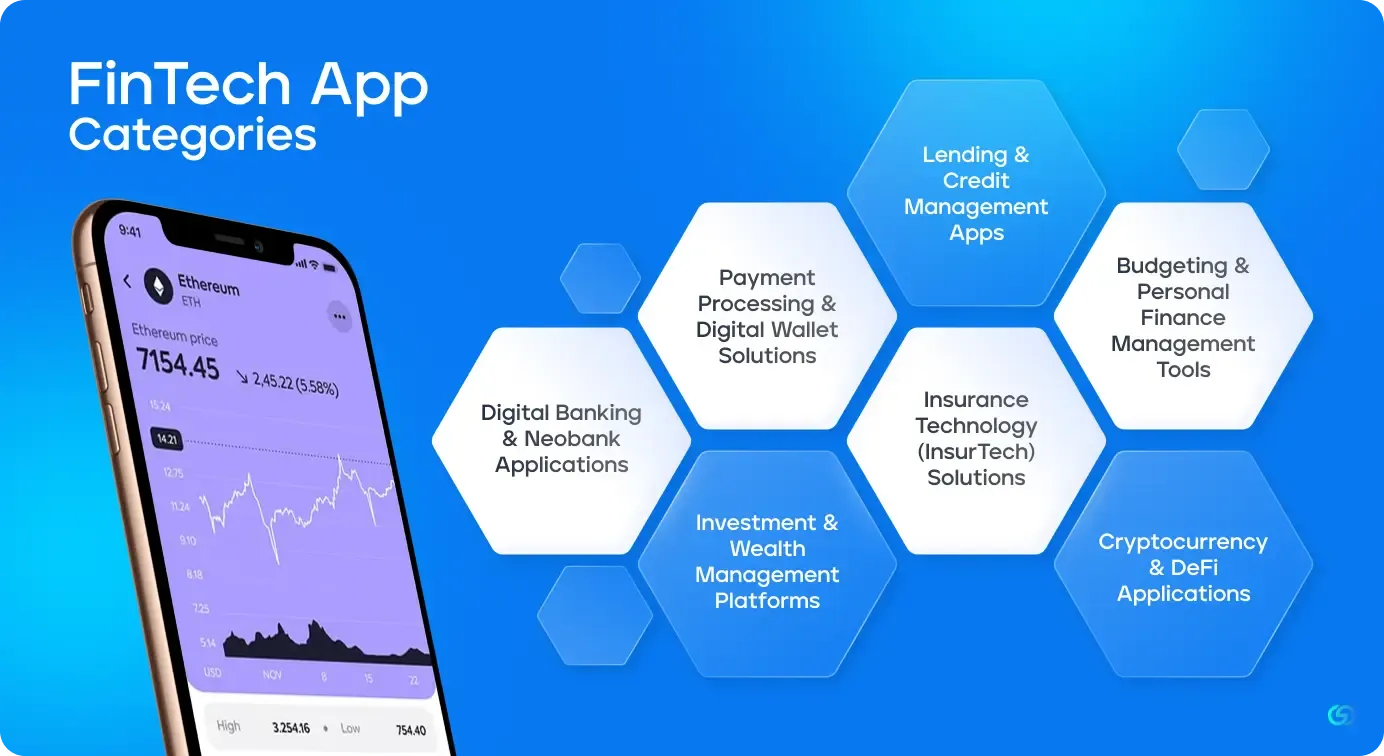
The ecosystem for FinTech is vast, and each category comes with its unique audience, challenges, and opportunities. In order to build a successful FinTech app, understand where your product fits the best in this landscape.
Let’s explore the major categories shaping the FinTech space in 2025.
◼ Digital Banking and Neobank Applications
Digital banking is revolutionizing the banking experience with the flexibility to handle finances without having to visit the bank. The app offers a complete suite of services, including account opening, fund transfers, balance inquiries, loan applications, and payment processing.
Neobanks operate without physical branches, focusing on offering user-friendly, faster, and cheaper banking services.
Players like Chime, Revolut, and N26 have proven that with the right UX and compliance, institutions can build customer trust and scale rapidly.
◼ Payment Processing and Digital Wallet Solutions
Digital wallets are a complete industry game-changer, offering security, convenience, and innovative features for businesses and consumers. This FinTech application development ushered in a new wave of digital transformation by making way for global payments.
Contactless payments and mobile wallets like Apple Pay, Google Pay, and Paytm have already become household names. Besides, modern payment apps are going beyond transactions by integrating loyalty programs, Buy Now, Pay Later, AI-driven fraud detection, and crypto payments to boost customer engagement.
◼ Investment and Wealth Management Platforms
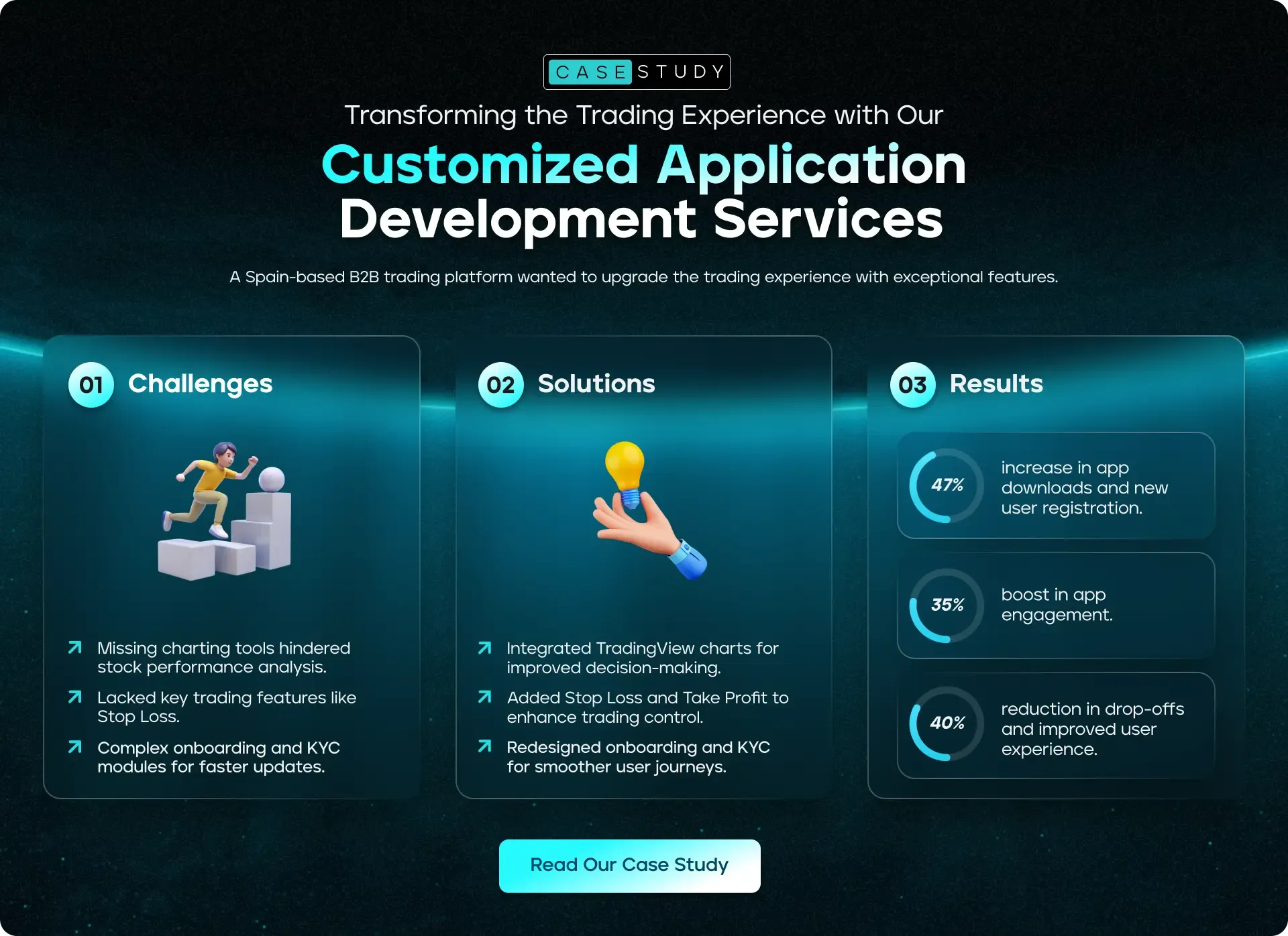
Custom FinTech mobile app development has democratized investing, which was once reserved for those with high-net worth. Today, any person can invest in ETFs, trade stocks, and explore crypto portfolios.
To highlight how technology is transforming the world of investment, here’s a quick example of a success story by ConvexSol:
◼ Lending and Credit Management Apps
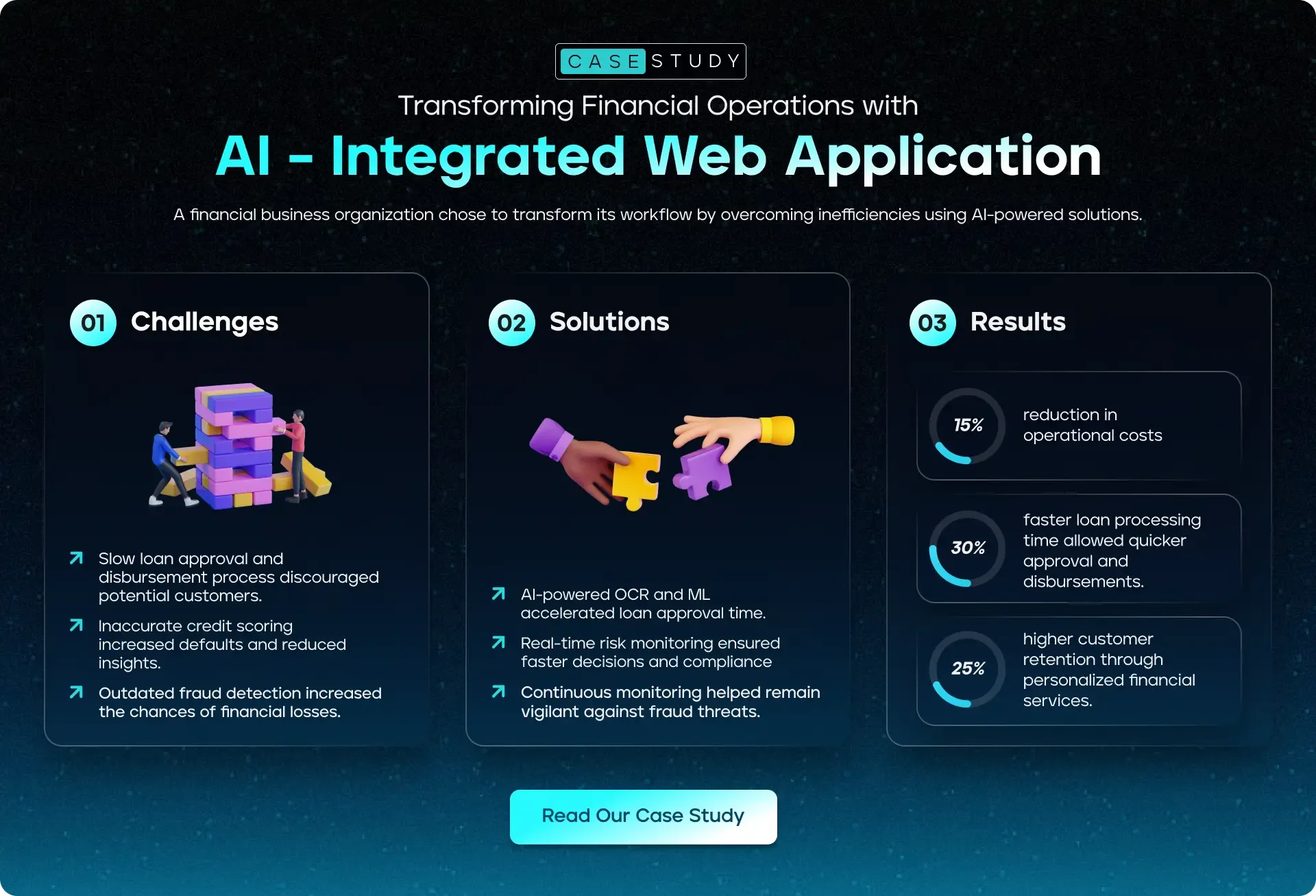
Credit management has become more accessible due to lending apps. From microloans to business financing, they offer convenience without the lengthy paperwork or physical verifications of traditional lenders.
With AI and ML, lenders now evaluate creditworthiness in seconds and offer personalized interest rates. EKYC and automated underwriting speed up the approval process while maintaining compliance.
◼ Insurance Technology (InsurTech) Solutions
FinTech mobile app development also caters to providing insurance solutions. This type of app streamlines the buying and managing of the insurance process. It comes with several features and advantages, such as faster policy management, emergency assistance, and claim processing.
◼ Budgeting and Personal Finance Management Tools
Personal finance management apps help you have better control over spending and savings. These tools sync across multiple bank accounts and offer smart insights into financial habits.
Apps like Mint or PocketGuard offer personalized recommendations and investment tracking, helping you focus on financial wellness.
If you are exploring custom FinTech mobile app development, this category offers endless opportunities to build solutions that create lasting user engagement.
◼ Cryptocurrency and DeFi Applications
Cryptocurrency and decentralized finance (DeFi) apps are completely reshaping the way banking and investment are done. Such apps allow token management, peer-to-peer transactions, and more, without intermediaries. However, this category does require extra attention to compliance and security.
Strategic Planning for FinTech Mobile App Development: From Concept to Market Entry
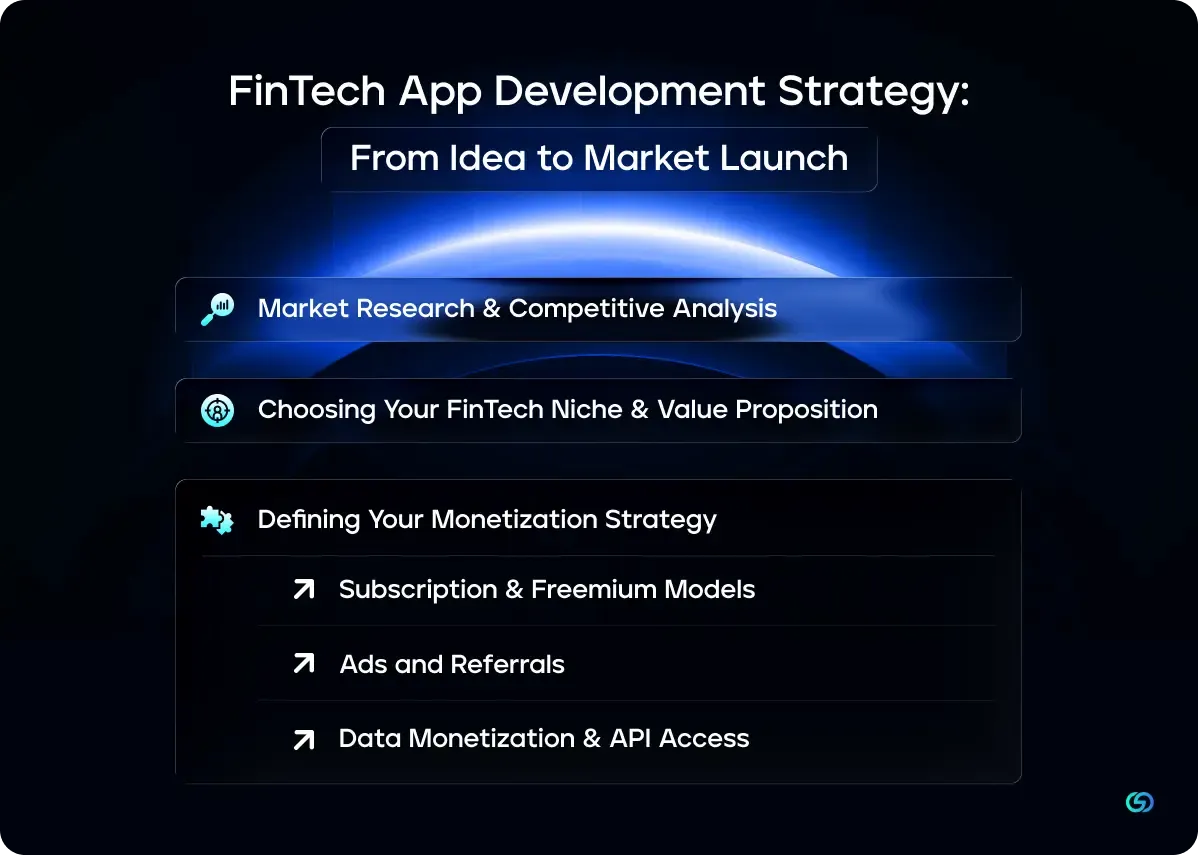
FinTech application development is about strategy more than technology. The basis of a successful project lies in the understanding of the target audience and defining what truly sets your platform apart. And here’s how you can strategically plan your journey.
▶ Market Research and Competitive Analysis
As you may now know, FinTech is a highly competitive space where innovation and user expectations move faster. It’s important to conduct a detailed analysis of the market to identify trends, pain points, and areas where the app falls short. This crucial step ensures that the product aligns with both market needs and regulatory standards.
▶ Choosing Your FinTech Niche and Value Proposition
Whether you want to opt for digital lending, InsurTech, wealth management, or a crypto app, the FinTech market is broad, and picking a domain that aligns with your expertise and audience makes the platform even sharper.
Your value proposition should answer why someone would choose your app over others. It could be due to faster transactions, user experience, or smart analytics.
▶ Defining Your Monetization Strategy
A great FinTech app needs a substantial revenue model. The way you monetize your app should align with user behavior and the nature of the type of app you are opting for. Here are some effective models in FinTech space today.
-
Subscription and Freemium Models: Several apps use subscriptions or freemium models to generate income. As the name suggests, the freemium model lets users access features for free and upgrade premium plans for advanced functionalities.
-
Ads and Referrals: Once you establish a large customer base, advertisers can endorse highly targeted ads and referrals, which can lead to your FinTech monetization strategy. Individuals can enjoy the app for free, but they need to watch the commercials. This way, the service owner gets paid for every conversion.
-
Data Monetization and API Access: In the modern FinTech world, APIs have become a backbone. Securely monetizing APIs allows businesses to collaborate with third-party services (digital wallets or analytics tools) while ensuring compliance.
With custom FinTech mobile app development, businesses can create platforms that support open banking integrations, helping their platform stay relevant.
Essential Features for Modern FinTech Mobile Apps Development
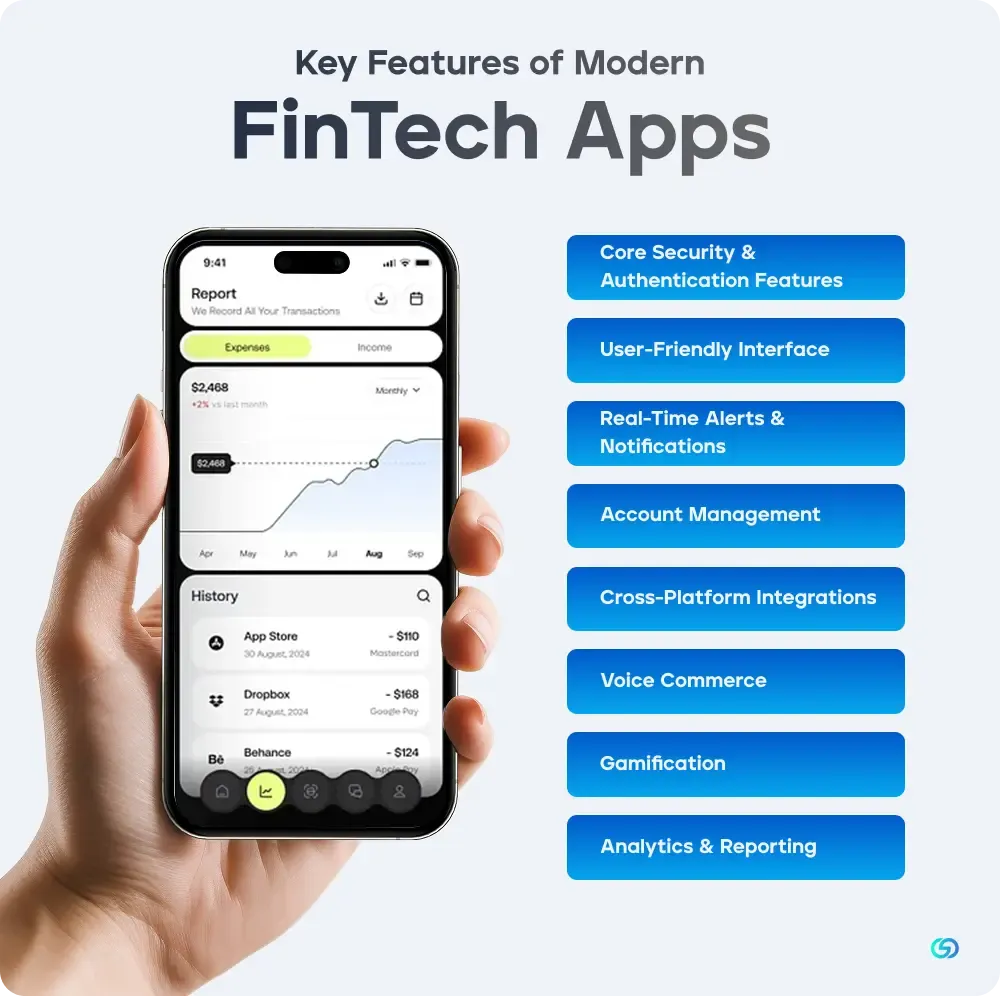
FinTech application development requires careful consideration of essential features in order to add value and boost user experience. The following are a list of features to consider to make your FinTech app stand out in the market:
⏺ Core Security and Authentication Features
In FinTech, security plays a paramount role and cannot be compromised because users want their information to remain safeguarded. It is highly crucial to integrate features like multi-factor authentication, biometric security, end-to-end encryption, and detection alerts. FinTech application development without strong security is a risky affair.
⏺ User-Friendly Interface
For a FinTech app to prosper, simplicity is the key feature to keep in mind. The app should be intuitive so that customers can browse through effortlessly, such as comprehending transactions or finding out advanced features. The app must cater to all users, making it accessible to everyone.
⏺ Real-Time Alerts and Notifications
Today, receiving real-time notifications, security updates, and account activities keeps users informed and helps them manage finances smartly. According to a report, about 68% of users appreciate real-time alerts for their finance apps, preventing unauthorized transactions.
⏺ Account Management
A central dashboard to manage accounts, bill payments, and transactions simplifies finance management. More than 70% of users prefer easy access to financial accounts, streamlining user experience, and financial operations.
⏺ Cross-Platform Integrations
For FinTech mobile app development, ensure compatibility across devices for an enhanced user experience. Most global web traffic comes from mobile devices, which highlights the significance of responsive design. The cross-platform integration feature ensures that users can access financial information anytime.
⏺ Voice Commerce
The voice feature in the FinTech app enables users to use the app hands-free. This is highly beneficial for individuals with accessibility needs; voice assistants offer an inclusive and frictionless user experience.
⏺ Gamification
With gamification elements like badges, rewards, and challenges, FinTech mobile app development can motivate customers to use the app proactively. This way, managing finance becomes more enjoyable, encouraging users to use the app regularly.
⏺ Analytics and Reporting
FinTech application development should contain advanced analytics to help users understand their financial expenditures and habits. The report must utilize algorithms and models that offer tips to increase savings and make informed decisions.
Technology Stack and Architecture Decisions
Custom FinTech mobile app development experts can help you choose the right tech stack, which is one of the most critical steps in the app development process. Tech stack shapes the app’s performance, compliance, and ensures scalability. With the right architecture, the platform stays flexible and reliable as it grows and adapts to the evolving market demands.
FinTech mobile app development tech stack:
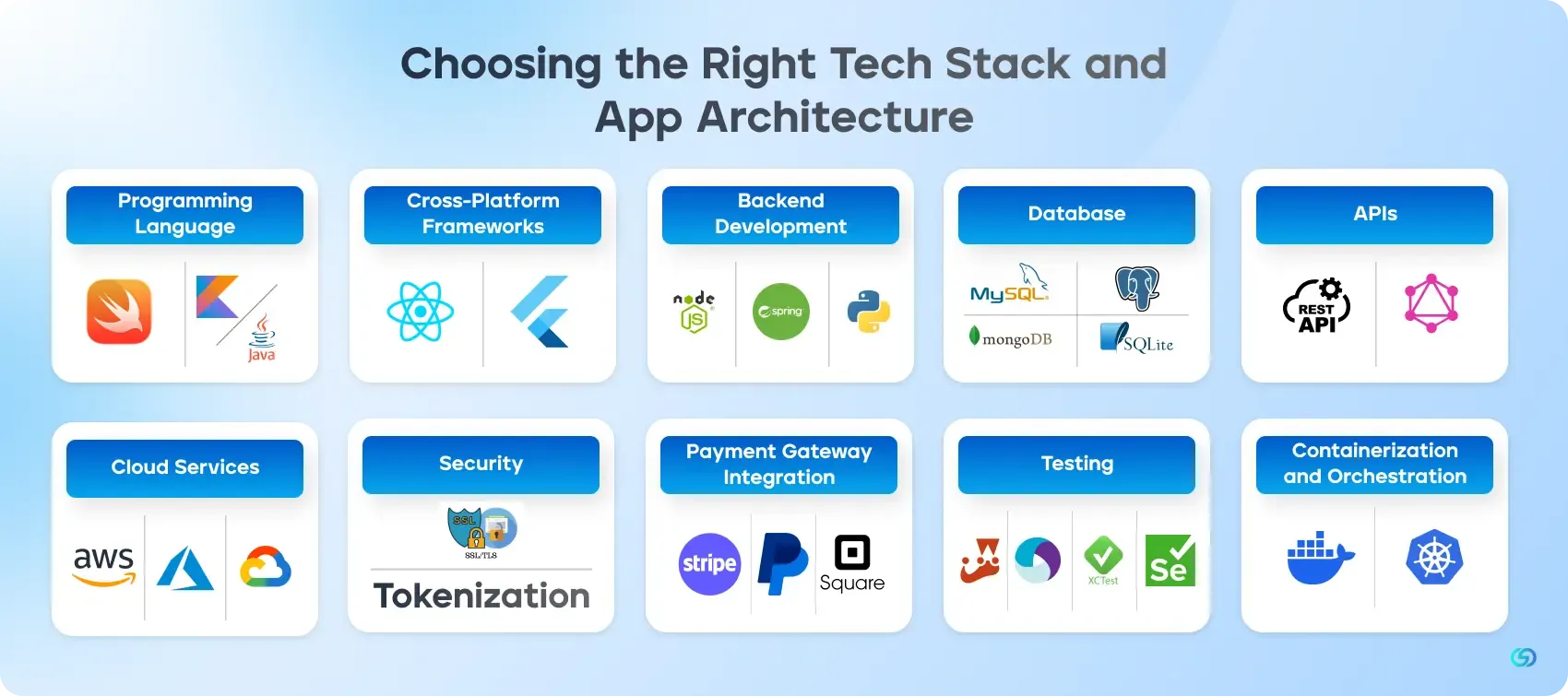
Regulatory Compliance and Legal Considerations for FinTech Mobile App Development
The FinTech sector has seen immense growth, with people from all walks of life using FinTech services. However, this fast-paced expansion comes with the critical responsibility of adhering to regulatory standards and legal frameworks. FinTech apps handle crucial financial data, making compliance with laws like KYC, AML, GDPR, and PCI-DSS essential.
Let’s explore key areas of FinTech compliance:
🔹 Anti-Money Laundering and Know Your Customer
Firms need to identify users accurately and monitor how funds move through different accounts. This happens with KYC procedures: documentation, ID verification, and screening. That’s not it, after onboarding, customers remain under vigilance to detect behavior and abnormal patterns.
🔹 Data Protection and Privacy
Modern FinTech apps hold highly crucial records, like transaction histories, ID documents, and so on. Regional compliance, such as GDPR or CCPA, requires secure access, encrypted storage, and swift responses to privacy breaches.
🔹 Transaction Monitoring
Real-time fraud detection defines modern compliance management. Apps alert on fraudulent activities, flag anomalies, and report without delay. Platforms need to meet the standards while also catering to local expectations around money laundering and international money transfers.
🔹 Consumer Protection and Fair Lending
Unbiased access, full disclosure, and transparent decisions are vital for compliance in the FinTech industry. Pricing and credit decisions must be transparent and supported by logic, and compliance must follow a protocol aligned with the local laws.
Step-by-Step FinTech Mobile App Development Process
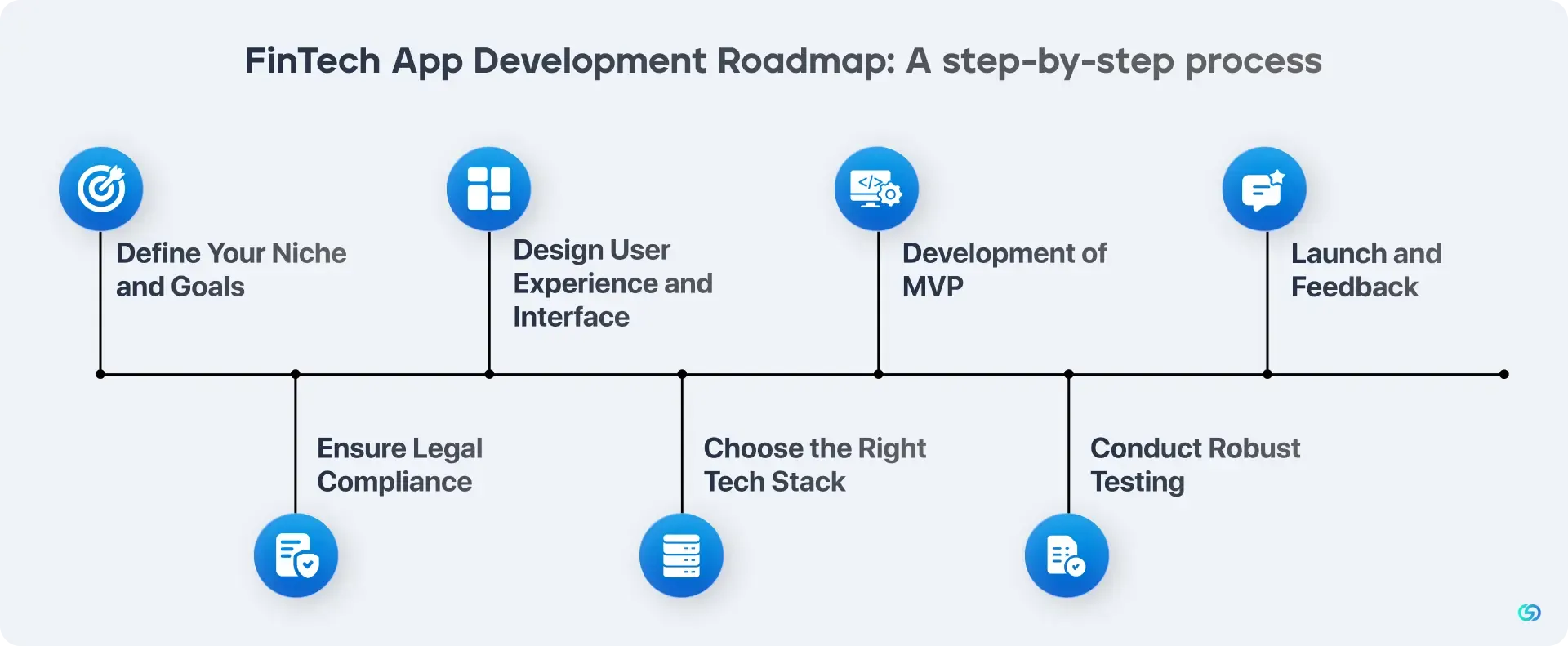
For a full-fledged FinTech application development, you need more than just coding—a secure and user-friendly interface. Here are some proven steps involved in the app development:
1️⃣ Define Your Niche and Goals
Before you develop a FinTech app, reliable FinTech app development experts will help you clearly define your niche and goals. Research the type of app you need to build, and which area you wish to focus on.
Decide the purpose of the application—personal finance management, trading, global money transfer, or mobile banking. Once this is done, the professionals will help you find who your target audiences are and create a detailed roadmap of the app development process.
2️⃣ Ensure Legal Compliance
Before kicking things off, the professional team of custom FinTech mobile app development ensures legal compliance. Different countries have different sets of legal requirements, which need to be complied with. Some examples of such policies include AML, KYC, PCI DSS, and more.
If you are thinking of developing a FinTech app in Europe, it must comply with GDPR because non-compliance can lead to loss of customer trust, reputational damage, and license revocations.
3️⃣ Design User Experience and Interface
User experience design is highly crucial in crafting engaging and intuitive interfaces. In this phase, designers need to focus on delivering an exceptional user experience by adopting the latest UI/UX trends and proven strategies along with user-centric design principles.
For FinTech, a well-designed UX enhances usability and increases user satisfaction, laying the ground for long-term success.
4️⃣ Choose the Right Tech Stack
For FinTech application development, selecting the right tech stack is essential. With so many options to choose from, a team of engineers can help you select the right one to reduce development expenses and accelerate the app’s time to market. To target Android and iOS users, going for a cross-platform framework like Flutter and React Native works the best.
5️⃣ Development of MVP
Developers can start with a Minimum Viable Product (MVP) to attract early users who can help validate the idea in the real market. The MVP approach is cost-efficient and lets you test and make improvements as you build your FinTech app.
6️⃣ Conduct Robust Testing
Before finally launching the app, the FinTech app development experts conduct thorough testing to keep your app functional at all times. With comprehensive, robust testing, you will be able to handle sensitive user information and rectify issues, which are critical for FinTech mobile app development.
7️⃣ Launch and Feedback
Once your FinTech app is ready, experts will help you launch the market with a smart marketing plan. The development team you choose will improve and upgrade the app as you start receiving valuable feedback. Improvements and upgrades will be made by leveraging the latest technologies and trends, and proactive support will be provided.
Cost Analysis and Budget Planning for FinTech App Development
FinTech app development focuses on creating software apps tailored for financial services, covering everything from investment management to mobile app payments and banking. The cost of app development can widely vary, influenced by several external factors such as feature requirements, app complexity, and tech stack used.
Cost Breakdown by App Type:
- Personal Finance Apps: Starting from $30,000
- Mobile Banking Apps: Starting from $60,000
- Investment/Trading Platforms: Starting from $80,000
- Lending or Loan Management Apps: Starting from $50,000
However, the cost can vary depending on the client’s requirements.
Cost Optimization Strategies:
- Help define an MVP to validate the concept
- Selecting cross-platform frameworks like React Native or Flutter
- Leveraging third-party APIs for faster feature integration
- Collaborating with a FinTech mobile app development company that offers a flexible engagement model
How to Choose the Right FinTech App Development Partner?
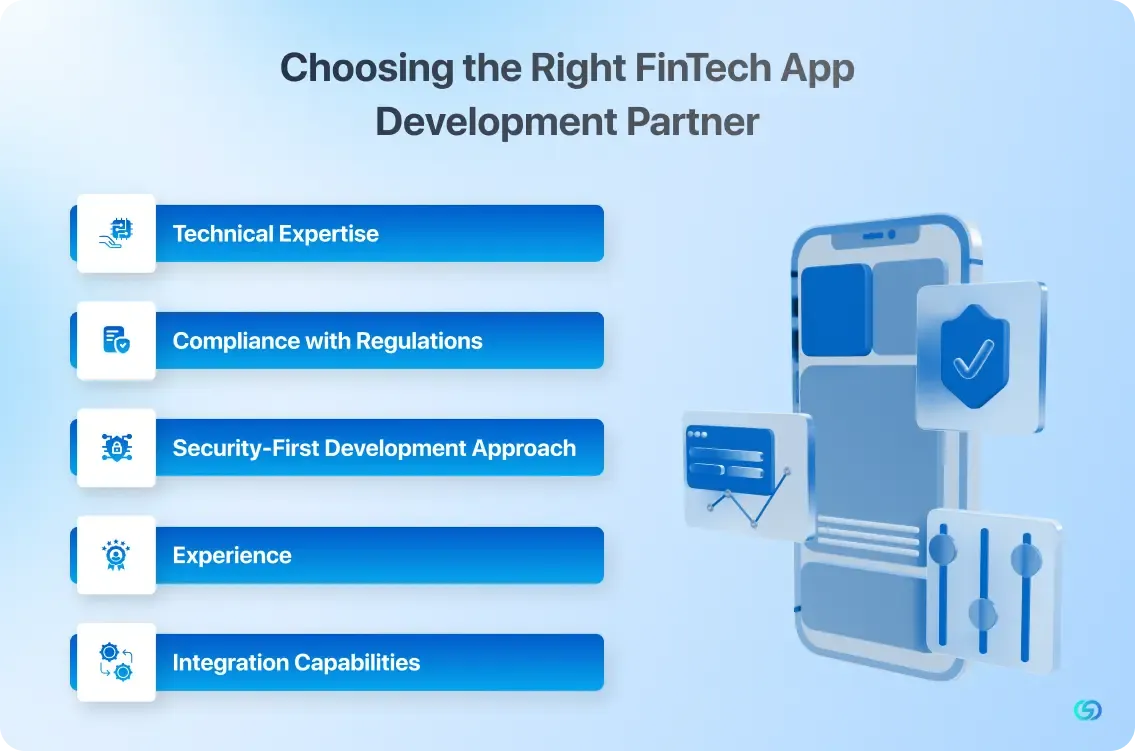
FinTech is revolutionizing financial services, disrupting the existing status quo, and leading to enhancements due to the demands of modern consumers. In such a fiercely competitive market, choosing the right custom FinTech mobile app development company ensures everything aligns with the project's needs and goals.
➡ Technical Expertise
The rise of a successful FinTech app is due to the technical knowledge of the developers. Find partners who have a track record of delivering successful finance projects. These experts must have experience in developing complex payment gateways and other money-related systems. An ideal partner should be well-versed in the latest tech, such as AI, ML, and data analytics, as well as other programming languages.
➡ Compliance with Regulations
A reliable outsourcing FinTech partner understands the regulations to safeguard consumer data and ensure secure transactions to reduce financial crimes such as PSD2, GDPR, AML, and KYC. Experts who come with a proven track record in ensuring compliance with regulations can help navigate through the complexities and avoid legal repercussions.
➡ Security-First Development Approach
In the FinTech industry, the importance of security cannot be overestimated because a single breach can lead to loss of customer trust and trouble with the law. Whether launching or modernizing the FinTech app, the development company you partner with will ensure strong, secure architecture, solid authentication, and encrypted communication.
➡ Experience
Experience speaks of quality and reliability. When choosing the right development partner, consider the capabilities and previous successes. Review client testimonials and case studies. By doing this, you provide insights into the company’s analytical capabilities, tech expertise, and customer fulfillment levels.
➡ Integration Capabilities
A successful FinTech mobile app development relies on the integration capabilities with various technologies. The apps leverage data from market APIs, payment processors, or credit bureaus, which can boost business workflows and heighten customer experience.
Launch Strategy and Go-to-Market Planning
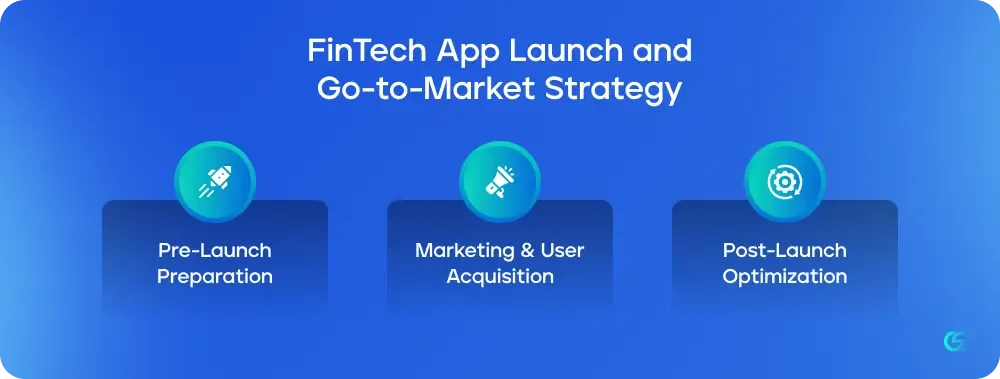
FinTech marketers use creative strategies to build a brand and attract loyal customers. Taking your FinTech app from development to launch needs a solid go-to-market (GTM) strategy. This way, the platform captures users’ attention in a highly competitive space.
Pre-Launch Preparation
Before the app releases, FinTech app development experts focus on creating a solid plan. Define the KPIs, prepare marketing assets, fix your pricing, and ensure all technical aspects are thoroughly tested.
Marketing and User Acquisition
The custom FinTech mobile app development company that you partner with creates awareness about the platform before the launch. Marketing strategy includes PR campaigns, influencer collaborations, content marketing, social media engagement, and influencer partnerships.
Post-Launch Optimization
After launching, businesses need to continuously track performance metrics and feedback. Regular updates, feature enhancements, and UI/UX improvements ensure the app stays competitive.
Emerging Trends and Future Opportunities of FinTech Mobile App Development
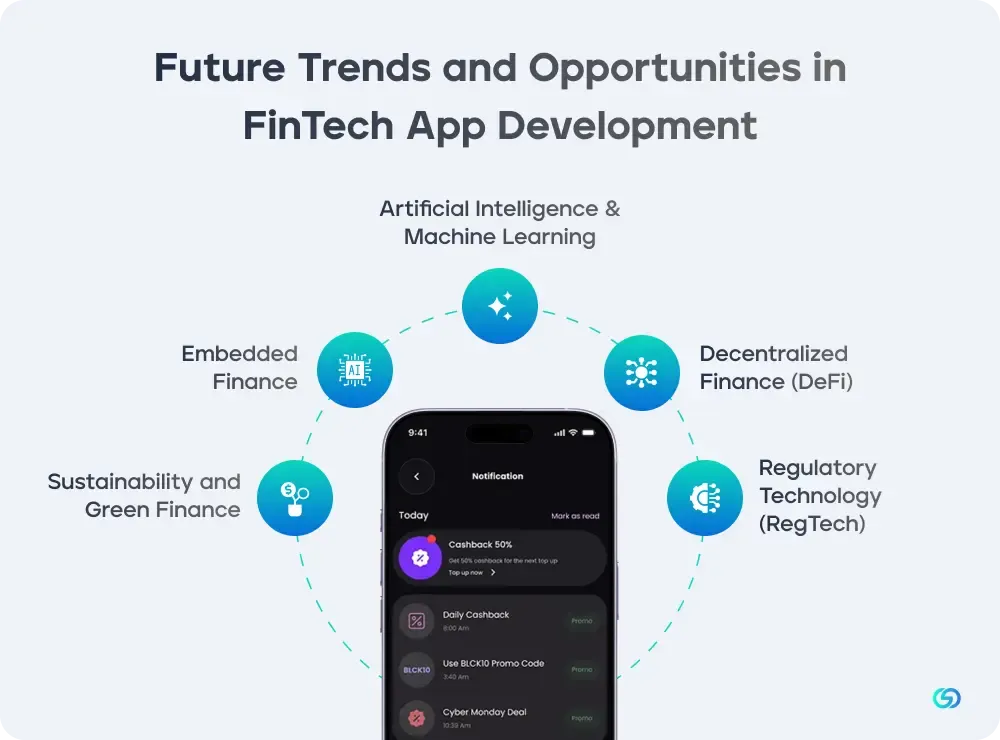
Now you know that the FinTech industry is rapidly transforming the way we connect to money. As we look into the future, there are a few patterns that are anticipated to shape the FinTech industry. Let’s explore:
Artificial Intelligence & Machine Learning
AI in FinTech is expected to contribute $1.2 trillion to the world economy by 2030. AI in FinTech offers personalized and smart data-powered insights, streamlining decision-making.
AI and ML are redefining how users manage their finances, from detecting fraudulent transactions in real-time to offering predictive investment insights. ML algorithms are capable of analyzing user behavior, spending patterns, and risk profiles to deliver hyperpersonalized recommendations.
Decentralized Finance (DeFi)
DeFi is increasingly embedded with FinTech apps, reshaping traditional financial services with greater user control, transparency, and accessibility. The rise of self-custodial finance services enables customers to directly control their assets. These services are integrated into user-friendly FinTech software, empowering users to manage their funds.
Regulatory Technology (RegTech)
Big data analytics and ML automate compliance processes. RegTech helps FinTech businesses automate compliance and stay ahead of advancing controls. By utilizing AI and ML, RegTech can reduce operational costs and mitigate risks.
Embedded Finance
Embedded finance blurs the line between financial and non-financial services. Banking-as-a-Service (BaaS) models enable non-financial companies to incorporate financial products into their platforms without becoming full-fledged financial institutions.
Sustainability and Green Finance
The FinTech industry aligns with global sustainability goals. Today, green finance apps are promoting responsible investing and carbon tracking, which help users make more eco-conscious financial decisions.
Frequently Asked Questions
How long does it take to develop a FinTech mobile app?
The FinTech mobile app development timeline varies based on the features, complexities, integrations, and design needs. Generally, it can take anywhere from a few weeks to a year to develop a solid app.
What are the most critical security requirements for FinTech apps?
Security is paramount for any FinTech application because these apps deal with financial data, which can lead to major risks. Some of the most critical security requirements include data encryption, multi-factor authentication, secure APIs, biometric authentication, secure cloud infrastructure, and compliance with financial regulations.
How do I ensure my FinTech app complies with regulations?
A FinTech mobile app development company can help your finance app adhere to strict regulatory requirements like KYC, AML, and PCI DSS. The experts can implement security measures such as multi-factor authentication, encryption, and regular security audits.
What's the difference between native and cross-platform development for FinTech?
Native development creates an app for one platform, either iOS or Android, with the use of a particular codebase. This offers high-performance native features but requires different development for each platform. Whereas cross-platform development leverages a single codebase to build an app for various platforms, saving ample time and money.
How do I choose between building in-house and outsourcing development?
The right choice depends on your business needs. In-house development means you build a team that is aligned with your company’s culture. The team is exclusively dedicated to your business. However, it can be costly. Whereas an outsourcing development team gives you access to global FinTech talent, specialized expertise, and faster delivery at a lower cost. Outsourcing is ideal if you want to bring niche skills and scale quickly.
What ongoing costs should I budget for after launch?
Here’s the cost breakdown by app type:
- Personal Finance Apps: $30,000 – $80,000
- Mobile Banking Apps: $60,000 – $150,000
- Investment/Trading Platforms: $80,000 – $200,000
- Lending or Loan Management Apps: $50,000 – $120,000
The cost may vary depending on the client’s requirements.